
Robin Lynn Cautin, PhD, will become the 11th president of Regis College on July 1, 2026. A collaborative and student-centered academic leader, Dr. Cautin brings more than two decades of experience in higher education as a faculty member, dean, and chief academic officer. Her work has consistently focused on advancing academic excellence, strengthening student success, fostering shared governance, and aligning institutional strategy with mission and community impact.
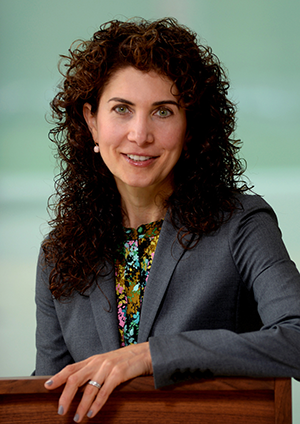
Dr. Cautin currently serves as provost at Sacred Heart University, where she is the university’s chief academic officer. In this role, she provides leadership and oversight for academic and faculty affairs, institutional effectiveness, student advising and success, research and sponsored programs, global education, and the university’s library. She led the development of the university’s 2024–2029 strategic plan, guided a successful decennial reaccreditation process, strengthened academic infrastructure and shared governance, and advanced cross-disciplinary and industry partnerships that expanded opportunities for students and faculty.
Before being named provost, Dr. Cautin served as Dean of the College of Arts and Sciences at Sacred Heart, where she oversaw the strategic development of new undergraduate and graduate programs, supported faculty development, and led initiatives to enhance enrollment, retention, and academic innovation. Earlier in her career, she held leadership roles at Manhattanville College, including dean of undergraduate education and associate provost, and served as chair of the Psychology Department. Across these roles, she developed extensive experience in academic planning, accreditation, program development, faculty engagement, and institutional collaboration.
Dr. Cautin began her career as a faculty member and has remained deeply committed to the scholar-teacher model and to the transformative power of higher education. Throughout her leadership journey, she has emphasized transparent communication, collaboration, and a strong commitment to shared governance.
She holds a doctorate and masters in clinical psychology from Case Western Reserve University and completed a postdoctoral fellowship at Columbia University. She earned a BA, magna cum laude with distinction, in psychology and philosophy from the University of Delaware. She has also completed leadership development programs at the Harvard Graduate School of Education.
Dr. Cautin is honored to serve Regis College and to work in partnership with faculty, staff, students, alumni, and friends of the university to advance its Catholic mission of educating the whole person and serving the dear neighbor without distinction.
-
Grants, Awards and Honors
- 2011 Fellow of the Eastern Psychological Association
- 2010 Fellow of the American Psychological Association, through Division 1
- 2010 Named to the inaugural cohort of the Council of Independent Colleges’ and the American Academic Leadership Institute’s Senior Leadership Academy, 2010
- 2010 Summer Research Stipend, Manhattanville College
- 2008 Early Career Award, Division 26 (History) of the American Psychological Association
- 2007-2008 History of APS Grant, Association for Psychological Science
- 2005 Club Co-Advisor of the Year Award, Manhattanville College Psychology Club
- 2003 J. R. Kantor Fellowship, Archives of the History of American Psychology
- 2003 Non-tenured Summer Research Grant, Manhattanville College
- 2002 Non-tenured Summer Research Grant, Manhattanville College
- 1993 Phi Beta Kappa Honor Society
- 1992 Phi Sigma Tau (National Honor Society in Philosophy)
- 1992 Psi Chi (National Honor Society in Psychology)
- 1989-1993 Dean’s List, University of Delaware
- 1992 Undergraduate Teaching Assistant Award, University of Delaware
- 1991 Science and Engineering Scholarship, University of Delaware
-
Research Interests and Selected Current Projects
History of Psychology Research
Dr. Cautin's historical work focuses on the history of clinical psychology. She explores the contextual factors — both within and outside the discipline of psychology — that contributed to the development and professionalization of clinical psychology. In so doing, her work highlights the scientific and professional contributions of David Shakow, who greatly influenced the development of professionalization of the field. One of her works focuses on the nature of the clinical psychology training program that Shakow directed at WSH (1928 – 1946), and how it served as a model for other institutions and provided a framework for national debate on issues of training. Two projects looked at specific organizational histories. Dr. Cautin studied the founding of the Association for Psychological Science (APS). This work involved the examination of various philosophical, social, economic, and interpersonal factors that led to its break from its parent organization, the American Psychological Association (APA), in 1988, as well as the challenges and successes involved in its inception. Generally speaking, these two projects — the professionalization of clinical psychology and the founding of the APS — contain many points of intersection. She also completed a written account of the organizational history of the American Association of Child and Adolescent Psychiatry, which spans almost 60 years.
She has been commissioned to write the history of the Psychological Clinical Science Accreditation System (PCSAS) and is currently contracted with Oxford University Press to write a book on the History of Psychotherapy in the United States.
Misconceptions and Critical Thinking in Abnormal/Clinical Psychology
Working with Scott Lilienfeld of Emory University, Dr. Cautin developed a measure of misconceptions in abnormal and clinical psychology. The initial study examined mean levels and correlates of these misconceptions in college undergraduates. They examined these misconceptions both with respect to content specific to the relevant disciplines (e.g., the relationship of suicide with depression) and to critical thinking (e.g. understanding correlation vs. causation), and both of these genres of questions are relevant to specific and general curricular and professional concerns. This project was recently published in the APA journal, Scholarship of Teaching and Learning in Psychology.
This work has also paralleled her interest in and work on the scientist-practitioner gap that characterized not only clinical psychology, but also other mental health fields.
Writings on Issues in Higher Education
Dr. Cautin enjoys writing on various issues in higher education, most recently on the value of the liberal arts and higher education leadership.
-
Refereed Publications
Basterfield, C., Lilienfeld, S. O., Cautin, R. L., & Jordan, D. (2020, August 3). Mental illness misconceptions among undergraduates: Prevalence, correlates, and instructional implications. Scholarship of Teaching and Learning in Psychology, 1-18.
Green, C. D., & Cautin, R. L. (2017). 125 years of the American Psychological Association. American Psychologist, 72(8), 722-736.
Lilienfeld, S. O., Savignè, K. C., Lynn, S. J., Cautin, R. L., Latzman, R. D., & Waldman, I. D. (2015). Fifty psychological and psychiatric terms to avoid: a list of inaccurate, misleading, misused, ambiguous, and logically confused words and phrases. Frontiers in Psychology, 6, 3-20.
Lilienfeld, S. O., Ritschel, L. A., Lynn, S. J., Cautin, R. L., & Latzman, R. D. (2014). Why ineffective psychotherapies can appear to work: A taxonomy of causes of spurious therapeutic effectiveness. Perspectives on Psychological Science, 9, 355 – 387.
Lilienfeld, S. O., Ritschel, L. A., Lynn, S. J., Brown, A. P., Cautin, R. L., & Latzman, R. D. (2013). The research practice gap: Bridging the schism between eating disorder researchers and practitioners. International Journal of Eating Disorders, 46, 386 - 394.
Lilienfeld, S. O., Ritschel, L. A., Lynn, S. J., Cautin, R. L., & Latzman, R. D. (2013). Why many clinical psychologists are resistant to evidence-based practice: Root causes and constructive remedies. Clinical Psychology Review, 33, 883 - 900.
Cautin, R. L. (2012). David Shakow. In R. W. Rieber (Ed.), Encyclopedia of the history of psychological theories (pp. 989 – 991). New York: Springer.
Cautin, R. L. (2011). Invoking history to teach about the scientist-practitioner gap. History of Psychology, 14, 197-
203.Cautin, R. L. (2010). [Review of the book Shyness: How normal behavior became a sickness]. Journal of the History of the Behavioral Sciences, 46, 109 – 111.
Cautin, R. L. (2009). The founding of the Association for Psychological Science: Dialectical tensions within organized psychology. Perspectives in Psychological Science, 4, 211 – 223.
Cautin, R. L. (2009). The founding of the Association for Psychological Science: The tipping point and early years. Perspectives in Psychological Science, 4, 224 - 235.
Cautin, R. L. (2008). David Shakow and schizophrenia research at Worcester State Hospital: The roots of the Scientist-Practitioner Model. Journal of the History of the Behavioral Sciences, 44, 219 – 237.
Enos, F., Benus, S. Cautin, R. L., Graciarena, M., Hirschberg, J., & Shriberg, E. (2006). Personality factors in human deception detection: Comparing human to machine performance. Proceedings of Interspeech 2006.
Killam, C., Cautin, R. L., & Santucci, A. (2005). Assessing the enduring residual neuropsychological effects of head trauma in college athletes who participate in contact sports. Archives of Clinical Neuropsychology, 20, 599-611.
Cautin, R. L., Overholser, J. O., & Goetz, P. (2001). The Assessment of Mode of Anger Expression in Adolescent Psychiatric Inpatients. Adolescence, 36, 163-170.
-
Invited Chapters
Cautin, R. L., & Baker, D. B. (2014). A history of education and training in professional psychology. In B. Johnson and N. J. Kaslow (Eds.), The Oxford Handbook of Education and Training in Professional Psychology (pp. 17-32). Oxford University Press.
Cautin, R. L. (online as of 2011). Abnormal Psychology. In Dana S. Dunn (Ed.), Oxford Bibliographies Online (OBO). http://www.oxfordbibliographies.com/obo/page/psychology/
Cautin, R. L., Freedheim, D.K., DeLeon, P. (2013). Psychology as a profession. In D. K. Freedheim (Ed.),
Handbook of Psychology, Volume 1: History of Psychology (Second Edition) (pp. 32 – 54). Wiley-Blackwell.Cautin, R. L., & Benjamin, L. T. Jr. (2012). A History of Psychology at Columbia University: 1891-1970. In R. W. Rieber (Ed.), Encyclopedia of the history of psychological theories (pp. 188 – 210). New York: Springer. Robin Lynn Cautin / pg. 12
Dunn, D. S., Cautin, R. L., & Gurung, R. A. R. (2011). Curriculum matters: Structure, content and psychological literacy. In J. Cranney and D. S. Dunn (Eds.), Educating the psychologically literate citizen: Global perspectives (pp. 15 – 26). New York: Oxford University Press.
Cautin, R. L. (2011). History of Psychotherapy, 1860 – 1960. In J. Norcross, G. VandenBos, and D. K. Freedheim (Eds.), History of Psychotherapy (Second Edition) (pp. 3 – 38). Washington, DC: American Psychological Association.
Dunn, D. S., Brewer, C. L., Cautin, R. L., Gurung, R. A. R., Keith, K. D., McGregor, L. N., Nida, S. A., Puccio, P., & Voight, M. J. (2010). The Undergraduate psychology curriculum: Call for a Core. In D. Halpern (Ed.), Undergraduate education in psychology: A Blueprint for the future of the discipline (pp. 47 – 61). Washington, DC: American Psychological Association.
Cautin, R. L. (2006). David Shakow: Architect of Modern Clinical Psychology. In D. Dewsbury, L. T. Benjamin, Jr., and M. Wertheimer (Eds.), Portraits of pioneers in psychology, Volume VI (pp. 207 – 224). Washington, DC: American Psychological Association.
-
Other Publications
Cautin, R. L., & Wang, S. (2020, June). Evolution of the NexReality Lab at Sacred Heart University. University Business.
Cautin, R. L. (2019, December). Why I don’t call them soft skills. Hartford Courant.
Cautin, R. L. (2019, July). STEM vs. Liberal Arts? That’s a Fight We Don’t Need. Hartford Courant.
Cassuto, L. & Cautin, R. L. (2018, September). What’s So Bad About Marketing? Inside Higher Ed.
-
Selected Conference Presentations
Cautin, R. L., & Ramos, M. (2010, August). David Shakow at the Intersection of Psychoanalysis, Psychology, and Psychiatry. Talk presented at the American Psychological Association Convention in San Diego, California, August 13, 2010.
Cautin, R. L., & Gonzalez, M. Z. (2008, August). Training comes of age: Shakow and the WSH internship program. Talk presented as part of a symposium on Worcester State Hospital at the American Psychological Association Convention in Boston, Massachusetts, August 16, 2008.
Cautin, R. L. (2007, August). David Who? Shakow’s underappreciated significance to clinical psychology. Talk presented at the American Psychological Association Convention in San Francisco, August 19, 2007.
Cautin, R. L., Reid, A. & Learmonth, A. (2006, March). Alexithymia and symptom-reporting within a non-clinical population. Poster presented at the Eastern Psychological Association (EPA) convention, Baltimore, Maryland.
Cautin, R. L., Steinbach, S., Murr, M., Remy, K., Marzinotto, F., & Ortiz, J. (2005, March). Self-regulation within a self-regulation model. Poster presented at the Eastern Psychological Association (EPA) convention, Boston, Massachusetts.
Cautin, R. L. & Salemi, M. (2004, April). Perfectionism and Eating Pathology in a Nonclinical Population. Poster presented at the Eastern Psychological Association (EPA) convention, Washington, D.C.
Cautin, R. L. (2003). Faculty Lecture Series, Symptom-Reporting within a Self-Regulation Model, Manhattanville College.
Cautin, R.L. (2003, January). Conducting Research: The Role of Undergraduates. Participant Idea Exchange presented at the National Institute on Teaching of Psychology convention, St. Petersburg, Florida. Robin Lynn Cautin / pg. 14
Cautin, R. L. & Schreer, G. (2003, January). Assessing Students Perceptions of and Attitudes towards Conducting Research. Poster presented at the National Institute on Teaching of Psychology convention, St. Petersburg, Florida.
Cautin, R. L. & Zimring, F. M. (2002, March). Aiding Memory in the Elderly: The Effects of Self-Focus. Poster presented at the Eastern Psychological Association (EPA) convention, Boston, Massachusetts.
Overholser, J.C., Cautin, R. L., & Freiheit, S. (1995, August). Suicidal Intent and Substance Abuse among Adolescent Psychiatric Inpatients. Poster presented at the American Psychological Association convention, New York, New York.
-
Edited Reference Work
Cautin, R. L. & Lilienfeld, S. O. (Eds.) (2015). Encyclopedia of clinical psychology (Volumes I-V). Wiley-Blackwell.
-
Professional Affiliations
- 1992-present American Psychological Association (APA), Fellow
-APA Division 1: General Psychology
-APA Division 2: Teaching of Psychology
-APA Division 12: Clinical Psychology
-APA Division 26: History of Psychology - 2001-present Association for Psychological Science (APS)
- 2001-2006; 2011 Eastern Psychological Association (EPA), Fellow
- 2004-present Cheiron: International Society for the History of the Behavioral Sciences
- 2013-2021 Council of Colleges of Arts and Sciences (CCAS)
- 2021-present Association of Chief Academic Officers (ACAO)
- 1992-present American Psychological Association (APA), Fellow