
For many career changers, the question isn’t “Can I become a nurse?” Instead, it’s often: “How does nursing school actually fit into my life?”
Those who already have a bachelor’s degree may be considering an Accelerated Bachelor of Science in Nursing (ABSN) program, which is designed to move quickly. That speed comes with real demands on your time and energy, so understanding what a typical schedule looks like, how intensive the workload is, and whether working while enrolled is realistic can help you choose the right path and avoid surprises once classes begin.
At Regis College, you can enter a 16-month ABSN program, designed to help those seeking a new career emerge with a valuable credential in a little over a year's time. Here, we'll look at what to expect from the program, answer whether working while enrolled is possible, and help you determine what the best path forward for you may be.
Key Takeaways
- The ABSN at Regis delivers a 60-credit BSN curriculum and NCLEX-RN eligibility.
- The 16-month ABSN is a fully in-person, highly immersive program, where most students cannot work due to intensive weekday schedules and clinical demands.
- ABSN students should expect a full-time weekly commitment, often comparable to a 40–60+ hour workweek once classes, clinicals, and studying are combined.
Who the ABSN is Designed For
Accelerated BSN programs are typically designed for students who already hold a non-nursing bachelor’s degree and are ready to transition into nursing as a second career. At Regis College, students who enroll in their ABSN programs often come from a wide range of backgrounds, including:
- Career changers from non-healthcare fields
- Healthcare-adjacent professionals (EMTs, nursing assistants, respiratory therapists)
- Parents returning to school
- Recent graduates who discovered nursing after completing another major
According to Sharon Higgins, DNP, NP-C, ONC, WCC, Dean of the Young School of Nursing at Regis, ABSN students tend to succeed because they already understand how to manage college-level coursework, structure their study time, and commit to an academically rigorous program.
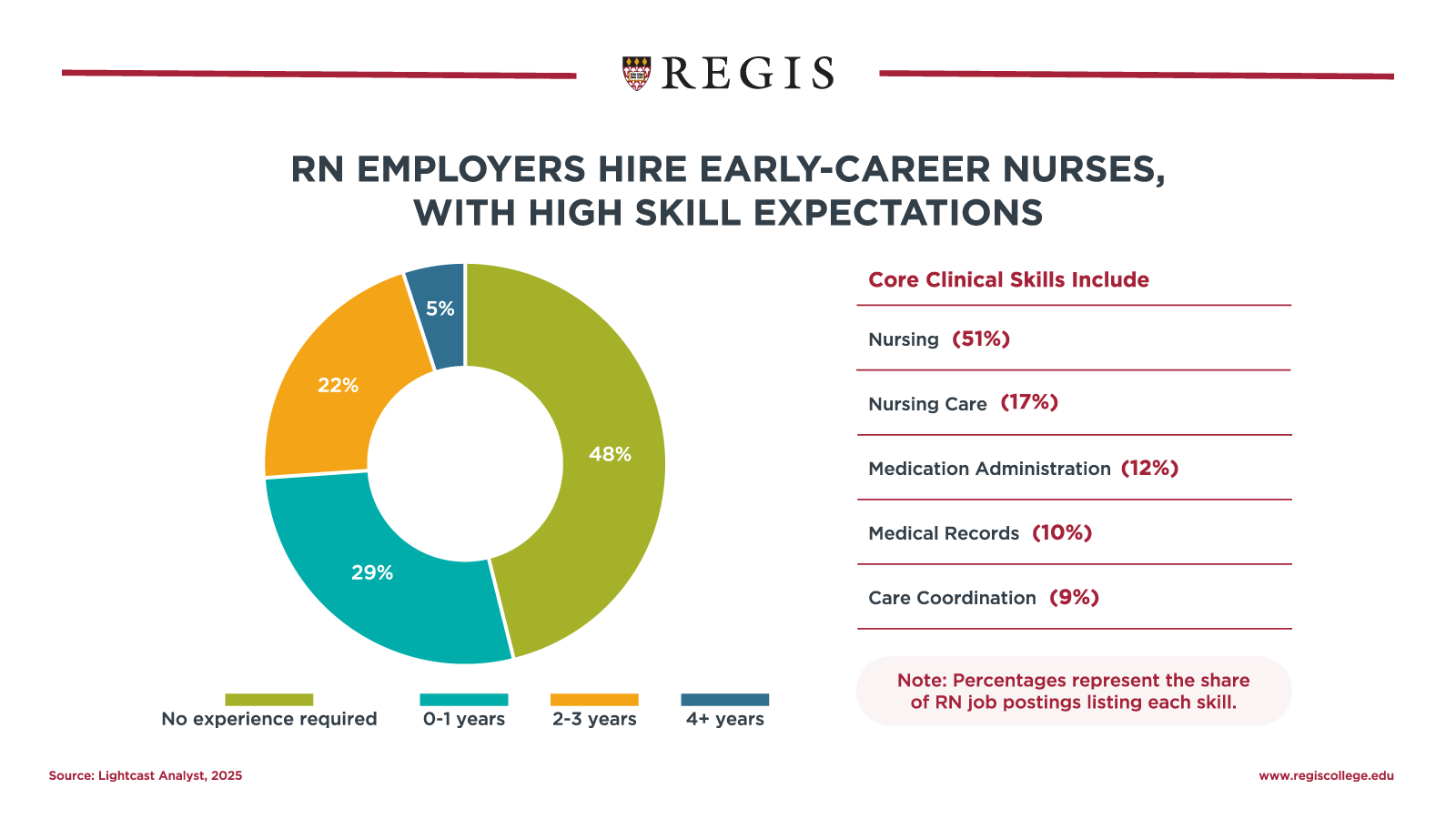
Regardless of format, nursing education is science-heavy and exam-based, and accelerated pathways require sustained focus. By mastering this rigorous curriculum, Regis graduates enter the workforce with the specific clinical skills that modern healthcare employers prioritize most.
The 16-Month ABSN at Regis: At a Glance
The ABSN 16-month track at Regis leads to:
- A 60-credit Bachelor of Science in Nursing
- Eligibility to sit for the NCLEX-RN
- Preparation for entry-level registered nursing roles
The format is designed to move at a highly-accelerated pace, which means students should expect less schedule flexibility lower and a greater need for time management skills.
Wondering Which Path Fits Your Goals?
Compare our accelerated nursing programs at a glance.

What a Typical Schedule Looks Like in the 16-Month ABSN
The 16-month ABSN is a full-time and delivered entirely in person at Regis College’s Weston, MA campus, with clinical placements throughout Greater Boston.
Students can expect a weekly schedule that includes:
- Classroom instruction
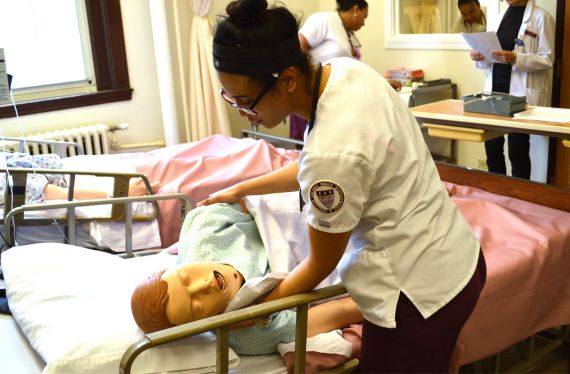
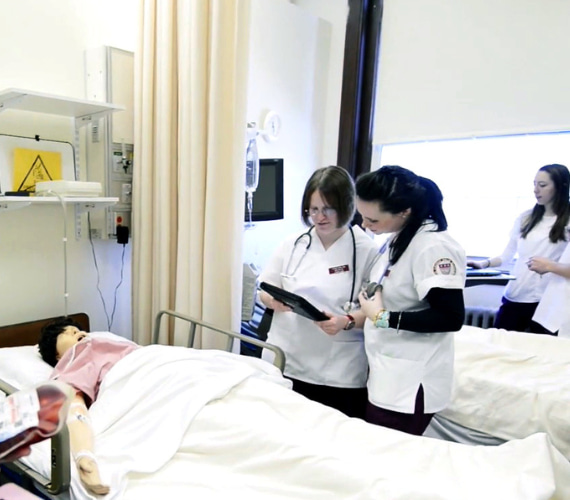
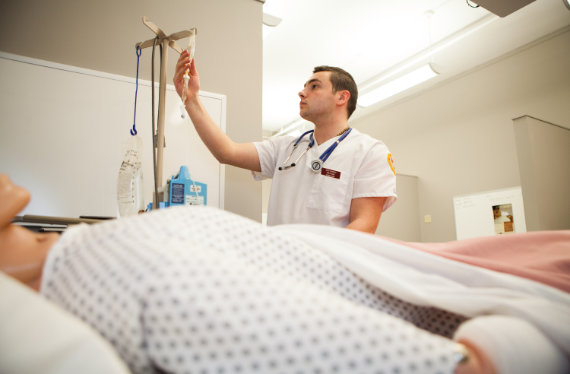
- On-campus simulation labs
- Clinical rotations at partner healthcare facilities
Clinical days often resemble real nursing shifts, with early start times and long hours, and schedules may vary from week to week depending on placement availability. Because clinical sites operate during standard weekday hours, students must be available Monday through Friday.
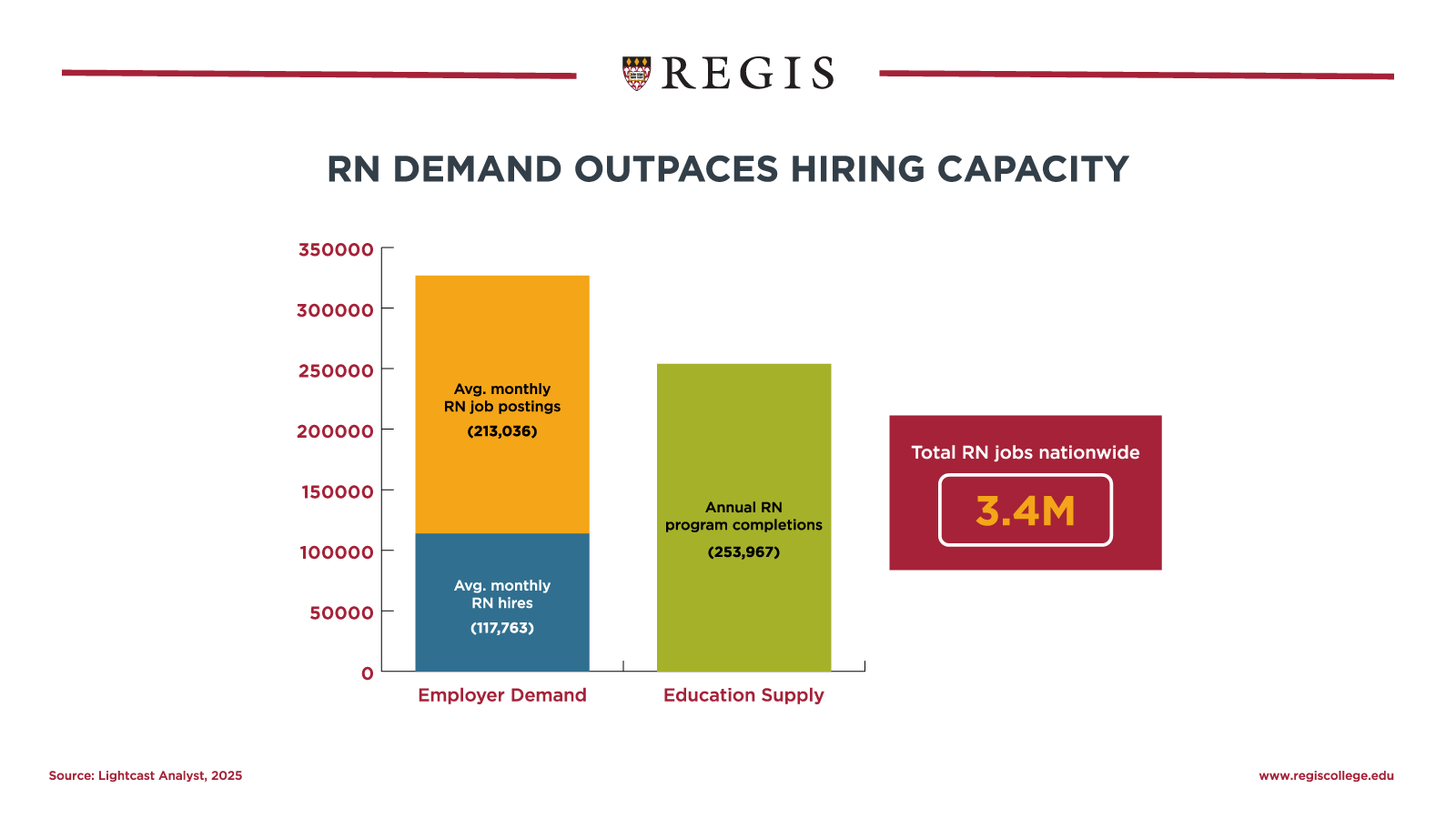
As Higgins notes, for these 16 months, “your life is really wrapped up in school.” The pace leaves little room for outside obligations, and most students treat the program like a full-time job. While the schedule is demanding, the investment of time is met by a job market where the demand for qualified registered nurses significantly exceeds the current supply of new graduates.
How Intensive Is the ABSN Workload?
Accelerated nursing programs compress the same competencies and clinical requirements found in traditional BSN programs into fewer months.
A common academic benchmark is about three hours of total work per credit per week (class time plus studying). For a 60-credit nursing program, that baseline alone represents a significant time commitment.
In practice, ABSN students often exceed those norms due to:
- Skills practice and simulation prep
- Clinical preparation and documentation
- NCLEX-style exams and objective assessments
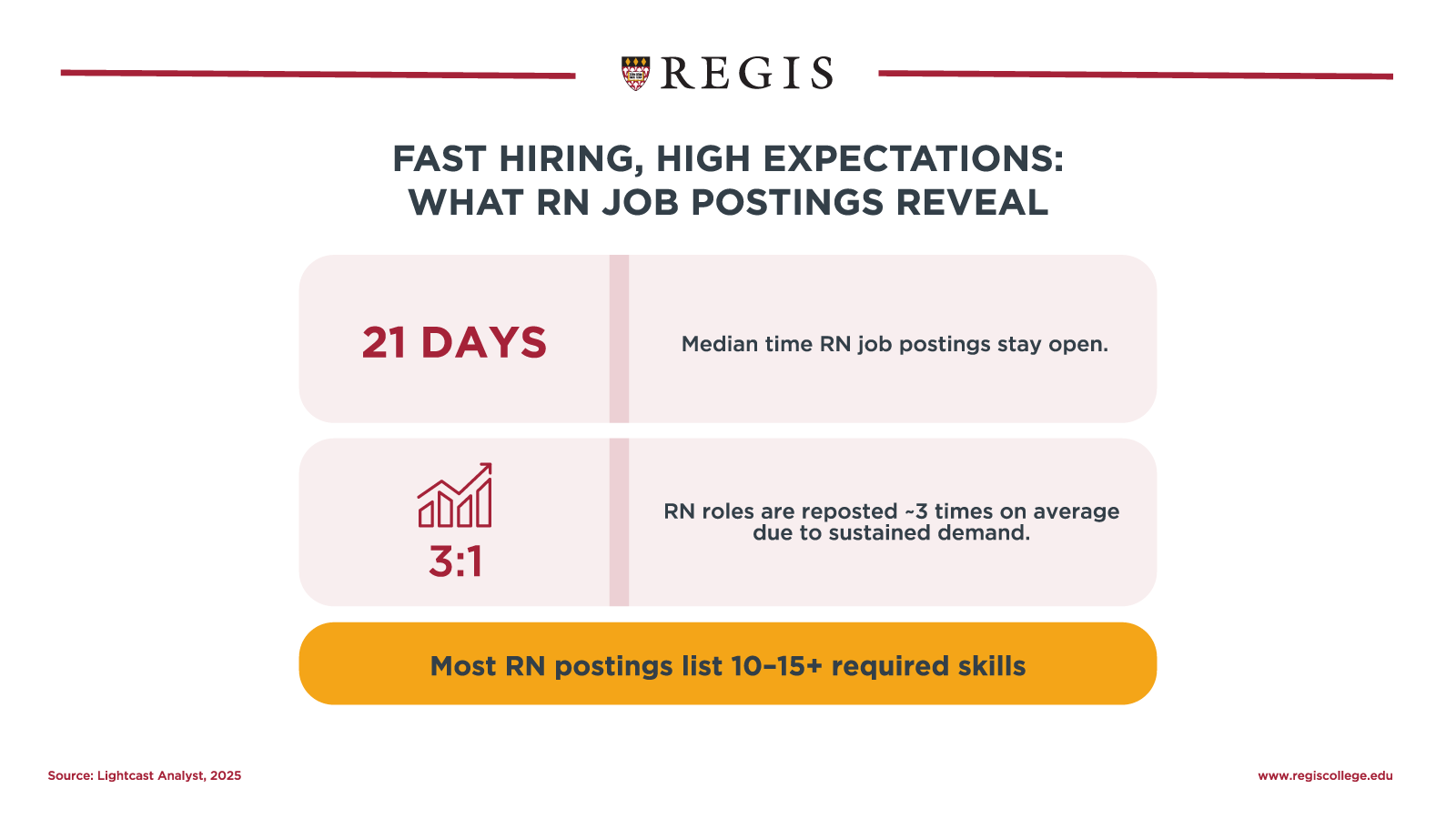
ABSN programs generally demand a full-time commitment comparable to a job, with many students spending 40–60 hours or more per week on coursework, labs, clinical rotations, and study time—a pace that often makes consistent employment difficult and not recommended. However, this intensive preparation directly mirrors the high expectations of a job market where roles are filled rapidly and employers seek candidates with a robust, diverse clinical skillset.
Can You Work While Enrolled in the ABSN at Regis?
Students enrolled in the 16-month program generally cannot work while enrolled and are encouraged not to. The pace, variability of clinical schedules, and daytime requirements make consistent employment extremely difficult.
What Successful ABSN Students Have in Common
Across both tracks, successful ABSN students tend to share:
- Strong time-management and organizational skills
- Realistic expectations about workload and intensity
- Willingness to temporarily prioritize school
- Comfort with exam-based, objective evaluation
- Clear motivation for entering nursing
Higgins notes that accelerated students are often highly focused, mature, and goal-driven—qualities that help them navigate the intensity of nursing education.
Go In Prepared, Not Surprised
ABSN programs are challenging by design. Knowing what to expect—from weekly schedules to workload intensity—helps students plan effectively and succeed once enrolled.
Regis College offers two accelerated pathways to meet students where they are, without compromising preparation for the nursing profession.

Published Date