
For many registered nurses, pursuing a master of science in nursing (MSN) is a natural next step toward career advancement. Yet, of the multiple nurse practitioner (NP) specialties from which to choose, which one is right for you?
Finding the right NP track isn’t about choosing the “best” specialty overall. Instead, it’s about identifying the one that aligns with your interests, values, and professional goals. Julia Martyn, a Professor in the Regis College Young School of Nursing, explains that, “When students start deciding on specialization, they begin to think about what truly interests them—whether it’s the type of patients they want to work with or the kind of impact they want to make.”
Here, we’ll break down the major NP specialties offered, like the ones offered through Regis College’s MSN program, helping you understand the unique scope, setting, and appeal of each so you can find the right path to match your purpose.
Key Takeaways
- Each nurse practitioner (NP) specialty serves distinct patient populations and clinical needs. Choosing the right one starts with understanding your passions and strengths.
- Factors like preferred patient age group, work environment, and desired autonomy level can help determine the best fit.
- Compassion, curiosity, and attention to detail are traits shared by successful nurse practitioners in any specialty.
- Regis College’s MSN program offers six in-demand NP tracks, each designed to prepare students for meaningful, high-impact careers in advanced nursing practice.
What to Consider Before Choosing a Nurse Practitioner Specialty
There are key considerations one should address before making a decision on which NP track is right for them:
1. Your Passion and Interest Areas
What makes you feel most fulfilled? Working with children and families? Helping older adults manage chronic disease? Supporting those struggling with mental health conditions? Identifying what motivates you day to day can point you toward a specialty that will keep you engaged long-term.
2. Your Preferred Patient Population
Different specialties focus on different populations. This, according to Martyn, is one of the key elements in determining which track is likeliest to be right for you. “A lot of our students like the idea of being able to work with various populations across the lifespan,” she says. “They can then kind of figure out if they prefer to work more with pediatrics or geriatric population, and they can always kind of find that niche that really suits them well.”
3. Work Environment Preferences
Some NP roles are fast-paced and hospital-based while others are clinic-centered, school-based, or increasingly remote through telehealth. If you thrive when there is variety or in a team environment, a primary care or family practice role may be ideal. If you prefer more structured, focused care, a specialty clinic or outpatient setting might be a better match.
4. Autonomy and Scope of Practice
Depending on your state and specialty, you may enjoy significant independence depending on the speciality you choose. For instance, nurse practitioners in Massachusetts can practice independently after two years of supervised experience. Consider how much responsibility you want in clinical decision-making and patient management.
5. Long-Term Career Goals
Don’t just consider what you want to do now. Think about what your career goals are long-term. Some NPs choose to pursue leadership, education, or policy work, while others build private practices or community health programs. The right specialty can open the door to your ideal long-term career trajectory.
Ready To Start Your Nursing Journey?
Download our guide to find out which degree is right for you.

Nurse Practitioner Specialties
Each NP specialty offers unique professional opportunities and patient care experiences. Here are the tracks Regis College offers, with an explanation of the type of nurses that tend to thrive in each.
Family Nurse Practitioner (FNP)
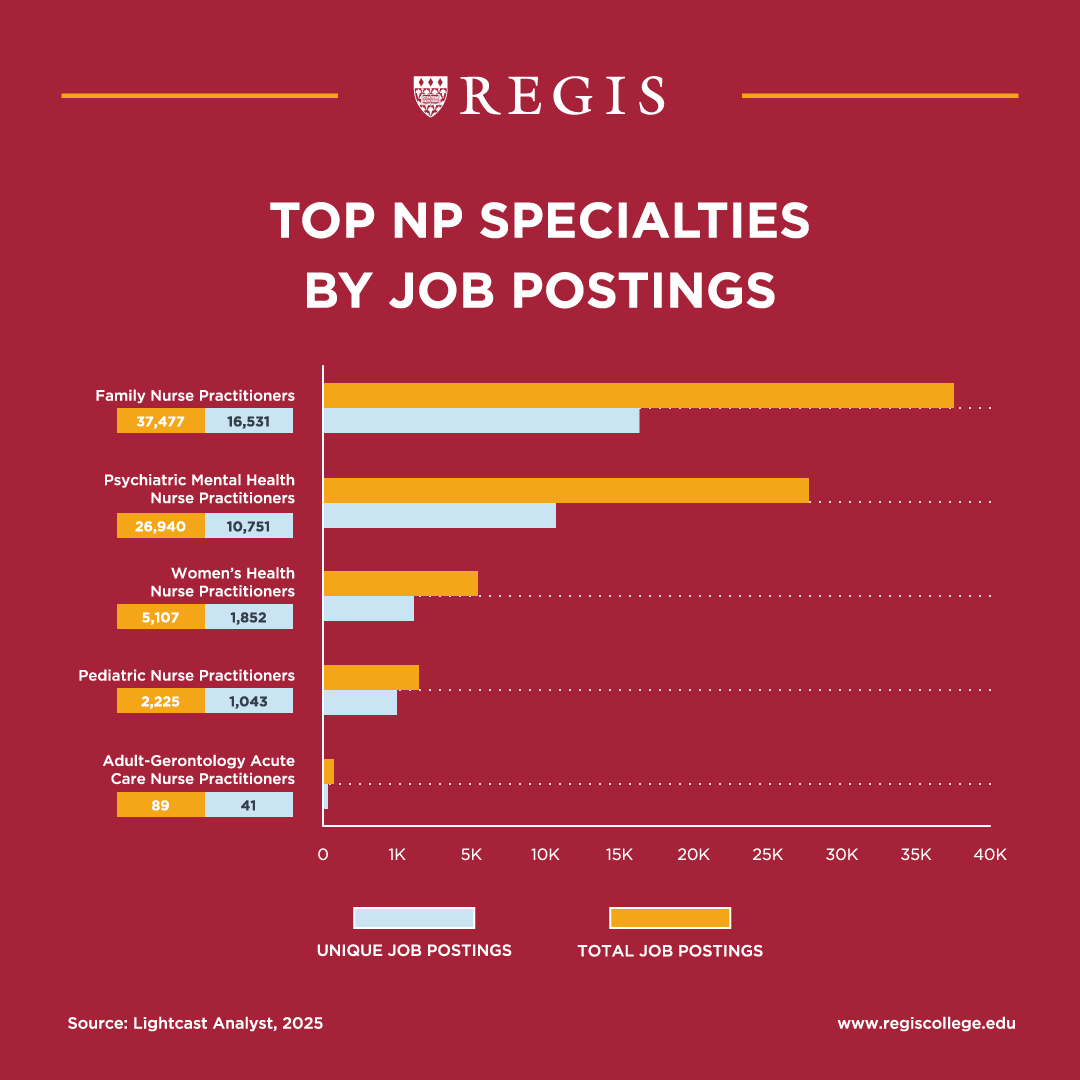
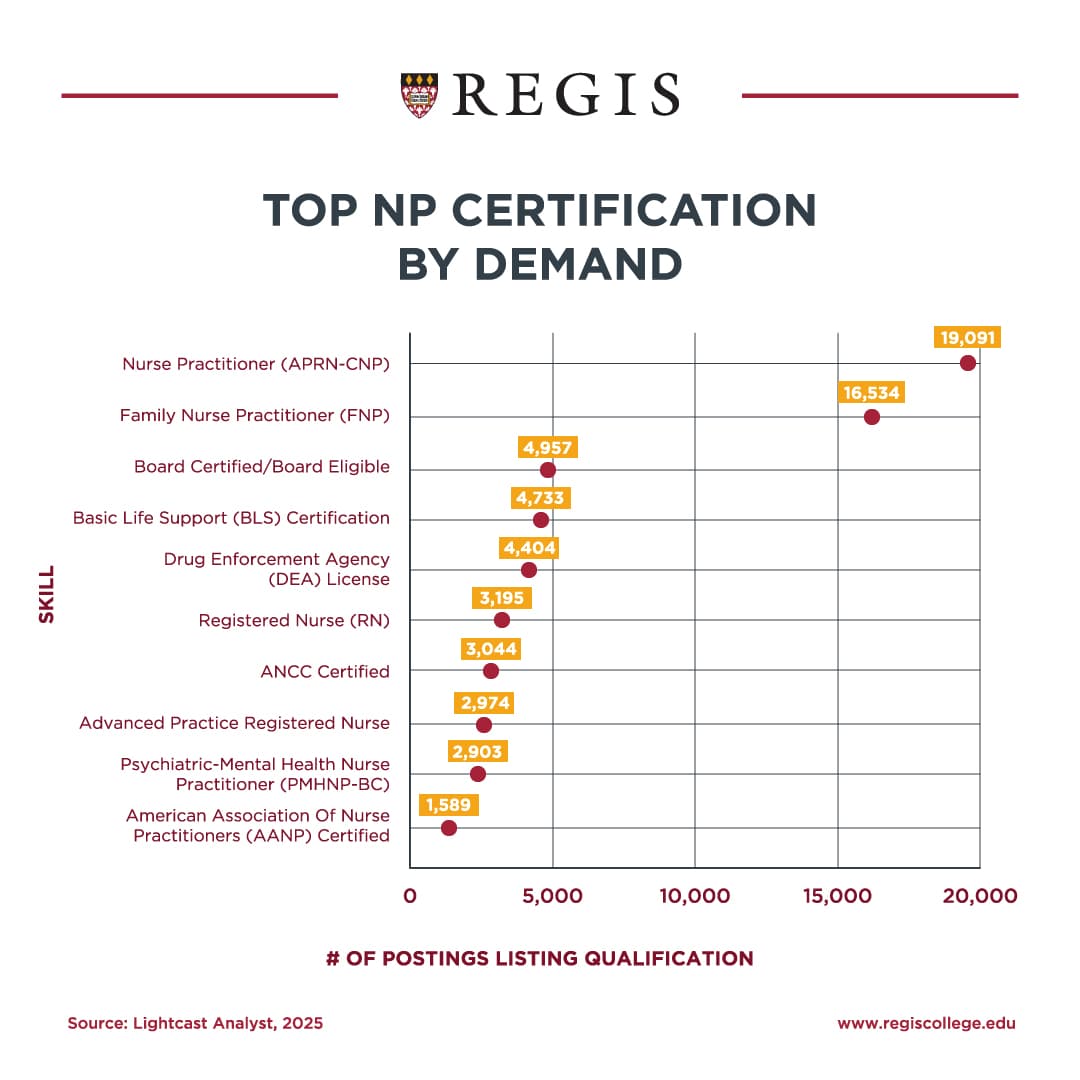
Family Nurse Practitioners provide comprehensive primary care for patients across the lifespan, from children to older adults. They diagnose illnesses, manage chronic conditions, perform preventive screenings, and promote overall wellness.
- Common Settings: FNPs often work in community health centers, private practices, and family medicine clinics. They may also serve in school-based health centers, urgent care, or telehealth environments.
- Who Often Thrives as an FNP: Nurses who enjoy variety and continuity of care often gravitate toward this specialty. Martyn notes that FNPs have “a broad wealth of knowledge,” caring for patients in wellness and illness across all age groups.
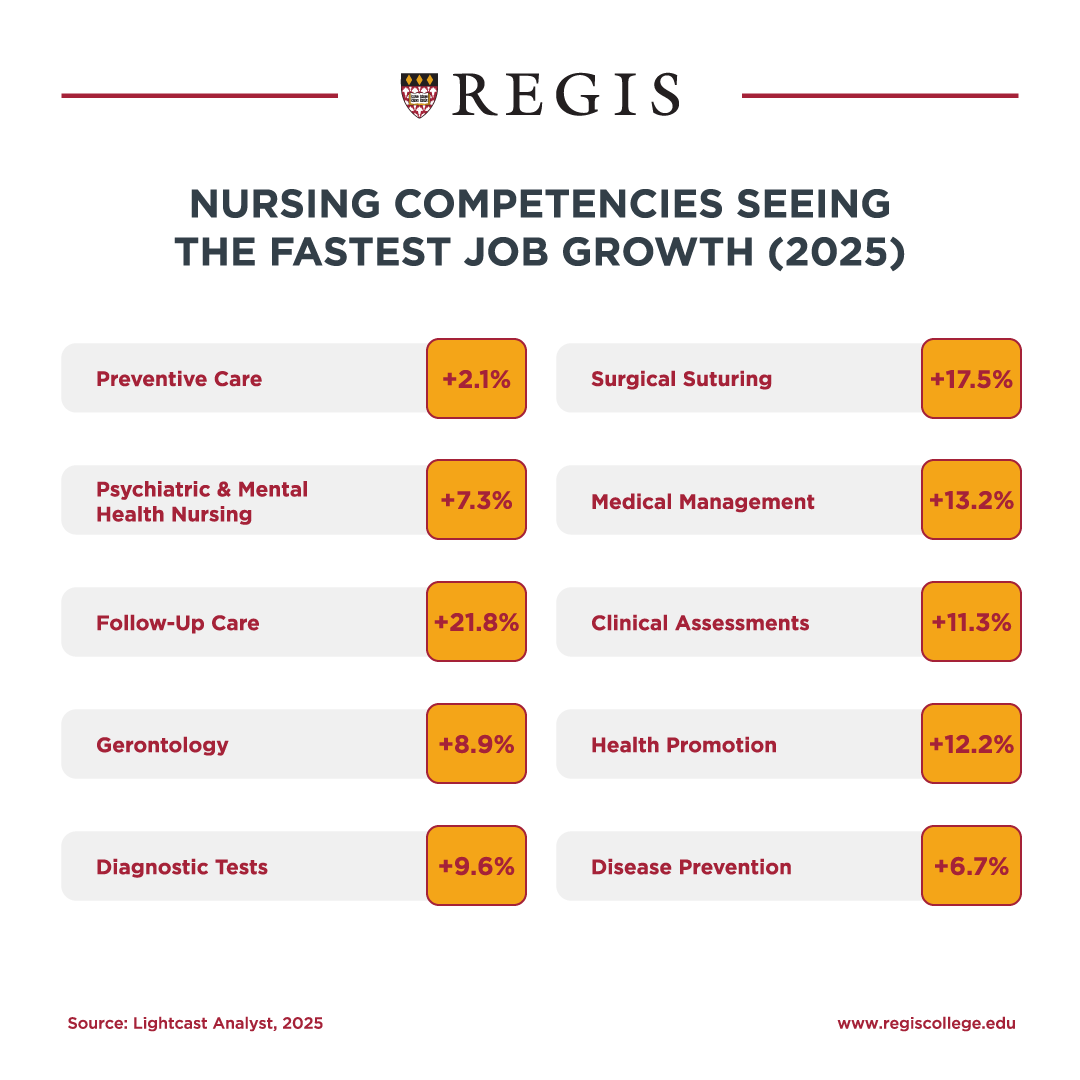
- Career Outlook: The Bureau of Labor Statistics (BLS) projects a 35% growth rate for nurse practitioners between 2024 and 2034—much faster than average. FNPs are among the most in-demand due to their versatility and broad training.
Psychiatric Mental Health Nurse Practitioner (PMHNP)
PMHNPs assess, diagnose, and treat individuals with mental health conditions. They combine medication management and psychotherapy, addressing the full spectrum of behavioral and emotional needs.
- Common Settings: PMHNP’s work in hospitals, outpatient clinics, private practice, schools, and telehealth. They often collaborate with interdisciplinary teams or operate independently, depending on state regulations.
- Who Often Thrives as a PMHNP: Nurses who are curious about human behavior and motivated by helping others through emotional or psychological challenges are most likely to excel in these roles. Many are drawn to the field for personal reasons, such as seeing unmet needs for mental health care in their communities.
- Career Outlook: As mental health awareness rises, demand for PMHNPs continues to outpace supply. Martyn observes that many students choose the psychiatric track because “they see how hard it can be to find providers” and want to make a difference in that space.
Pediatric Nurse Practitioner (PNP)
PNPs provide primary or acute care to infants, children, and adolescents. They focus on wellness, growth, development, and the management of pediatric illnesses and chronic conditions.
- Common Settings: PNPs can be found working at pediatric hospitals, outpatient clinics, schools, and family practices.
- Who Often Thrives as a PNP: Nurses with a strong affinity for working with children and families. The role requires excellent communication skills, patience, and the ability to partner closely with parents and caregivers.
- Career Outlook: PNPs are in demand nationwide, particularly in rural and underserved regions where access to pediatricians is limited. Their preventive and educational role makes them central to long-term community health.
Women’s Health Nurse Practitioner (WHNP)
WHNPs focus on the unique health needs of women throughout their lives, offering care in gynecology, reproductive health, prenatal and postpartum care, and preventive screenings, as well as menopause and perimenopause management.
- Common Settings: Graduates concentrating on WHNP work at OB/GYN practices, reproductive health centers, primary care clinics, and community organizations.
- Who Often Thrives as a WHNP: Those nurses passionate about reproductive health, patient education, and advocacy will likely excel in these roles. It is ideal for those who value long-term relationships and holistic, empowerment-focused care.
- Career Outlook: The ongoing demand for women’s health specialists, particularly in primary and reproductive care, keeps this role in high demand. According to the AANP, WHNPs play a key role in addressing gaps in women’s health access across the country.
Adult-Gerontology Nurse Practitioner - Primary Care (AGNP) and Adult-Gerontology Acute Care Nurse Practitioner (AGACNP)
AGNPs specialize in the care of adults and the elderly, focusing on both acute and primary care. They manage chronic diseases, perform health assessments, and provide preventive care tailored to aging populations.
- Common Settings: AGNPs work in hospitals, long-term care facilities, specialty clinics, and primary care practices.
- Who Often Thrives as an AGNP: This is an ideal track for nurses who enjoy longitudinal relationships with adult patients and have a strong interest in chronic disease management or elder care.
- Career Outlook: With the U.S. population of adults over 65 expected to nearly double by 2050, AGNPs are vital to the future of healthcare.
What Regis College Offers
Regis College provides a deeply supportive learning environment designed to help future nurse practitioners succeed.
Regis College MSN students benefit from:
- Small cohorts and accessible faculty that foster personalized mentorship and open communication. “Having smaller cohort sizes helps a lot because we are able to really get to know our students,” says Martyn. “When we have smaller cohorts, it's a lot easier for us to identify what might be some of the areas where students tend to struggle, so we can tailor to those topics a little bit more.”
- A hybrid format that combines on-campus courses, or 100% online learning.
- High board pass rates that are consistently above national averages across tracks.
- Dedicated clinical placement support that leans on partnerships with hospitals, clinics, and community sites, often staffed by Regis alumni.
These elements, Martyn says, help create the close-knit community and individualized guidance that set Regis apart from larger institutions.
Question to Ask Before Selecting An NP Track
Choosing the right NP specialty starts with self-reflection. Consider:
- When do you feel most connected to your patients?
Think back on moments in your nursing career that felt most meaningful. Were you supporting a family through a health crisis, educating patients about wellness, or helping someone through a difficult emotional period?
- What kind of problems do you most enjoy solving?
Are you energized by diagnosing complex conditions, managing chronic diseases, guiding behavioral change, or empowering preventive care?
- How do you want to spend your time each day?
Some specialties involve fast-paced environments with high patient turnover; others offer slower, relationship-based care. Imagine your ideal workday and see which track aligns.
- Where do you want to make my impact?
Do you see yourself improving health access in underserved communities, leading in hospital systems, shaping policy, or mentoring the next generation of nurses?
- What legacy do you want to leave?
Beyond titles or certifications, consider how you hope your work will influence patients, families, and the profession as a whole.
By reflecting on these questions, you’ll not only clarify which path fits your strengths but also enter your MSN program with clear direction and confidence. “Every student brings something unique to their program,” says Martyn. “The most important thing is that they find a specialty that matches their passion and their purpose.”
Each Path Leads to Impact
No matter which nurse practitioner specialty you choose, your work will change lives. From supporting a new mother through postpartum recovery to helping an older adult manage a chronic condition, each NP role provides meaningful ways to serve and lead.
At Regis College, you’ll be able to explore whichever path is right for you, learning from experienced professionals and gaining real-world experience that will allow you to immediately move from graduation to impacting lives.
Now is the time to start your journey towards becoming an NP.

Published Date