
Speech-language pathology (SLP) is a field where investment in an advanced degree can pay off quickly.
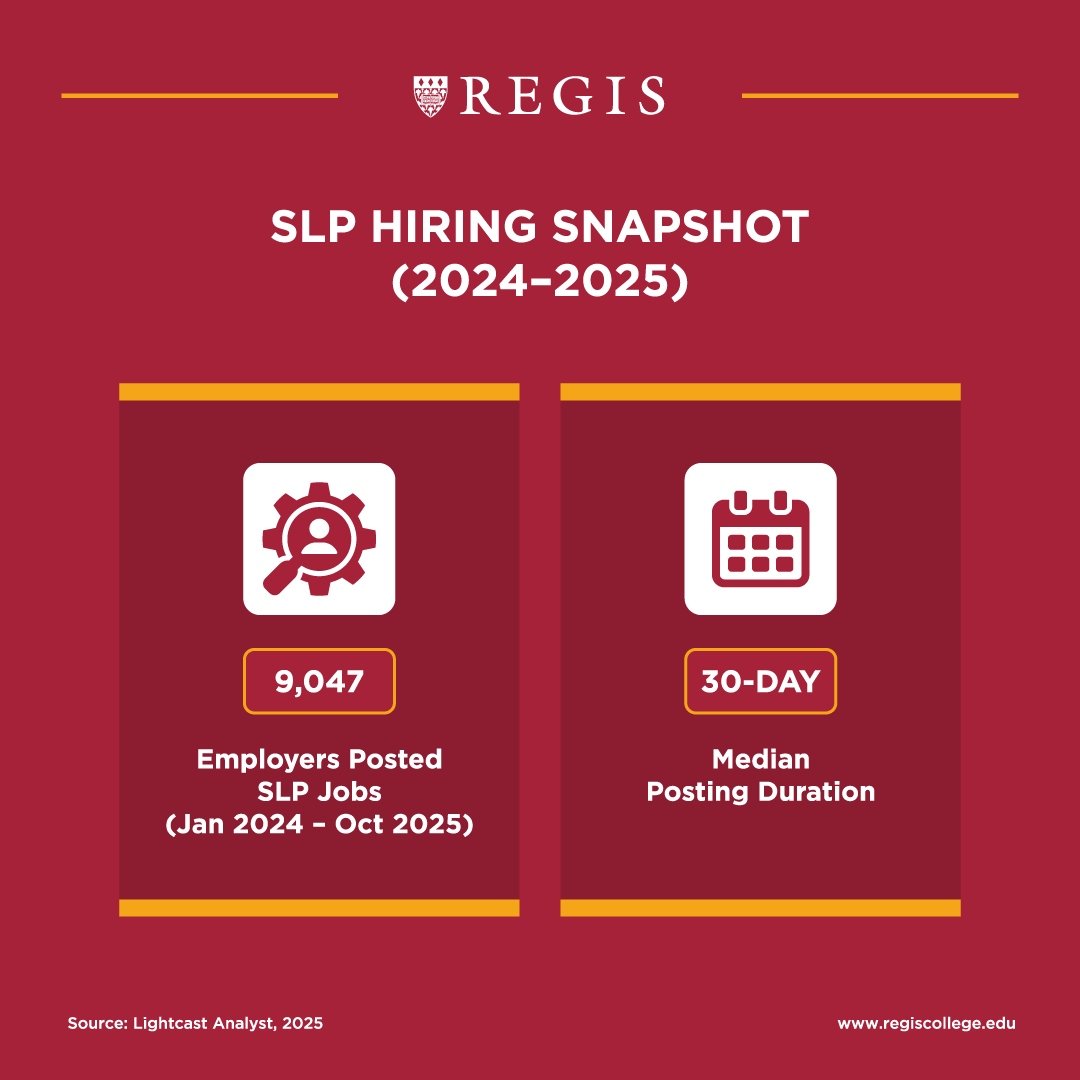
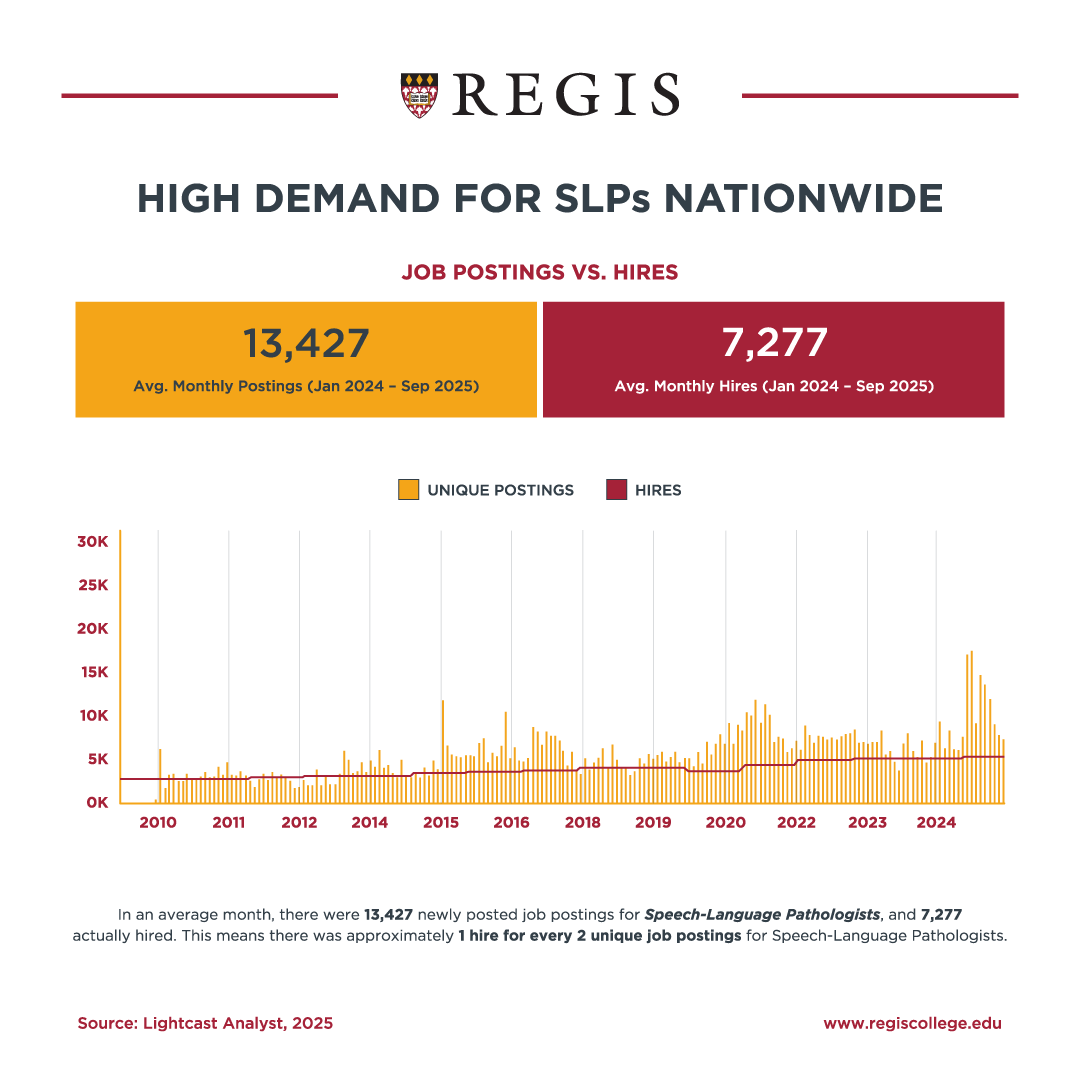
SLPs are in high demand nationwide, earn competitive salaries, and have the flexibility to work in school, clinic, medical, and private practice settings. But before applying to any program, a clear understanding of what the degree will actually cost, and how students commonly pay for it, is essential.
Here, we’ll break down the full cost of Regis College’s Master of Science in Speech-Language Pathology program, while outlining the scholarships, financial aid opportunities, and practical strategies that help make this career-accelerating degree more affordable.
Key Takeaways
- Regis’ MS in SLP is a 56-credit program typically completed in about two years (five semesters), with tuition currently set at $1,295 per credit (about $72,520 total), plus standard fees and insurance if not waived.
- The program is intentionally commuter-friendly, with schedules and clinical placements designed to minimize unnecessary time—and cost—spent on campus while supporting local, community-based learning.
- Most students use a mix of funding sources to pay for the degree, including federal Direct and Grad PLUS loans, Regis-connected opportunities like MetroWest Health Foundation scholarships, outside awards (ASHA, ASHFoundation, NSSLHA, state associations), and interest-free monthly payment plans.
- Speech-language pathology remains a high-demand, stable field, and Regis’ strong outcomes—high Praxis pass rates, on-time completion, and 100% employment within a year of graduation—help make the overall investment more sustainable long term.
How Much Does Regis’s MS in Speech-Language Pathology Cost?
The pace of Regis’ MS in SLP program shapes how much you’ll pay at different points along the way. Here’s a likely breakdown:
- Cost per credit: $1,295
- Total credits: 56
- Estimated total tuition: $72,520 (tuition only; does not include fees or insurance)
Students should also factor in the following typical fees:
- Technology Service and Support Fee: $580
- Graduation Fee: $300
- Student Health Insurance: Required for students enrolled in 6.75+ credits, unless waived with proof of comparable coverage
Example cost breakdown by semester (56-credit plan):
Year One
- Fall: 14 credits; approximately $18,130
- Spring: 14 credits; approximately $18,130
- Summer: 2 credits; approximately $2,590
Year Two
- Fall: 12 credits; approximately $15,540
- Spring: 14 credits; approximately $18,130
Note: This is a sample schedule for full-time students and may vary based on pace, elective or prerequisite course loads, or program changes.
How to Pay: Financial Aid Options at Regis
Paying for graduate school rarely comes from a single source. Most students use a mix of federal aid, scholarships, and payment plans.
1. Federal Financial Aid (FAFSA Required)
Regis participates in all federal student aid programs for graduate students. By filing the FAFSA (Free Application for Federal Student Aid), you may qualify for:
- Direct Unsubsidized Loans (annual limit $20,500)
- Graduate PLUS Loans, which can cover remaining tuition, fees, and living expenses up to the cost of attendance
- Federal Work-Study, depending on financial need and position availability
2. Regis-Specific Aid
- Monthly Payment Plans (Nelnet): Regis offers interest-free monthly payment plans that allow students to split tuition and fees into smaller installments across the semester.
- Strategic Partnership Benefit: Many working students in the SLP Master's program are eligible for the Regis Strategic Partnership Program, which provides a 20% tuition for employees of partner organizations. This aid directly reduces cost of attendance and is ideal for students who pursue the degree part-time.
3. Graduate Assistantships or On-Campus Work
While Regis’s SLP program is full and demanding, some students find part-time work through:
- Campus offices
- Graduate assistant positions (availability varies)
- Federal work-study placements
These roles can help offset living expenses.
External Scholarships and Grants
Thousands of dollars in outside funding is available for SLP students. Some of the most widely used sources include:
ASHFoundation Graduate Scholarships
The American Speech-Language-Hearing Foundation offers competitive $5,000 graduate scholarships each year.
NSSLHA Scholarships
Through the National Student Speech Language Hearing Association, the NSSLHA Scholarship Fund provides several $5,000 scholarships each year to active NSSLHA members who are about to begin graduate study in communication sciences and disorders.
Massachusetts Speech-Language-Hearing Association (MSHA) Scholarships
MSHA offers an annual Graduate Student Scholarship, typically awarded each fall.
State and regional funding
Massachusetts residents may qualify for state-based aid, grants, or loan programs. Explore options at Mass.edu.
Employer tuition reimbursement
This is especially relevant for:
- Paraeducators
- ABA therapists
- Early childhood specialists
- Speech-language assistants (SLP-As)
Many school districts and healthcare employers offer tuition benefits ranging from $1,000–$5,250 per year, depending on their HR policies.
Federal Loan Forgiveness Programs
- Public Service Loan Forgiveness (PSLF): SLPs working full-time in qualifying nonprofit or public-sector settings may qualify to have their remaining Direct Loan balance forgiven after 120 qualifying monthly payments.
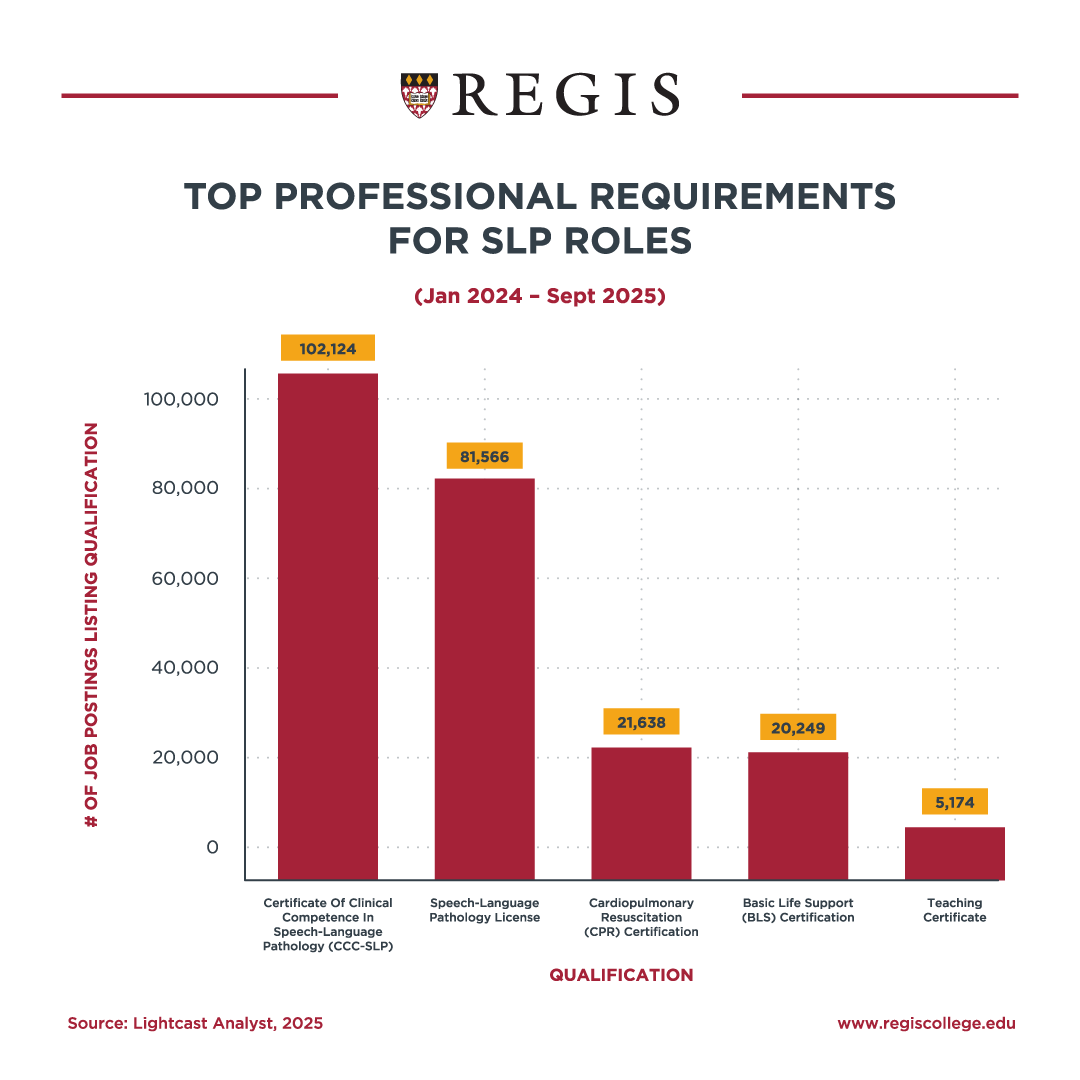
- Teacher Loan Forgiveness: SLPs who work in school-based roles that meet the program’s definition of a ‘teacher’ at qualifying low-income schools or districts may be eligible for Teacher Loan Forgiveness after five consecutive years of service. Exact benefit amounts and eligibility depend on your role and loan type.
Regis SLP Program: What You’re Paying For
Regis’ MS in Speech-Language Pathology is designed for students seeking a highly supportive, flexible, outcomes-driven pathway into the profession.
Several of the program’s most prominent features directly affect cost and value, such as:
A focused, 21-month curriculum
The full-time program takes approximately 21 months to complete, beginning in September and ending in the following May. Allan Smith, PhD, CCC-SLP, MS in SLP Program Director at Regis College, explains that students start in September, move through their coursework quickly, and are ready to enter their clinical fellowships in under two years. This timeline is shorter than many programs that now run 2.5 years or longer, allowing students to enter the workforce sooner.
A supportive, student-centered format
Because Regis does not have an undergraduate SLP program, faculty attention is focused entirely on graduate students. Small cohorts, accessible faculty, and personalized placement support help students stay on track academically, clinically, and financially.
Friendly schedules for local students
Most Regis students commute from across Eastern Massachusetts and Smith notes that Regis intentionally designs course and clinic schedules to support working adults. This flexibility can significantly reduce travel costs and make it easier to maintain part-time work.
No on-campus clinic requirement
Unlike many SLP programs, Regis does not require students to complete hours in an on-campus clinic. Instead, all clinical hours take place in community agencies. Smith explains that this approach helps limit student time on campus and reduces nonproductive hours that could otherwise add to transportation or work-schedule challenges.
Extensive community-based placements
Students complete approximately 400 clinical hours, beginning with an on-campus internship and moving into school, hospital, private practice, or rehabilitation placements. Regis prioritizes matching students with placements close to home, which helps reduce transportation costs.
Is It Worth It? The ROI of a Regis SLP Degree
Graduate school is a major investment, but Regis’ MS in SLP program offers a strong return on investment based on:
1. Exceptional Job Outcomes
- 100% employment within one year of graduation (three-year average)
- 94% average Praxis pass rate
- 98% on-time program completion rate
These outcomes indicate strong advising, supportive faculty, and well-structured clinical experiences.
2. High National Demand for SLPs
According to the U.S. Bureau of Labor Statistics:
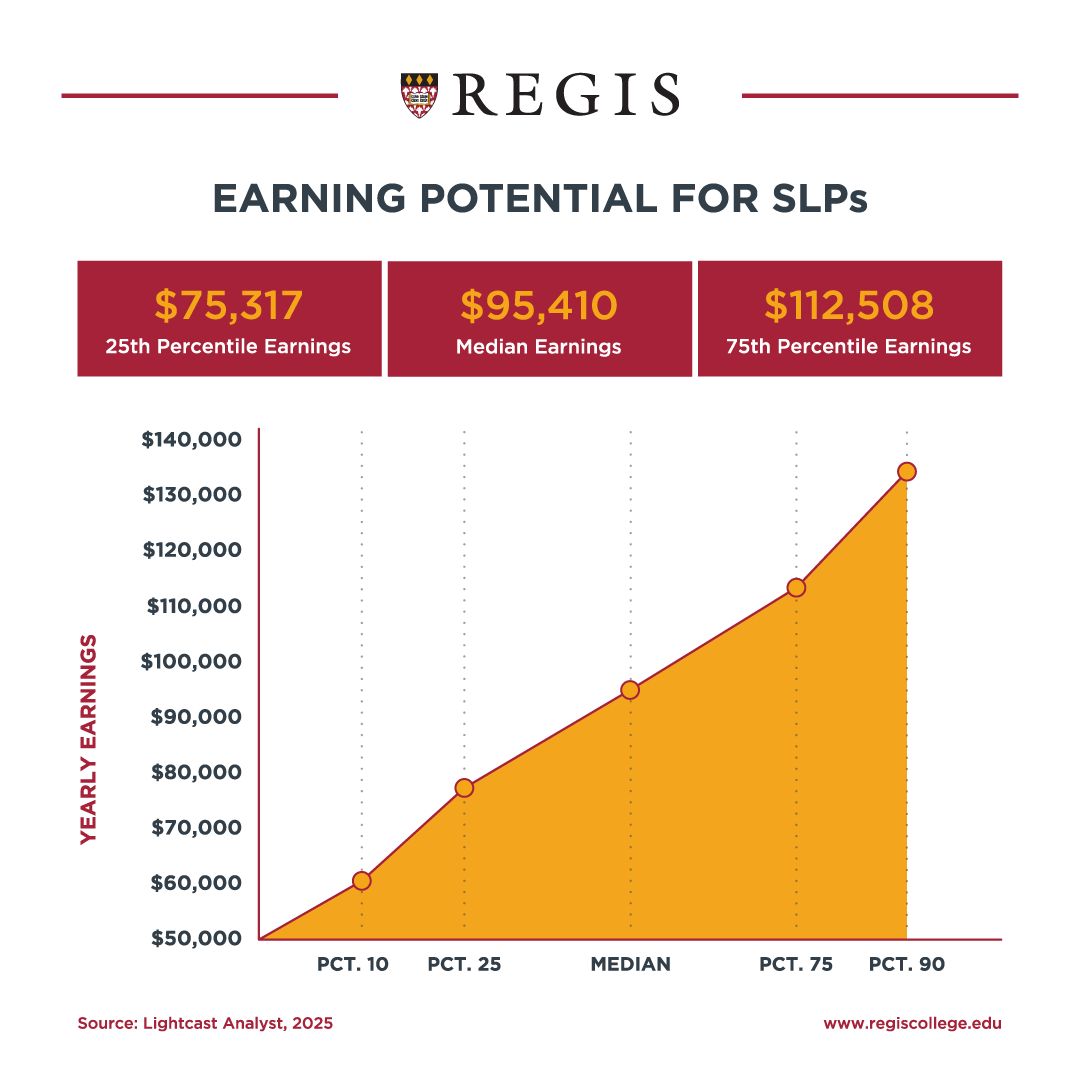
- Median pay (2024): $95,410
- Projected job growth (2024–2034): +15% (much faster than average)
- 13,300 annual job openings
Strong job security makes repayment of loans faster and more predictable.
3. Long-Term Job Security in a Growing Field
Beyond today’s job numbers, national organizations point to several reasons SLPs will stay in demand:
- An aging population experiencing more stroke- and dementia-related communication and swallowing problems.
- Better survival rates for premature infants and people with brain injuries.
- Earlier identification of speech and language disorders in children.
Agencies like the U.S. Bureau of Labor Statistics and ASHA specifically highlight these trends as key drivers of future need for speech-language pathologists.
Tips for Making Grad School More Affordable
Here are some practical ways to keep costs manageable that fit how Regis structures the MS in SLP program and line up with common graduate-financing best practices:
1. Choose (and Request) Placements Close to Home
Once you start off-campus clinical placements, you’ll typically be in the field about three days a week. To help with that, Regis intentionally tries to place students near where they live, not just near campus.
When you’re talking with the clinical team, it’s worth sharing your home location and transportation situation so they can keep commuting time and related expenses as reasonable as possible.
2. Plan Your Work Hours Around Clinical Load
In the early part of the program, you may have more flexibility to work part-time. Once you begin off-campus placements, though, those three placement days each week can make a traditional work schedule tougher to maintain.
Building a semester-by-semester budget that anticipates reduced work hours during heavier clinic terms can help you avoid surprises.
3. Use Monthly Payment Plans to Smooth Cash Flow
Regis partners with Nelnet/MyCollegePaymentPlan to offer interest-free monthly payment plans that let you spread tuition and fees over the semester instead of paying in one lump sum. This can reduce how much you need to borrow in higher-interest private loans and make it easier to manage expenses alongside part-time work.
4. Combine Scholarships, Federal Aid, and Employer Support
Most graduate students fund their degree with a mix of:
- Federal Direct Unsubsidized and Grad PLUS Loans (via the FAFSA)
- Regis-connected opportunities, such as MetroWest Health Foundation scholarships for eligible students
- Outside scholarships from organizations like ASHA, ASHFoundation, NSSLHA, and state associations
- Employer tuition assistance if you’re working in a school, clinic, or related setting that offers education benefits
Applying early, and reapplying each year, can help you layer multiple sources of support instead of relying on one large loan.
5. Build a Realistic Cost-of-Living Plan
Finally, it helps to zoom out beyond tuition:
- Estimate housing, food, transportation, and insurance costs for each year.
- Consider living with family or roommates to keep housing more affordable.
- Use a simple spreadsheet or budgeting app to map out income (work, loans, aid) against monthly expenses.
Putting the numbers in one place can make the overall investment feel more concrete and less overwhelming—and help you see how a 21-month program like Regis’ fits into your broader financial life.
MS in Speech-Language Pathology at Regis College Worth the Investment
A master’s degree in speech-language pathology is a meaningful investment in your education, your earning potential, and the lives you’ll impact throughout your career.
Regis makes that investment more accessible by keeping the program streamlined, supportive, and focused on helping students move into the field with confidence. With a 21-month timeline, flexible scheduling designed for commuters and working adults, and a tightly-knit faculty who know their students well, the program is built to help you succeed academically and clinically without adding unnecessary time or cost.
If you’re ready to take the next step in your career, connect with our team for more information on how to make your Master’s in SLP more affordable.



Published Date