
Choosing to pursue a master’s in speech-language pathology is no small decision. It requires time, energy, and a deep commitment to helping others communicate. For many prospective students—often career changers with backgrounds in education, psychology, or healthcare—the final question before applying is clear: Will this degree pay off?
The short answer: yes—the speech-language pathology career outlook is strong.
The longer answer—one explored here—explains why Regis College graduates of the MS in Speech-Language Pathology program are set up to thrive in today’s job market, what employers in the field truly value, and how Regis’ uniquely personal, practice-driven approach prepares students for success from day one.
Key Takeaways
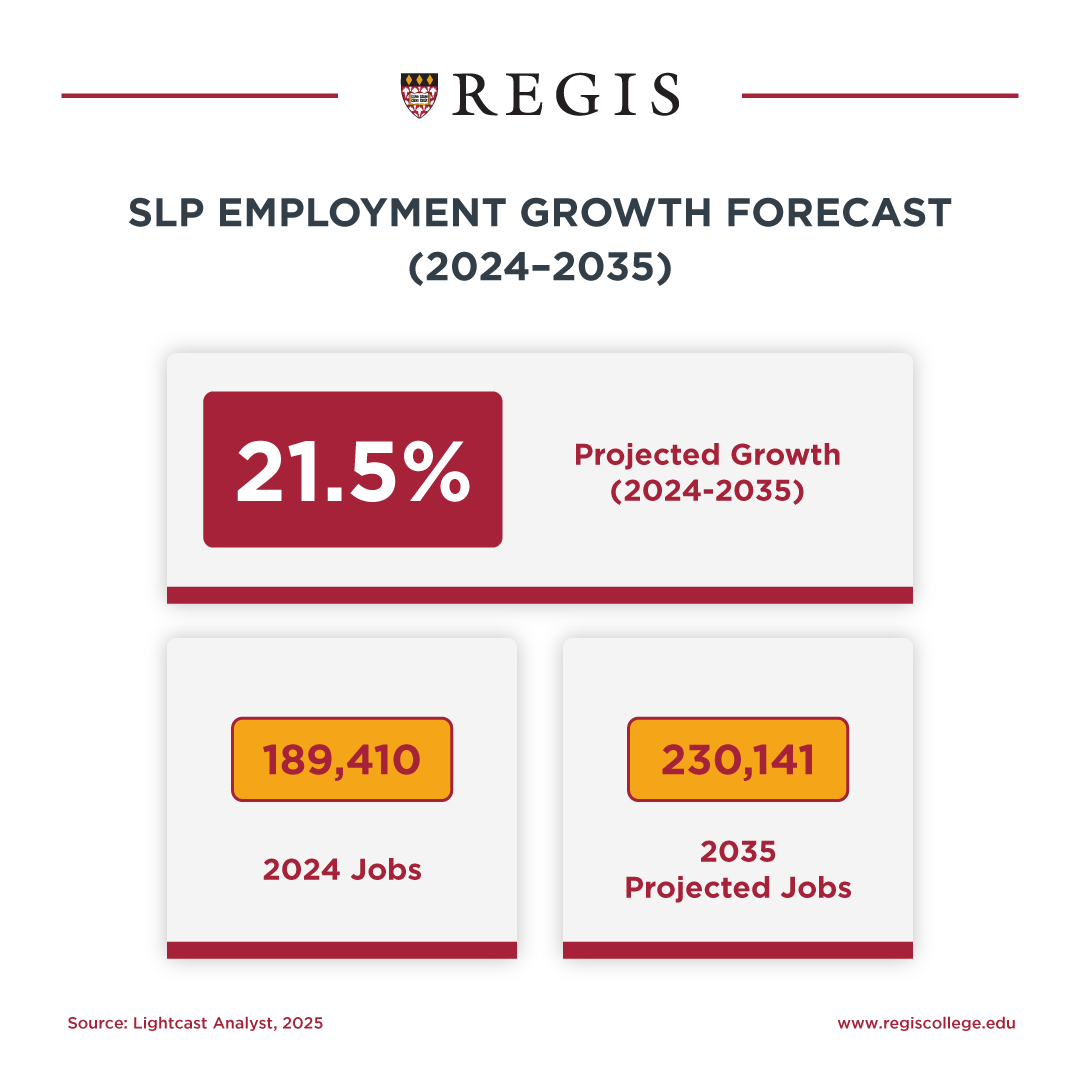
- The speech-language pathology career outlook remains highly favorable, with 15% projected growth from 2024–2034, driven by aging populations, early intervention programs, and expanded public awareness.
- Regis SLP graduates pursue rewarding roles in schools, private practices, hospitals, and rehabilitation centers, with opportunities to specialize or advance into leadership and teaching.
- Hiring managers value empathy, adaptability, collaboration, and cultural sensitivity as much as technical knowledge—traits Regis emphasizes throughout its program.
- Regis’ off-campus clinical placements and faculty mentorship ensure graduates are confident and job-ready, reflected in the program’s 100% employment rate.
- Small cohorts, flexible scheduling, and individualized attention create a close-knit community that helps students thrive personally and professionally.
What’s the Job Outlook for SLPs in 2025 and Beyond?
According to the U.S. Bureau of Labor Statistics, employment for speech-language pathologists is projected to grow 15% from 2024–2034, which is much faster than average. BLS also projects about 13,300 openings per year over the decade. The median salary for SLPs (2024) is $95,410.
The robust outlook for the profession is being driven by a number of factors:
- An aging population, which increases the demand for services addressing stroke, dementia, and neurological conditions.
- Early intervention initiatives, emphasizing speech and language development in children as early as preschool.
- Increased public awareness of communication disorders and expanded access through insurance and educational mandates.
These trends point to a profession with enduring relevance and security. Each new generation brings not only more opportunities, but also more specialized paths ranging from pediatric fluency work to geriatric rehabilitation and augmentative communication technology.
And because SLPs are licensed healthcare professionals, the credentialing process itself adds another layer of job stability. Employers rely on certified, licensed practitioners who meet rigorous clinical and ethical standards, ensuring steady demand for well-prepared graduates.
Where Can a Career in SLP Take You? Exploring Long-Term Pathways
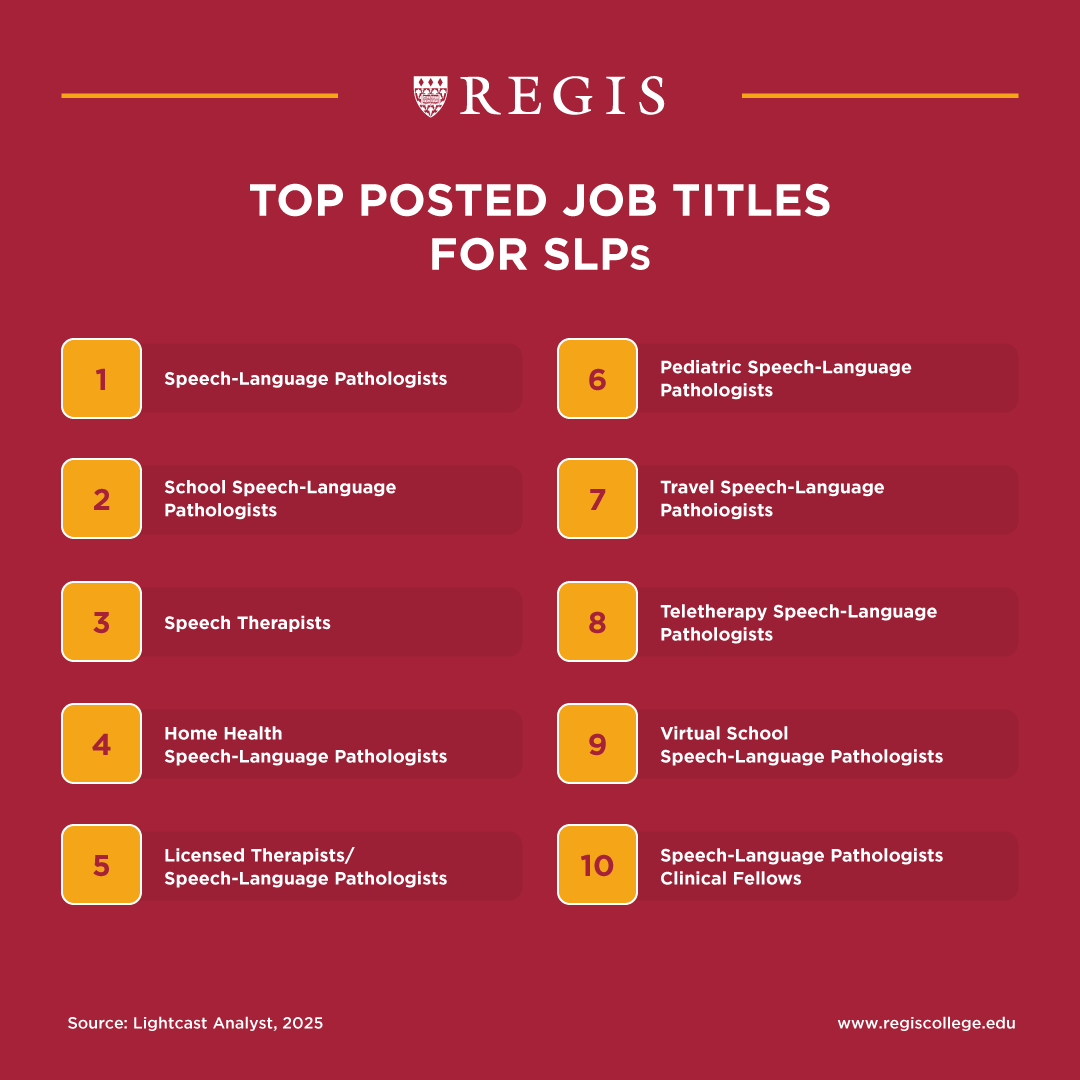
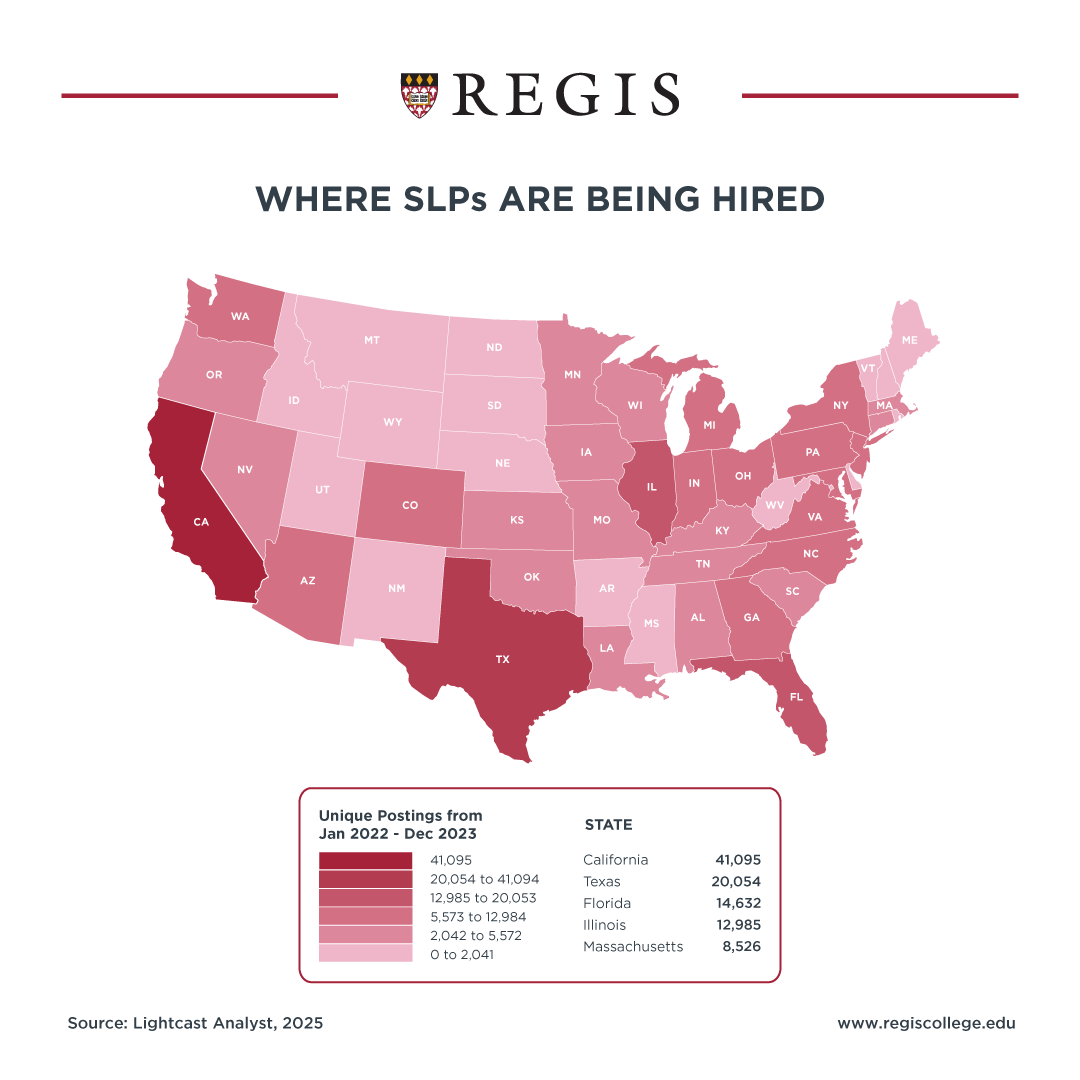
An MS in speech-language pathology opens doors across a spectrum of professional environments. Graduates, such as those who emerge from the Regis SLP program, enter a field that’s both diverse and flexible, with opportunities to evolve throughout a career.
Common Employment Settings
- Public and private school systems
- Early intervention programs
- Hospitals and rehabilitation centers
- Private practices and clinics
- Skilled nursing facilities and long-term care
Allan Smith, PhD, CCC-SLP, Program Director for Regis College’s MS in Speech-Language Pathology, notes that the vast majority of graduates pursue these traditional routes. “Most of our students go to schools or private practices,” he explains, “and a few have gone to hospitals.” For them, this is not just a job but a calling, one that immediately puts their clinical and interpersonal training to work.
Paths for Growth and Specialization
As SLPs gain experience, many pivot toward specialization or leadership roles. Some pursue advanced certification in:
- Augmentative and Alternative Communication (AAC)
- Voice and resonance disorders
- Pediatric dysphagia (feeding and swallowing)
- Cultural and linguistic diversity (bilingual SLP practice)
Others transition into clinical supervision, university teaching, or independent consulting. For those drawn to management or program development, leadership roles such as lead therapist or clinic director offer opportunities to mentor younger clinicians and shape patient-care models.
Smith emphasizes that this adaptability is one of the profession’s greatest assets. Many graduates start in schools, drawn to predictable hours and meaningful relationships with children. Later, they may move into healthcare or private practice. Graduates can begin in one setting (often schools) and later pivot to healthcare or private practice as their interests evolve.
That flexibility, he adds, reflects the Regis approach: a program that gives students exposure to varied populations and contexts so they can choose the environment where they’ll thrive.
What Employers Are Really Looking For in New SLP Graduates
Every employer—from school districts to hospitals—seeks clinical competence. But what truly distinguishes an outstanding new SLP, according to Smith, are the human qualities.
“It’s more important to be good with people,” Smith explains. “Understanding, patience, and having a broad skill set matter as much as organization.”
That insight aligns with what hiring managers consistently report: technical proficiency gets you in the door, but empathy, communication, and adaptability help you succeed once you’re there.
Core Traits Employers Value Most
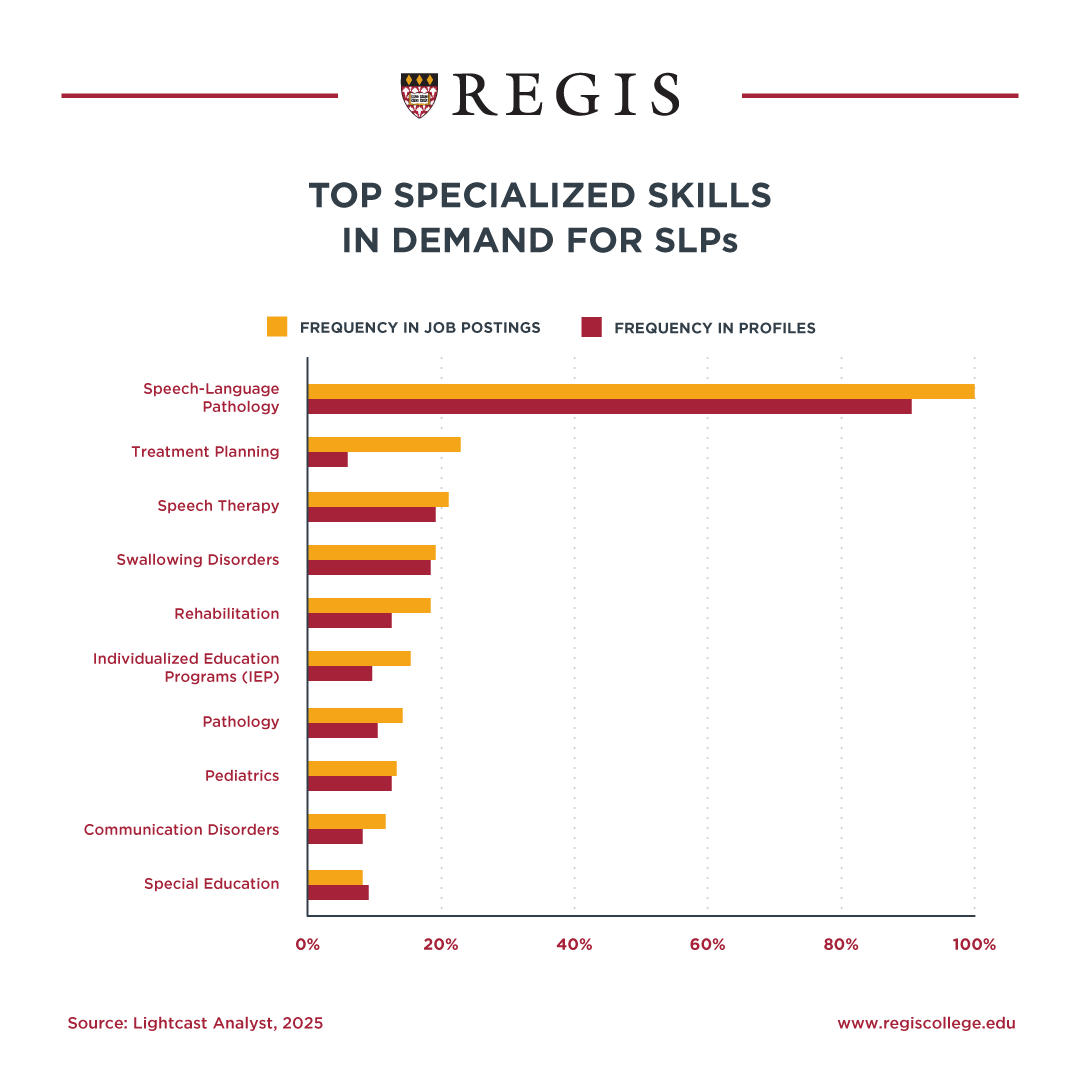
- Strong interpersonal communication: SLPs work with clients, caregivers, teachers, and interdisciplinary healthcare teams. Listening, empathy, and the ability to explain complex concepts simply are essential.
- Cultural and linguistic sensitivity: Effective treatment depends on recognizing diverse backgrounds and communication norms. Employers increasingly seek clinicians who can serve multilingual or multicultural populations.
- Emotional intelligence: The ability to manage challenging behaviors, build trust, and maintain professionalism in emotional situations defines effective practice.
- Collaborative mindset: In school systems and clinical environments, teamwork is constant. Supervisors value SLPs who can integrate feedback and support others’ work.
- Commitment to lifelong learning: Because research and technology continually evolve—from AAC software to telepractice—successful SLPs stay current through continuing education and mentorship.
These qualities reflect Regis’ mission of developing not just clinicians, but compassionate professionals. The program’s structure and culture intentionally reinforce those traits through mentorship, small cohorts, and faculty accessibility.
What Employers Value Beyond the Résumé
While Regis graduates enter the workforce with strong technical foundations, it’s their holistic preparation that sets them apart. Smith states that employers frequently recognize several traits that distinguish Regis graduates from the start:
- Readiness to contribute on day one: Thanks to extensive clinical practice, graduates adapt quickly to caseloads and documentation systems.
- Confidence balanced with humility: The program’s collaborative culture teaches students to trust their skills while seeking input when needed.
- Commitment to care: Smith notes that graduates enter the workforce ready to contribute, grounded in empathy and professionalism—a combination he says employers deeply appreciate.
In a field defined by human connection, that combination is powerful.
As Smith observes, “One day you might be talking to someone about World War II in a nursing home, and the next you’re working with a four-year-old on speech sounds. Not everyone can do that, but the ones who can, they’re the ones who love this work.”
How Regis Prepares You for Real-World Success
One theme seems to define the Regis MS in SLP program more than any other, Smith says: attention.
With no undergraduate SLP major and no doctoral program to split resources, Regis faculty focus entirely on their graduate students. “We talk all the time—texting, meeting, collaborating,” he says. “When you've got a big faculty, when you get 12 professors who barely know each other and you put them in a faculty meeting, they start to try and prove to each other that each one's more rigorous and more strict than the next, and the student can suffer in that kind of environment.”
That intimacy translates into mentorship and practical readiness that employers notice.
Employment Outcomes
Smith reports that Regis has achieved 100% employment for graduates for the past three cohorts. In part, he credits that to both the strength of the SLP job market and the program’s nurturing design.
“We’ve taken really good care of students who might not have been admitted elsewhere,” he says. “They graduate and they’re working as speech pathologists now.”
Regis’ success stories also stem from its emphasis on fit. The program’s cohort structure and clinical placement process ensure that students aren’t just trained but that they’re supported to pursue roles that match their skills and aspirations.
Customized Clinical Placements
Unlike programs centered around on-campus clinics, Regis uses off-campus clinical placements tailored to students’ locations and interests. “We try to get their placements close to their house, not close to Weston [Campus],” Smith explains. “That makes a huge difference for students.”
Students typically spend three days a week in placements during their second semester, gaining real-world experience in schools, hospitals, or private practices. Because those experiences are local, they often lead directly to employment offers after graduation.
Faculty Who Know and Support Students
The small faculty-to-student ratio allows professors to guide each student individually, providing feedback not only on academic progress but also professional development. Smith contrasts Regis’s supportive, close-knit culture with the ‘weed-out’ ethos he has observed elsewhere, noting that faculty focus on helping students succeed.
That support matters to employers too. Supervisors at clinical sites regularly comment on the professionalism and preparedness of Regis interns—many of whom transition seamlessly into full-time roles at those same sites.
Ask Yourself These Questions Before Choosing an SLP Program
While considering SLP programs, ask yourself these five key questions to help you find the best fit, and understand why Regis might be the answer.
1. Do I want a program that treats me like a number or like a colleague?
Large research universities can be impersonal. At Regis, the faculty know your name, your background, and your goals. Collaboration and community are woven into the experience, fostering confidence and connection.
2. Will my program prepare me for diverse career paths?
Because Regis exposes students to a wide range of populations—children, adults, individuals with communication disorders, and those using AAC devices—you graduate ready for multiple environments. Whether you want to work in a hospital or a school, you’ll have hands-on preparation.
3. How much real-world experience will I gain before graduation?
With more than 400 required clinical hours, you’ll apply classroom learning from the start. Regis’ partnerships across eastern Massachusetts ensure high-quality placements that reflect the region’s healthcare and educational needs.
4. What kind of mentorship will I receive?
At Regis, mentorship isn’t a buzzword. You’ll learn from faculty who are both educators and practitioners, often connected through decades of professional experience. That guidance continues beyond graduation, with alumni who remain active in mentoring current students.
5. Will this degree help me launch a stable, rewarding career?
Speech-language pathology offers long-term stability and personal fulfillment. Regis’ proven employment outcomes and respected reputation throughout Massachusetts mean you’ll graduate ready to make an impact and get hired quickly.
Take the Next Step Toward a Rewarding Career
A career in speech-language pathology offers both purpose and promise. With consistent job growth, competitive salaries, and opportunities to specialize or lead, it’s a field where you can make a lifelong impact while continually evolving as a professional.
Regis College’s MS in Speech-Language Pathology program provides the foundation, mentorship, and experience to help you start strong. From your first semester to your first job offer—and beyond—you’ll be part of a supportive community dedicated to your success.
Ask yourself: Are you ready to join a program that values both competence and compassion?
If the answer is yes, take the next step today.



Published Date