
Occupational therapy is often described as a helping profession, and for good reason. Occupational therapists work with people who are recovering from injuries, adapting to disabilities, managing chronic conditions, or learning new ways to participate in daily life.
But succeeding as an occupational therapist requires more than compassion alone.
Occupational therapists need a mix of skills. They must be able to listen carefully, observe how a person functions in daily activities, apply clinical knowledge, adapt treatment plans, collaborate with other professionals, and document progress accurately. They also need the flexibility to work with clients of different ages, diagnoses, goals, and environments.
For prospective students, that can raise an important question: Do I already have the skills needed to succeed in occupational therapy, or are those skills developed through graduate training?
The answer is both. Many future occupational therapists are drawn to the field because they are empathetic, service-oriented, curious, and interested in health sciences. But the clinical and professional skills required to become an occupational therapist are built over time through intensive coursework, labs, service learning, fieldwork, mentorship, and repeated hands-on practice.
That is why choosing the right graduate program is so imperative to those looking to take their OT career to the next level. A strong master’s program, like the Master of Science in Occupational Therapy program at Regis College, does more than teach students about occupational therapy. It helps them begin thinking, communicating, and practicing like occupational therapists.
Key Takeaways
- Occupational therapists need a blend of clinical, interpersonal, cognitive, and professional skills to support clients across a variety of settings.
- Communication, active listening, empathy, and service orientation help OTs understand what matters most to clients and provide more personalized care.
- Clinical reasoning and problem-solving are essential in healthcare, school, and community settings.
- Hands-on skills, such as assessment, treatment planning, transfers, and adaptive equipment use, are developed through graduate coursework, labs, and fieldwork.
- Regis College’s MSOT program helps students build these skills through active-practitioner faculty, lab-based learning, service learning, clinical reasoning coursework, and fieldwork experiences.
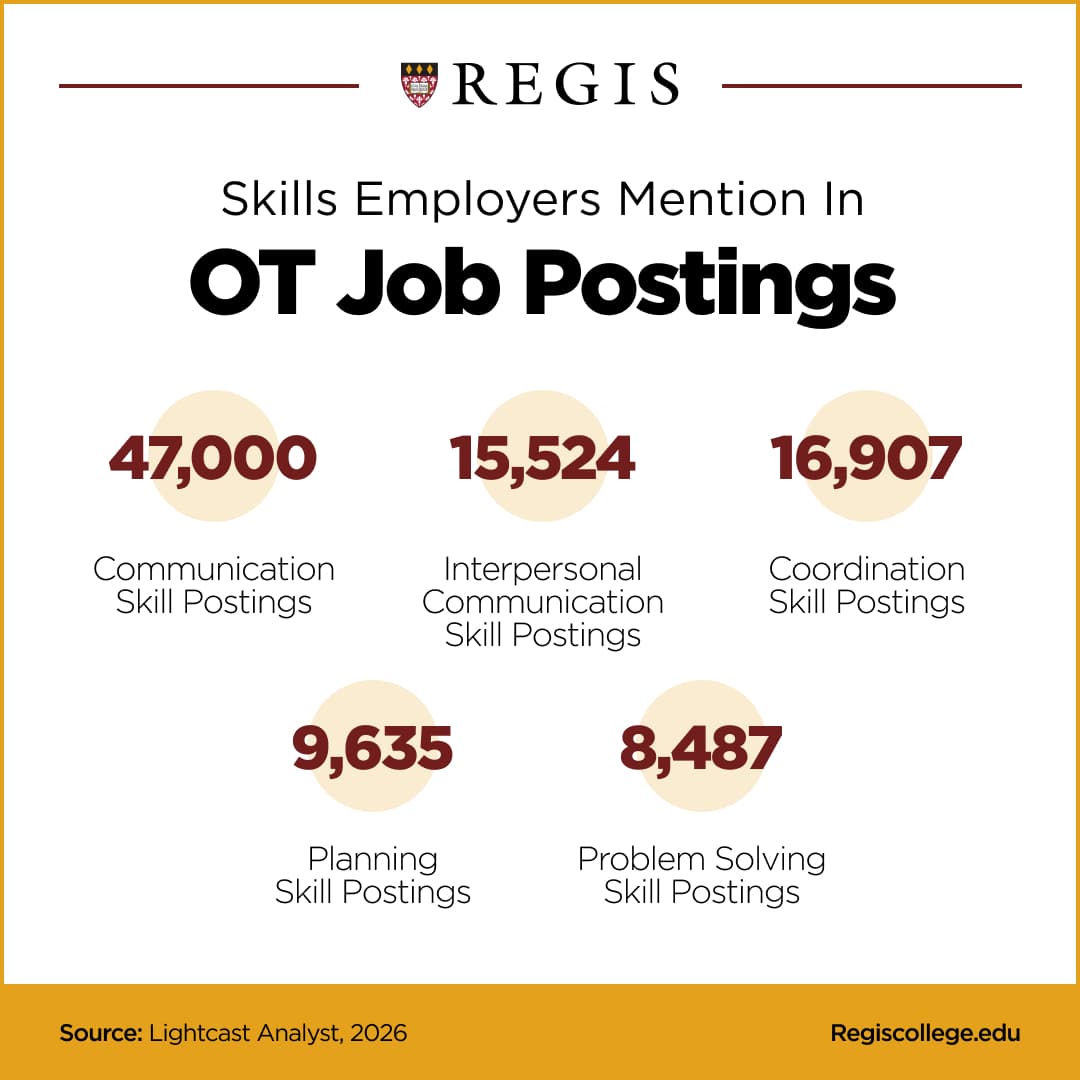
What Does an Occupational Therapist Actually Do?
Before looking at the skills occupational therapists need, it helps to understand what they actually do.
Occupational therapists evaluate and treat people with injuries, illnesses, or disabilities, helping clients develop, recover, improve, and maintain the functions and stability needed for daily living and working. In practice, that can include:
- Helping someone relearn how to dress after a stroke
- Recommending adaptive equipment
- Supporting a child’s participation at school
- Helping an older adult remain safe and independent at home
Occupational therapists commonly develop and implement treatment plans, educate families and caregivers, collaborate with healthcare providers, educators, all while documenting the client’s progress.
Such a variety of responsibilities is why occupational therapy requires a broad skill set. The work is clinical, but it is also personal and practical. OTs need to understand more than treatment plans. They also need to understand the routines, relationships, responsibilities, and goals that shape a person’s everyday life.
Wondering If Occupational Therapy Is Right For You?
Download our free guide to gain insights about the career!

The Most Important Skills for Occupational Therapists
There is no single skill that makes someone a successful occupational therapist. The profession requires a combination of qualities and abilities that work together in real time.
An OT may need to interview a client, observe how they complete a task, identify barriers, collaborate with another provider, adjust an intervention, teach a caregiver, and document the visit—all while keeping the client’s goals at the center of the plan.
These are some of the most important skills occupational therapists need to develop.
Communication and Active Listening
Occupational therapy starts with understanding the person in front of you.
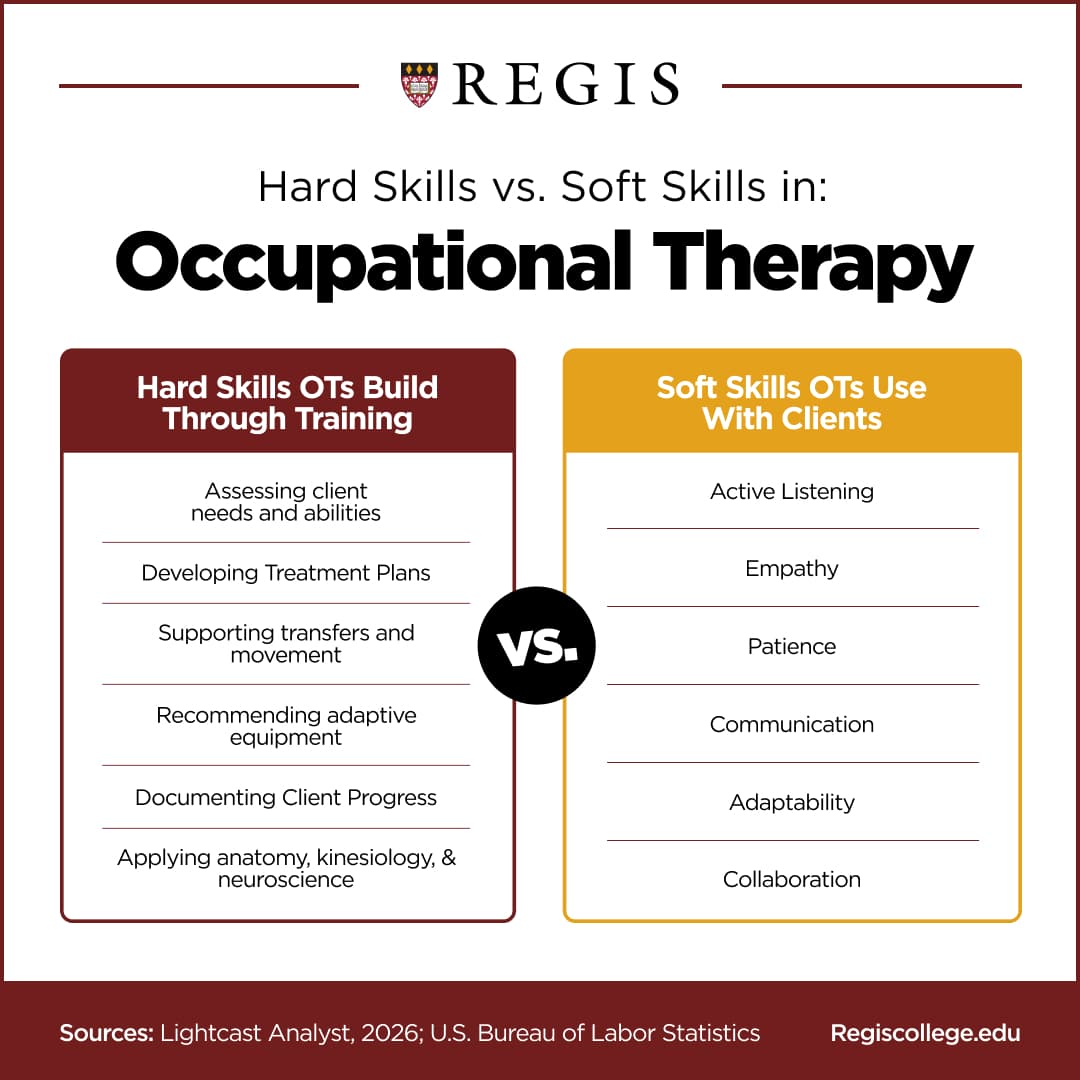
That means occupational therapists need strong communication and active listening skills—asking thoughtful questions, listening for what a client values, understanding family concerns, explaining treatment plans clearly, and communicating with other members of a care team.
For example, two people recovering from the same injury may have very different goals. One may want to return to work. Another may want to cook independently, drive again, care for a child, or participate in a favorite hobby. An occupational therapist needs to understand those priorities before designing an effective treatment plan.
Strong communication also matters when OTs work with families, teachers, nurses, physicians, physical therapists, speech-language pathologists, social workers, and insurance providers. Treatment rarely happens in isolation so the ability to translate clinical information into language that clients and families can understand, while also communicating professionally with other providers, is essential to ensuring the best outcomes.
Empathy and Service Orientation
Occupational therapists often work with people during vulnerable moments. A client may be frustrated by a loss of independence, overwhelmed by a diagnosis, recovering from trauma, or trying to adjust to a new way of moving through the world.
That requires patience and a genuine desire to help people participate more fully in daily life.
Mary Elizabeth Patnaude, associate professor and MSOT program director at Regis College, connects that service orientation to the values of the OT profession. In discussing Regis’ emphasis on service learning, she notes that students begin learning early how the profession can be used to support others.
“You’re getting out there and you’re helping people in the community,” Patnaude says. “You’re figuring out a way to kind of shape your profession in a way that gives back, which is really one of our core values as OTs: advocacy.”
Empathy is more than just kindness. It’s the ability to see the client as a whole person, not just a diagnosis or treatment plan.
Clinical Reasoning
Clinical reasoning is one of the most important skills an occupational therapist develops.
It is the ability to take what you know—about anatomy, neuroscience, psychosocial factors, movement, development, environment, and occupation—and apply it to a specific client’s needs. It helps OTs decide what to assess, what a client’s challenges may mean, which interventions to try, how to adjust a plan, and how to evaluate whether therapy is working.
“Clinical therapeutic reasoning is kind of the way that you figure things out. We can’t teach students everything about everything,” Patnaude says. “We teach them basic knowledge. We teach them how to think of a specific patient and bring them through the OT process, from evaluation to assessment to re-evaluation and discharge.”
For example, an OT may know the general effects of a stroke but still needs to understand how that stroke affects one particular person’s ability to shower safely, return to work, manage fatigue, or participate in family routines.
This is why OT education must help students learn “how to think and not just what to think,” Patnaude relates.
“We can give them some knowledge,” she says, “but we have to have them learn how to integrate the knowledge and then apply it.”
Clinical reasoning continues to develop throughout an OT’s career. Graduate school lays the foundation, but fieldwork, mentorship, professional practice, and continuing education help deepen it over time.
Hands-On Clinical Skills
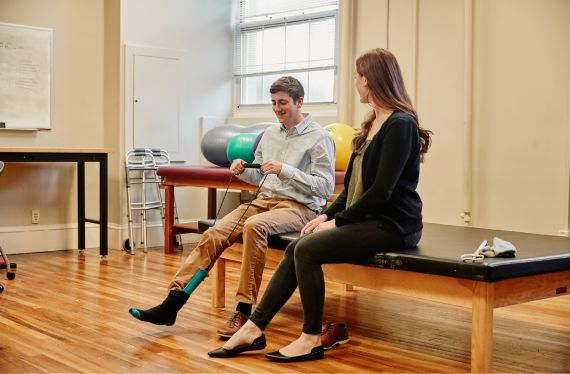
Occupational therapy is hands-on, practical, and applied.
“Getting hands-on practice with how to transfer patients, how to assess patients, writing treatment plans for patients is vital for professionals training to be top-level OTs”, Patnaude says, which is why students in the Regis MS in Occupational Therapy program begin with practice classes starting in their first semester.
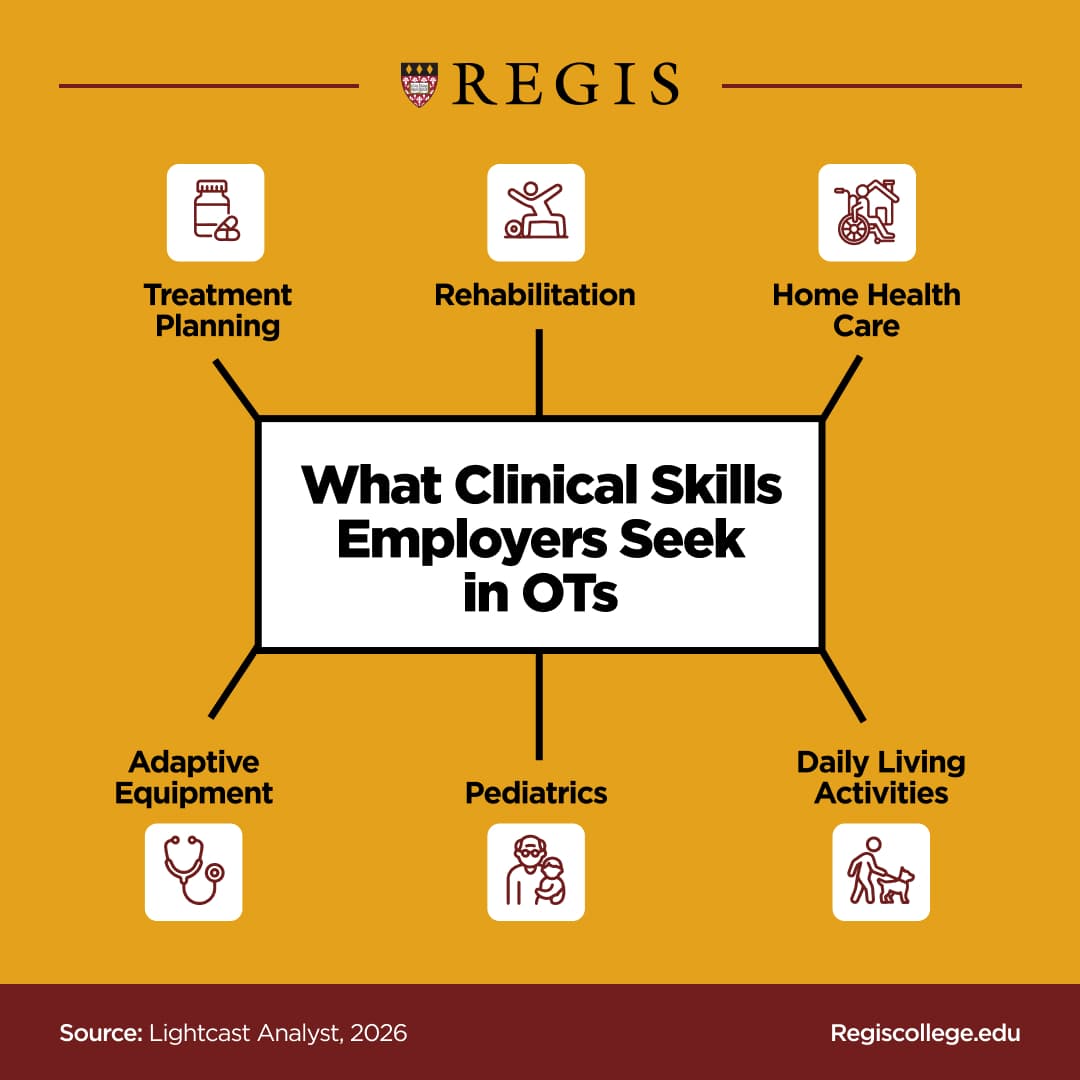
Depending on the setting, those skills may include:
- Assessing range of motion, strength, coordination, and functional mobility
- Supporting safe transfers and movement
- Evaluating how a client performs daily activities
- Recommending adaptive equipment
- Teaching clients and caregivers how to use assistive tools
- Developing and adjusting treatment plans
- Applying knowledge of anatomy, kinesiology, neuroscience, and psychosocial development
- Helping clients adapt routines, tasks, or environments
“We expect students to come in prepared with the basics,” Patnaude says. “We don’t waste their brain power trying to have them remember all the muscles and nerves again because they already learned that in anatomy and basic neuroscience... So we can get right back into it and start applying (that knowledge) to being an OT.”
That applied focus is especially important for students who want to understand how classroom concepts translate to real clients. It is also one reason prospective students often look closely at how an MSOT program is structured across coursework, labs, and fieldwork before deciding where to apply.
Problem-Solving and Adaptability
No two clients are exactly alike. Even when clients share a diagnosis, their goals, environments, support systems, and daily routines may be very different.
That is why occupational therapists need strong problem-solving skills—able to assess what is working, identify what is not, and adapt the plan when a client’s needs change.
A treatment strategy that works well for one client may not work for another. A home setup may create safety barriers. A child may respond differently in a school setting than in a clinic. An older adult may need an intervention adjusted because of fatigue, pain, cognition, or a change in medical status.
“In this day and age, (OTs are) likely to have a pretty high caseload, whether it be in the hospital or in the schools,” says Patnaude. “So they have to have good enough skills that they can think pretty quickly and move back and forth between patients.”
Adaptability is also an important quality for occupational therapists, who must be able to change treatment plans based on clients’ needs.
For students, this means OT education is not only about learning the “right answer.” It is about learning how to make informed decisions when a situation is changing, incomplete, or more complex than it first appears.
Collaboration and Professionalism
Occupational therapists rarely work alone.
Depending on the setting, they may collaborate with anyone from a physician to a psychologist. In pediatric practice, for instance, Patnaude notes that OTs often work closely with speech therapists.
That kind of collaboration requires professionalism, clear communication, ethical decision-making, and a deep understanding of how OT fits into a larger care plan.
At Regis, students spend time developing these professional skills alongside clinical ones.
“We do a lot of work on the more soft skills, like interviewing and interprofessional collaboration and professionalism,” says Patnaude, “but also being ethical and dealing with the insurance companies.”
Professionalism also includes knowing when to ask questions. New practitioners are not expected to know everything. But they do need the judgment to seek guidance, respond to feedback, and continue learning.
How Regis Helps MSOT Students Build These Skills
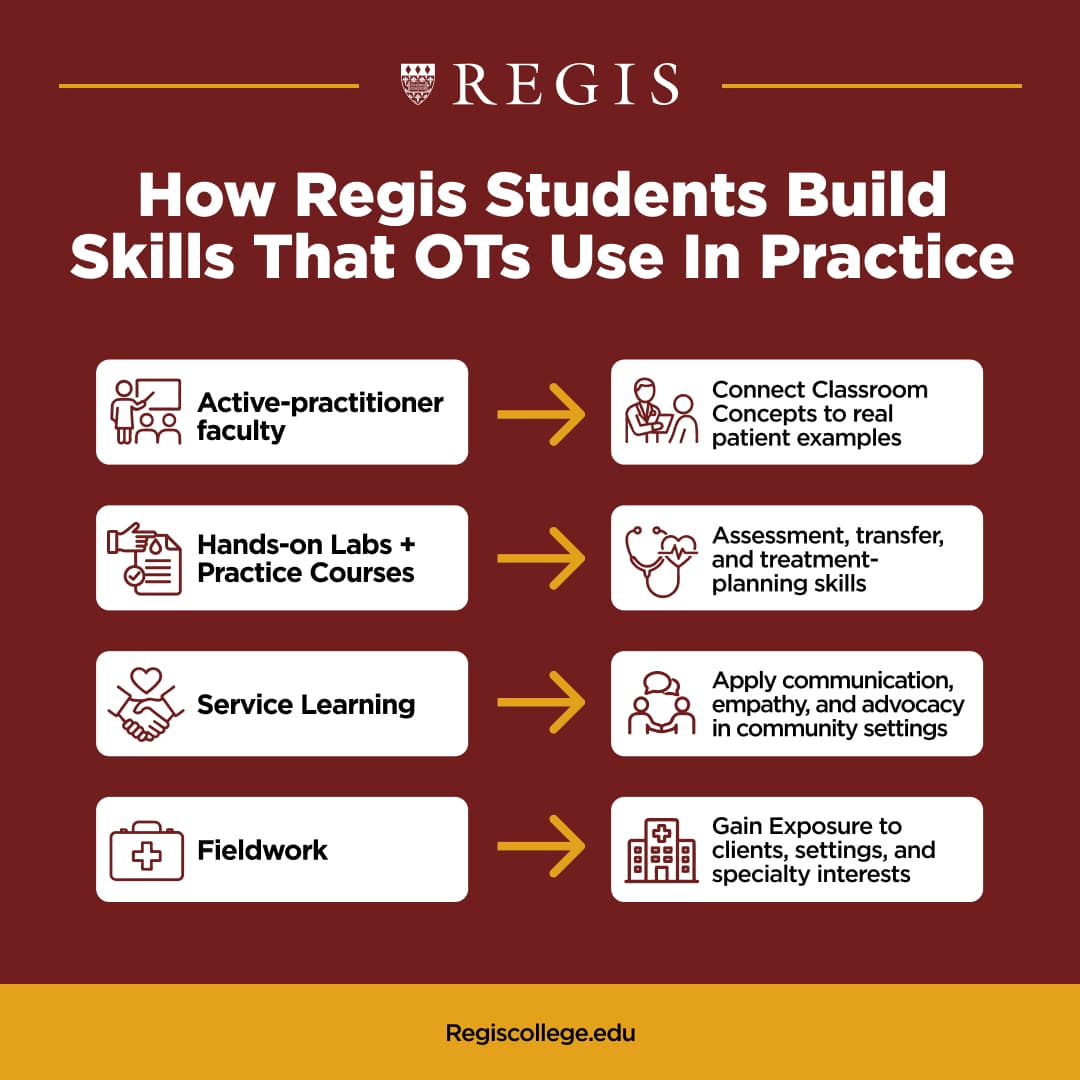
The skills occupational therapists need are developed through practice, feedback, and real clinical exposure. At Regis, the MSOT program is designed to help students move from foundational knowledge to applied OT practice through clinically focused coursework, hands-on labs, service learning, fieldwork, and faculty mentorship.
Several features of the program directly support that skill development:
Active-practitioner faculty
Regis’ OT faculty continue to practice clinically, which helps students connect course material to real patients, real settings, and real clinical decisions.
“All of our faculty are highly experienced and we all still practice clinically,” says Patnaude. “So you have faculty who are teaching who actually are out there in the clinic, who can bring real-life experience to you every day.”
In-person fieldwork and service learning
Regis emphasizes real-world experience through service learning and in-person Level I fieldwork, rather than relying only on simulation.
“At a lot of schools, the Level I experiences are simulated. Ours aren’t,” Patnaude says. “So, you’re getting out there.”
That early exposure helps students begin working with real people and communities before their full-time Level II fieldwork.
Boston-area fieldwork opportunities
Regis combines a small, close-knit program environment with access to clinical opportunities near Boston.
“I feel like we have kind of a small-town feel,” Patnaude says, “but we’re so close to Boston that you have access to excellent clinical placements.”
Students may pursue fieldwork in settings such as hospitals, school systems, outpatient practices, community-based mental health, adapted sports, and other practice environments.
Flexibility to explore clinical interests
Because OT includes many practice areas, students benefit from exposure to different settings and populations. Patnaude says Regis gives students flexibility in Level II fieldwork selection.
“We don’t force students to go to certain places for their clinicals,” she says. “You can pick whatever area you want of OT.”
Build the Skills to Become an Occupational Therapist
The skills needed to succeed in occupational therapy are not developed all at once. They are built through study, practice, feedback, fieldwork, and experience.
A strong MSOT program helps students grow from interested applicants into prepared, thoughtful, adaptable future clinicians. It gives them the opportunity to develop the communication, clinical reasoning, hands-on practice, documentation, collaboration, and problem-solving skills that occupational therapists use every day.
For students who want a clinically focused path into the profession, Regis College’s Master of Science in Occupational Therapy offers small classes, active-practitioner faculty, hands-on learning, and fieldwork opportunities in a range of OT settings.
If your goal is to become a practicing occupational therapist through a clinically focused, fieldwork-rich master’s program, we invite you to explore everything that the Regis College Master of Science in Occupational Therapy program has to offer.
Ready to take the next step towards your career as an OT?

Published Date