
If you’re considering returning to school to pursue a master’s in occupational therapy, you’re no doubt wondering how to fit it into an already busy personal and professional schedule.
How long is the timeline to earn the degree? What does the typical semester look like? When can I expect to be in class as opposed to out in fieldwork? Can I keep working while pursuing my degree?
At Regis College, the Master of Science in Occupational Therapy (MSOT) is an immersive, full-time, ACOTE-accredited program designed to help you improve the quality of life and functional independence of clients across the lifespan. The curriculum combines small classes, lab-based learning, and extensive fieldwork so that by the time you graduate, you’re ready to step into practice and pursue licensure as an occupational therapist.
Here, we’ll take a look at the full Regis MSOT program timeline—from your first semester to your final weeks of full-time fieldwork—and offer realistic insight into what it takes to balance the program with work, family, and life.
Key Takeaways
- The Regis MS OT program timeline is approximately 24–30 months, depending on whether you choose the fall or spring start, and includes four academic semesters followed by 12 weeks of full-time Level II fieldwork.
- Early, hands-on learning is built into the Regis MSOT timeline, with lab-based courses and Level I fieldwork experiences woven throughout your first semesters so you can apply classroom knowledge in real-world settings from day one.
- The program is designed to function like a full-time commitment, so strong time management, self-care, and collaboration skills are essential for success.
- Regis stands out for small cohorts, practicing OT faculty, and a wide network of fieldwork sites, helping you build the clinical reasoning, empathy, and adaptability needed to pass the NBCOT exam and step confidently into your first OT role.
Regis MSOT Program at a Glance
Here is a quick, concise look at what the Regis MS OT timeline entails:
Program length:
- Fall Start: 22–24 months from first semester to working as an OT.
- Spring Start: 2.5 years with a built-in summer break after your first semester.
Structure:
- Four academic semesters of intensive coursework and labs.
- Embedded Level I fieldwork experiences during the academic phase.
- 12 weeks of full-time Level II fieldwork (internships) after coursework.
- On-campus, full-time, cohort-based program with small classes and practicing OT faculty.
- Fieldwork settings include hospitals, school systems, outpatient clinics, community-based mental health, and non-traditional sites such as adapted sports and other emerging practice areas.
Quick Look: Fall Start Timeline
Here’s an example of what a prospective student enrolling in the fall can expect:
- Fall Year One: Start foundation coursework and labs.
- Spring Year One: Continue core courses + first Level I fieldwork.
- Summer Year One: Community-based practice, assistive technology, ethics, and clinical reasoning.
- Fall Year Two: Advanced coursework, leadership, special topics plus additional Level I fieldwork.
- January–July (Post-coursework): 12-week Level II fieldwork placements (full-time).
- August: Degree conferred; prepare for the NBCOT exam and state licensure.
Quick Look: Spring Start Timeline
Here is an example of what a prospective student enrolling in the spring can expect:
- Spring Year One: Begin foundation semester.
- Summer Year One: Built-in break—many students work or focus on personal commitments.
- Fall Year One – Fall Year Two: Continue academic coursework with Level I fieldwork integrated along the way.
- Post-coursework: 12-week Level II fieldwork experience (full-time), followed by graduation, exam, and licensure.
Wondering If Occupational Therapy Is Right For You?
Download our free guide to gain insights about the career!

What to Expect Year-Over-Year in the Regis MSOT Program
Whether you start in the fall or spring, you’ll move through three big phases:
- Foundational coursework in the classroom and labs
- Advanced coursework with deeper integration of practice and Level I fieldwork
- Full-time Level II fieldwork, followed by graduation and licensure preparation
Phase One: Foundation in the Classroom (Semesters One and Two)
Your first two semesters are about building a strong clinical and professional foundation.
You can expect:
- Core OT concepts and human occupation: Courses like human occupation, OT practice foundations, psychosocial and physical dysfunction, and group dynamics help you understand how illness, injury, and social context impact daily life.
- Heavy use of labs and hands-on learning: About half of the courses in the curriculum include a lab component, where you’ll practice transfers, use adaptive equipment, learn standardized assessments, and start to “think like an OT” in real-world scenarios.
- Early, supported exposure to fieldwork (Level I): Level I fieldwork experiences are woven into the academic semesters so you can apply what you’re learning in the classroom to real clients and communities right away.
From the start, there’s a strong emphasis on:
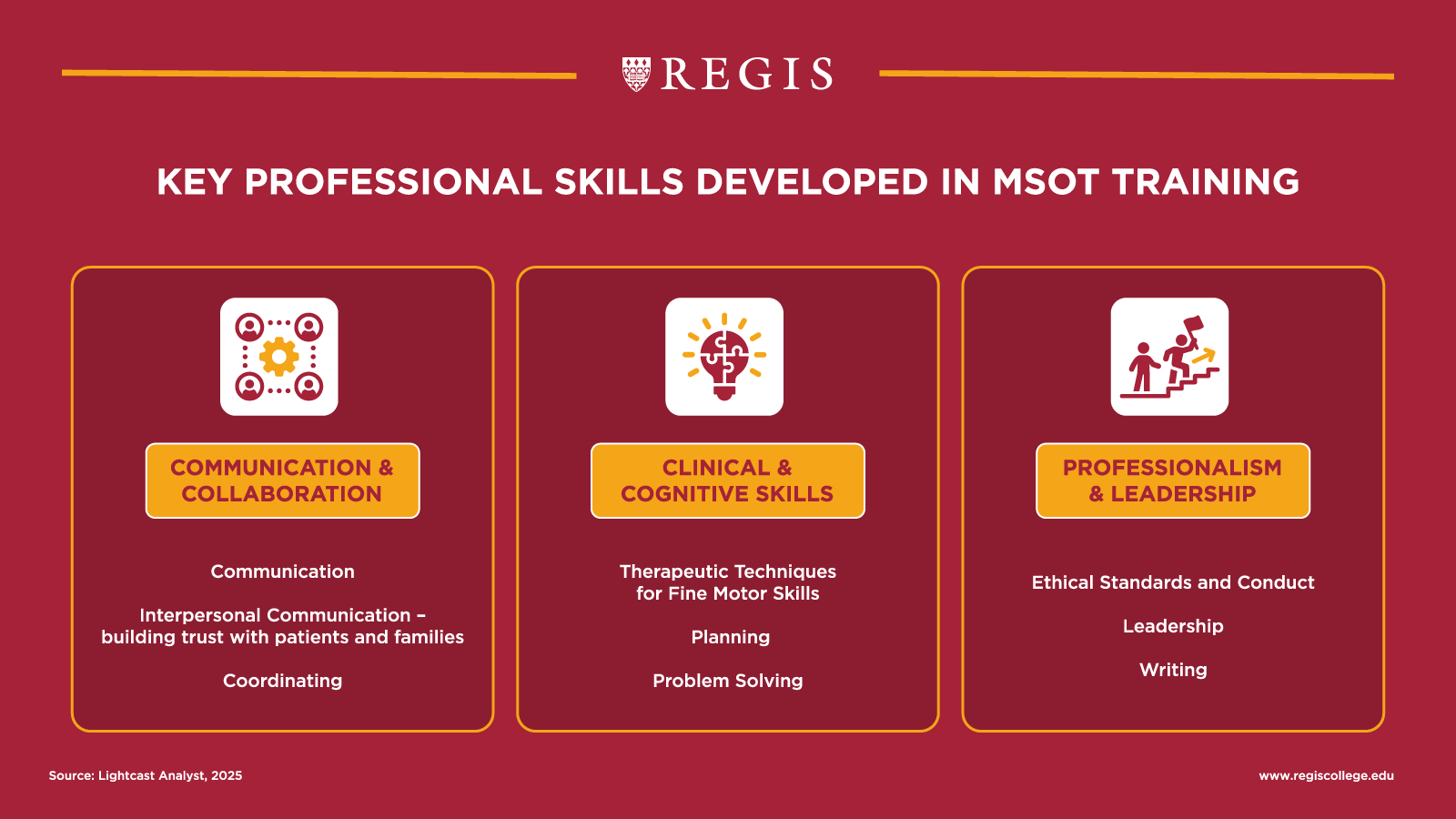
- Clinical reasoning and problem-solving
- Empathy, emotional intelligence, and cultural humility
- Client-centered thinking—seeing the unique person behind every diagnosis
As Dr. Michael Roberts, Associate Professor in the MSOT program, explains, the goal is for Regis students to be ready to find a way to help people in any situation, not just follow a checklist of interventions.
Phase Two: Advanced Coursework + Practice Integration (Semesters Three and Four)
Once the foundation has been built, the next phase deepens your skills and prepares you for full-time fieldwork.
You’ll move into:
- Advanced practice courses: Examples include community-based practice, assistive technology, school-based practice, hand and upper extremity rehabilitation, leadership in OT, and special topics courses that reflect emerging needs in the field.
- More complex clinical reasoning: You’ll work through challenging case studies, simulations, and lab activities that require you to integrate medical, social, and environmental factors into your treatment planning.
- Expanded Level I fieldwork: Additional Level I placements help you see a wider range of settings and populations, building your confidence and exposing you to potential specialty interests.
- Professional skills for practice: Courses in research methods, ethics and law, and clinical reasoning help you learn to justify your decisions with evidence, advocate for clients, and communicate with other professionals.
Throughout these semesters, you’re still in a cohort model, working closely with classmates on group projects and labs. According to Roberts, collaboration is not optional—it’s essential. Students spend a lot of time working in teams, practicing communication skills, and learning how to navigate real-world dynamics long before they are out on their own in the field.
Phase Three: Full-Time Fieldwork (Level II Internships)
After your academic coursework is complete, you transition into 24 weeks of full-time Level II fieldwork—the capstone of the Regis MSOT program.
What this phase looks like:
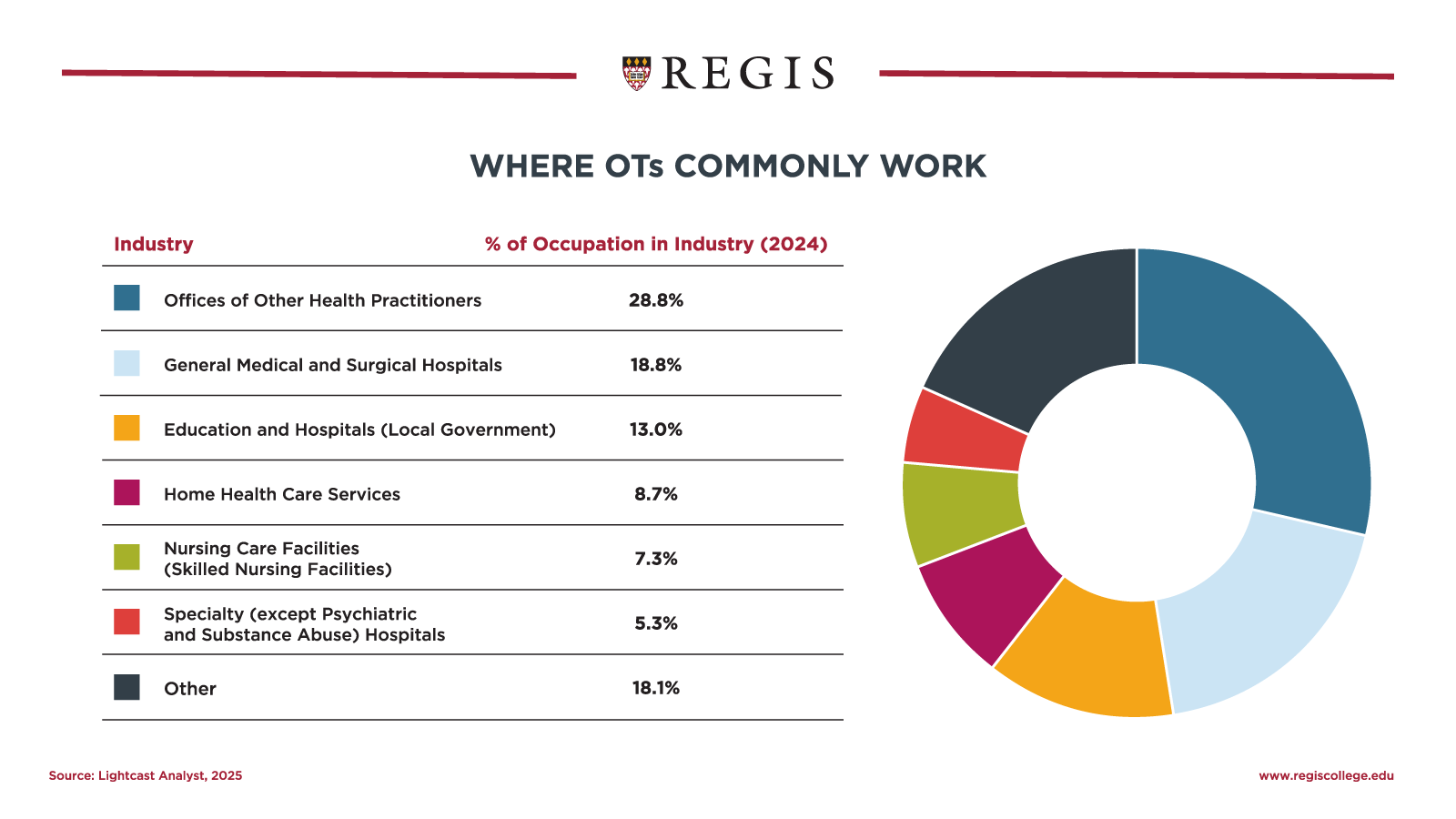
- 12-week full-time placements: You’ll spend roughly January through July (for fall-start students) at a specific site, such as large hospitals and rehab centers; skilled nursing facilities and long-term care; school systems; outpatient clinics and hand therapy practices; and community-based mental health or non-traditional settings like adapted sports programs.
- Intentional site matching: Small class sizes and close faculty advising mean the team knows your strengths, goals, and interests. They use that knowledge to help match you with fieldwork sites where you’re likely to grow and succeed.
- Real responsibility, with supervision: By the end of your Level II experience, you are expected to function at entry-level OT competence, managing caseloads, writing documentation, collaborating with teams, and adjusting treatment plans under the supervision of licensed therapists.
Regis’ combination of hands-on labs, active faculty clinicians, and broad fieldwork network helps explain why the program reports a very high success rate for students completing Level II fieldwork.
Graduation, Licensure, and Starting Your Career
At the end of your Level II fieldwork:
- Your MSOT degree is conferred.
- You’re eligible to sit for the National Board for Certification in Occupational Therapy (NBCOT®) exam, the national credential required for licensure.
- After passing the NBCOT exam, you apply for state licensure in the state where you plan to practice.
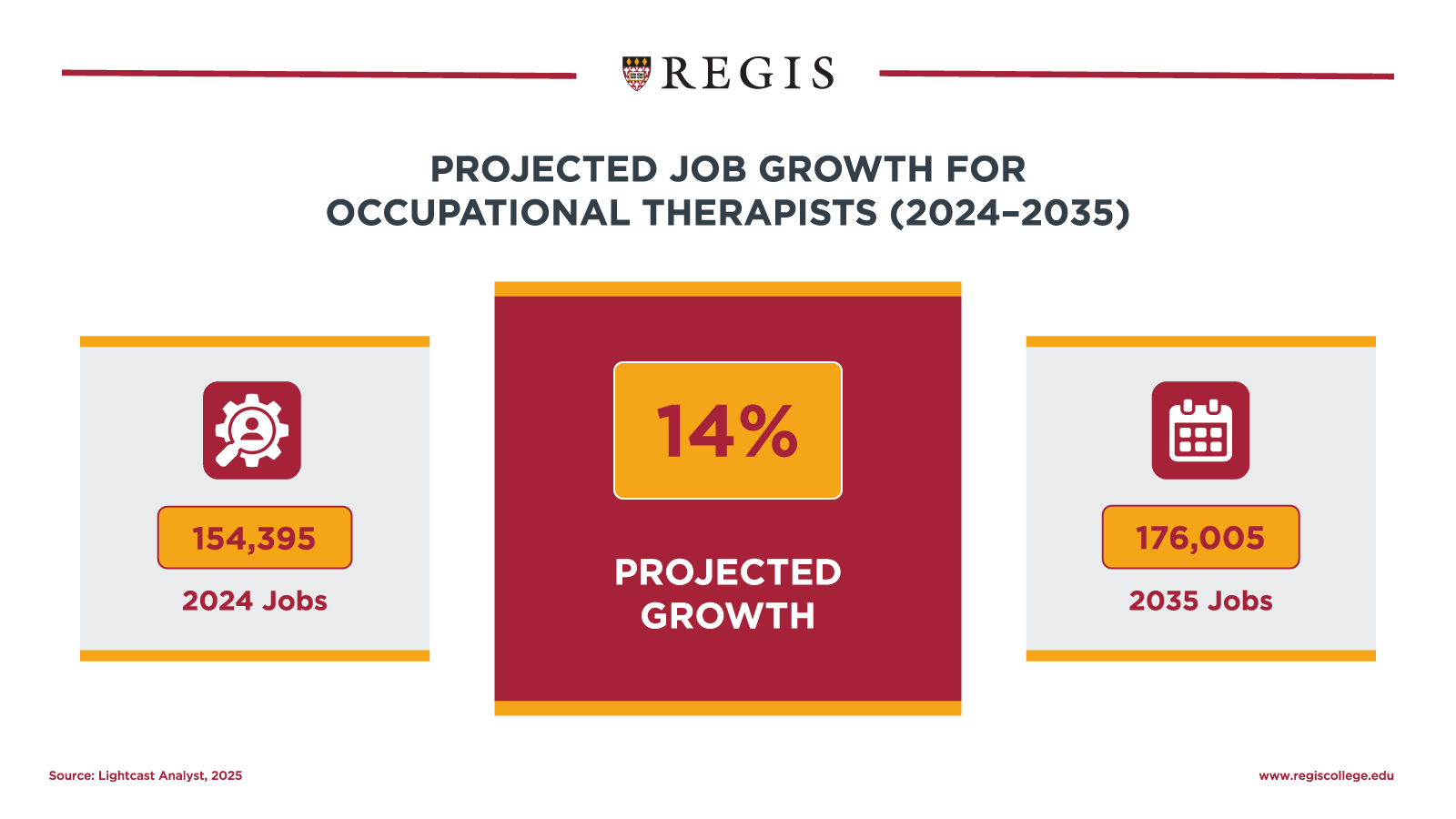
Roberts reports that recent Regis MSOT graduates typically earn $68,000–$80,000 in their first OT positions, often within months of graduation, and in sectors that range from traditional (school systems, hospitals) to niche practice areas. That, coupled with the program’s 99% employment rate, means Regis alumni quickly establish themselves in stable and well-paying roles across the OT landscape.
Balancing the MSOT with Life: What It Takes
The Regis MSOT program is intentionally intensive. Students are preparing for a licensed healthcare profession with serious responsibilities, and the program is structured to reflect that reality.
You can expect:
- Full-time course loads during academic semesters, with multiple lab-based courses, group projects, and written assignments.
- Significant out-of-class work for readings, documentation practice, studying for practicals, and preparing for lab checkoffs.
- Full-time commitment during Level II fieldwork.
Some students do maintain limited part-time work during the academic semesters, but the Regis MSOT intensive model requires students to carefully consider work hours, especially once full-time Level II fieldwork is reached.
Roberts notes that empathy, self-care, time management, and a spirit of collaboration are some of the most important skills for success in the program.
Strategies to Thrive While You Study
- Plan your schedule like a full-time job: Block off time for class, lab, commuting, studying, and self-care. Treat those blocks as non-negotiable.
- Lean into the cohort model: Your classmates become built-in study partners and emotional support. Group projects, lab practice, and shared fieldwork experiences mean you’re rarely doing this alone.
- Use faculty as a resource: Because many Regis OT faculty continue to practice clinically, they can give realistic advice about managing stress, balancing clinical expectations, and preparing for interviews.
- Be honest about your bandwidth: If you’re caring for family members, managing a chronic condition, or working, talk with your advisor early. The team can help you plan proactively rather than reacting when things get overwhelming.
Regis looks for students who bring real-life resilience—people who have navigated challenges, cared for others, or juggled competing priorities. Those experiences often become strengths in both the classroom and clinical practice.
What Sets the Regis MSOT Program Apart?
There are many MSOT programs out there. Here are a few reasons students choose Regis:
- Lab-Based Learning: You won’t just talk about techniques—you’ll practice them. From transfers and dressing with adaptive equipment to splint fabrication and standardized assessments, you get repeated, supervised practice.
- Faculty Who Actively Practice as Occupational Therapists: Full-time faculty at Regis continue to work clinically in hand therapy, pediatrics, adult and older adult care, and other areas. That means the tools, assessments, and approaches you learn are the ones they’re using now, not just what appears in textbooks.
- Small Class Sizes and Personalized Support: With tight-knit cohorts, faculty get to know each student’s strengths, interests, and growth areas. This allows them to offer personalized feedback and more thoughtful fieldwork matching.
- Real-World Learning from Day One: From early Level I fieldwork to community-based practice projects, service learning, and diverse Level II placements, you’re constantly applying what you learn in real settings.
- Emphasis on Empathy, Adaptability, and Leadership: The curriculum doesn’t just focus on technical skills. It also emphasizes empathy, emotional intelligence, evidence-based practice, and advocacy, traits that help you stand out in a rapidly evolving healthcare environment.
Ask Yourself These Questions
Choosing an MSOT program isn’t just about picking a school—it’s about understanding whether the timing, structure, and demands align with your life. As you evaluate whether Regis is the right fit, reflect on these questions and what your answers reveal about your readiness and priorities.
1. Can I commit to a full-time, 24–30 month graduate program that includes 12 weeks of full-time fieldwork?
This question helps you gauge whether the pace and intensity of Regis’ fast-moving MSOT timeline align with your life and responsibilities. Full-time fieldwork means you’ll be treating it like a full-time job, often with limited capacity for external obligations. Being honest about your availability now prevents stress later and helps ensure you enter the program at a time when you can fully engage and succeed.
2. Do I feel energized by hands-on learning and collaboration in a close-knit cohort?
Because roughly half of Regis’ courses include lab components, and because the program leans heavily on teamwork, you’ll be learning through doing and through others. If you thrive in collaborative environments, this structure will support your success.
3. What financial and personal support do I have in place to help me through the most intensive phases (especially Level II fieldwork)?
During your full-time fieldwork, working more than a few hours can be a challenge. This question pushes you to think practically about financial planning, childcare, transportation, and personal support systems. Being proactive about these factors can significantly reduce stress when you hit the most demanding parts of the timeline.
4. Does a career helping people regain independence and quality of life align with my values and long-term goals?
Graduate school is a major investment, not just of money, but of time, energy, and identity. This final question helps clarify whether the work itself feels meaningful to you. The more aligned you feel with OT’s mission and values, the more motivated and resilient you’ll be throughout the program.
Ready to Take the First Step?
Pursuing a graduate degree in occupational therapy is a serious commitment, but, with the right information and support, it’s also completely achievable.
At Regis, the MSOT program is built to be fast, rigorous, and doable for busy adults. Those students who start in the fall, for instance, can go from first class to practicing OT in as little as 22–24 months, all because of an academically challenging program that prepares students for real-world practice.
If you’re ready to begin this next chapter in your professional career, reach out to our team today and learn more about Regis’ MSOT program and how it can fit into your schedule.



Published Date