
“Occupational therapist” is a familiar job title, but for many it can be difficult to picture exactly what the day-to-day life of a therapist may actually look like.
Many careers offer a predictable daily routine. Not so for occupational therapy, where responsibilities can vary significantly depending on the setting a therapist is working in, the type of client they are attending to, and the treatment goals of those clients.
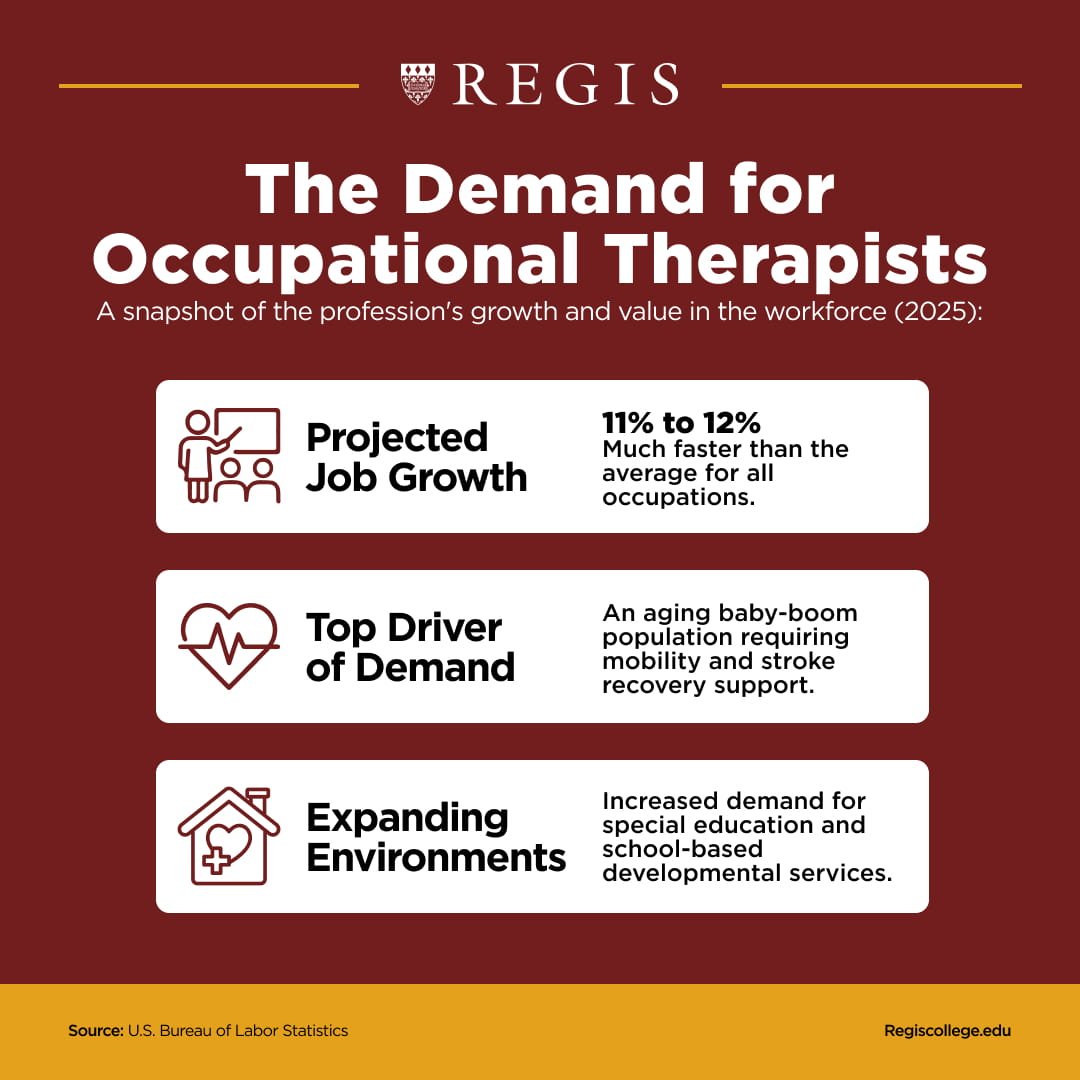
An OT working in a hospital may spend the day helping patients regain safe mobility after surgery or illness, while a school-based OT may help students participate more fully in classroom routines.
A day in the life of an occupational therapist can include client evaluations, treatment sessions, documentation, collaboration with other professionals, family or caregiver education, and adapting treatment plans based on client progress. The exact schedule depends on whether the OT works in a hospital, school, outpatient clinic, home health, mental health setting, pediatric practice, or another environment.
Understanding how those day-to-day realities will differ is important for students taking their first steps towards a career in occupational therapy. It can help you decide whether the profession fits your strengths, interests, and expectations—and what kind of graduate preparation can help you become confident in practice.
Key Takeaways
- A day in the life of an occupational therapist varies by setting, but most OTs evaluate clients, deliver interventions, document progress, and collaborate with others.
- OTs help people participate more fully in daily life, whether that means dressing, eating, moving safely, succeeding in school, returning to work, or managing routines.
- Common OT settings include hospitals, schools, outpatient clinics, home health, nursing care facilities, pediatric practices, and community-based programs.
- The work requires clinical reasoning, communication, adaptability, documentation, hands-on skills, and comfort working with people in complex situations.
- Regis College’s Master of Science in Occupational Therapy helps students prepare through clinically focused coursework, active-practitioner faculty, service learning, labs, and fieldwork experiences.
What Does an Occupational Therapist Do During the Day?
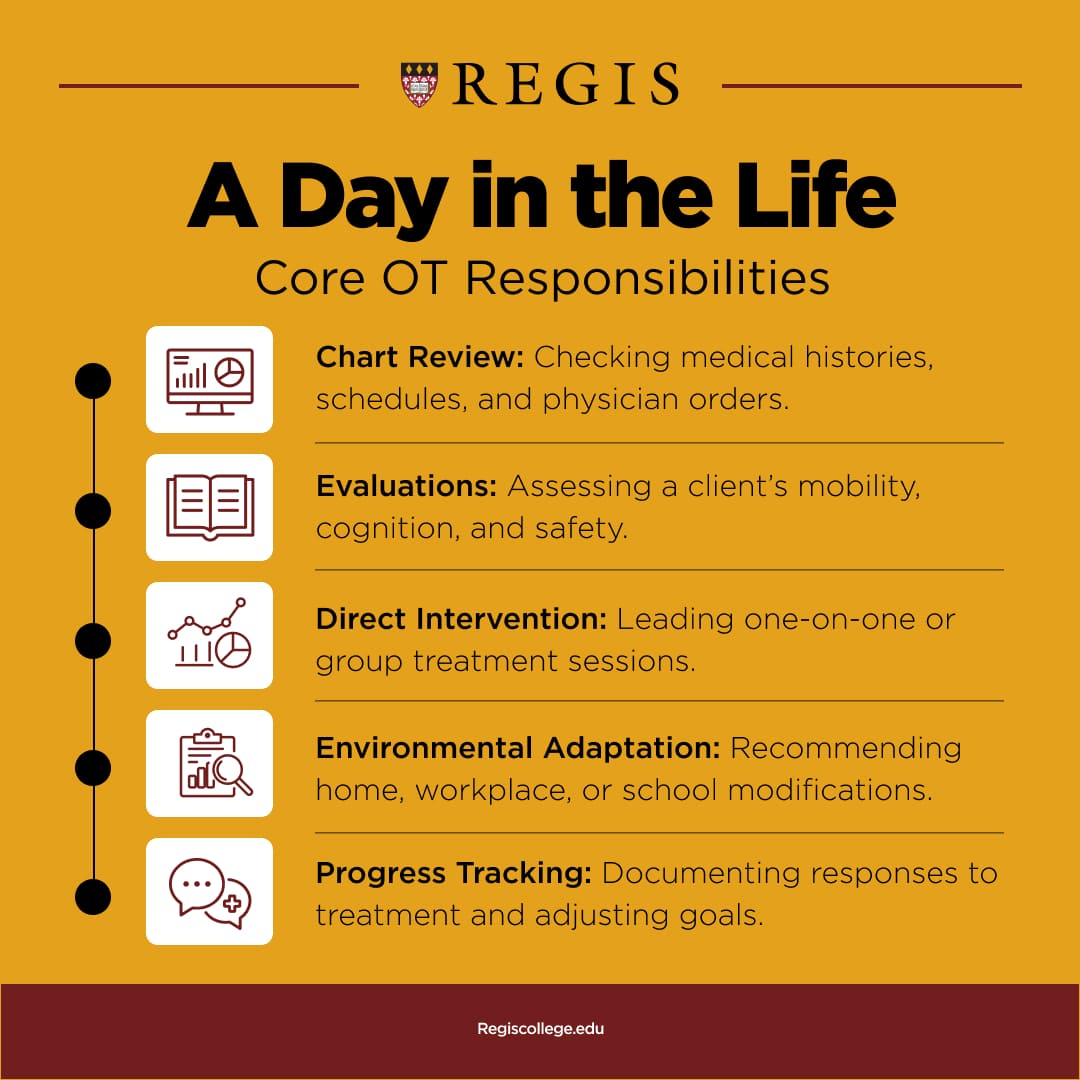
While setting and client population will determine specifically what an occupational therapist does each day, there are certain responsibilities that are common—evaluating and treating people with injuries, illnesses, or disabilities, helping them develop, recover, improve, or maintain the skills needed for daily living and working.
In practice, an OT’s day may include:
- Reviewing client charts, schedules, goals, and care plans
- Conducting evaluations or reassessments
- Leading one-on-one or group treatment sessions
- Helping clients practice daily living skills
- Recommending adaptive equipment or environmental modifications
- Communicating with families, caregivers, teachers, or employers
- Collaborating with nurses, physicians, physical therapists, speech-language pathologists, educators, or social workers
- Documenting client progress
- Adjusting treatment plans based on how clients respond
That work is both clinical and practical. OT’s may help someone relearn how to get dressed after a stroke, support a child’s participation in school, or help an older adult remain safe at home.
Having a broader understanding of what occupational therapists can expect, regardless of a specific setting, can help students assess whether the work is right for them.
Why an OT’s Day Depends on the Setting
There is no single “typical day” for every occupational therapist.
“It does depend on the setting,” says Mary Beth Patnaude, DHSc, OTR/L, FAOTA, associate professor and Master of Science in Occupational Therapy program director at Regis College. “In this day and age, they’re likely to have a pretty high caseload, whether it be in the hospital or in the schools. So they have to have good enough skills that they can think pretty quickly and move back and forth between patients.”
Rather than being a negative, such variety is what makes occupational therapy appealing to many students. OTs can work with different age groups, diagnoses, environments, teams, and goals. But it also means they need to be prepared for a fast-moving profession that requires flexibility.
An OT’s day may be shaped by:
- The client’s age and condition
- The client’s goals
- The size and pace of the caseload
- The care team involved
- Documentation and regulatory requirements
- The client’s home, school, workplace, or community environment
- Whether the goal is rehabilitation, adaptation, prevention, participation, or long-term support
That is why occupational therapy education is designed to help students move beyond memorizing information. OTs need to learn how to apply knowledge to real people in changing situations.
Wondering If Occupational Therapy Is Right For You?
Download our free guide to gain insights about the career!

What a Day Might Look Like in Different OT Settings
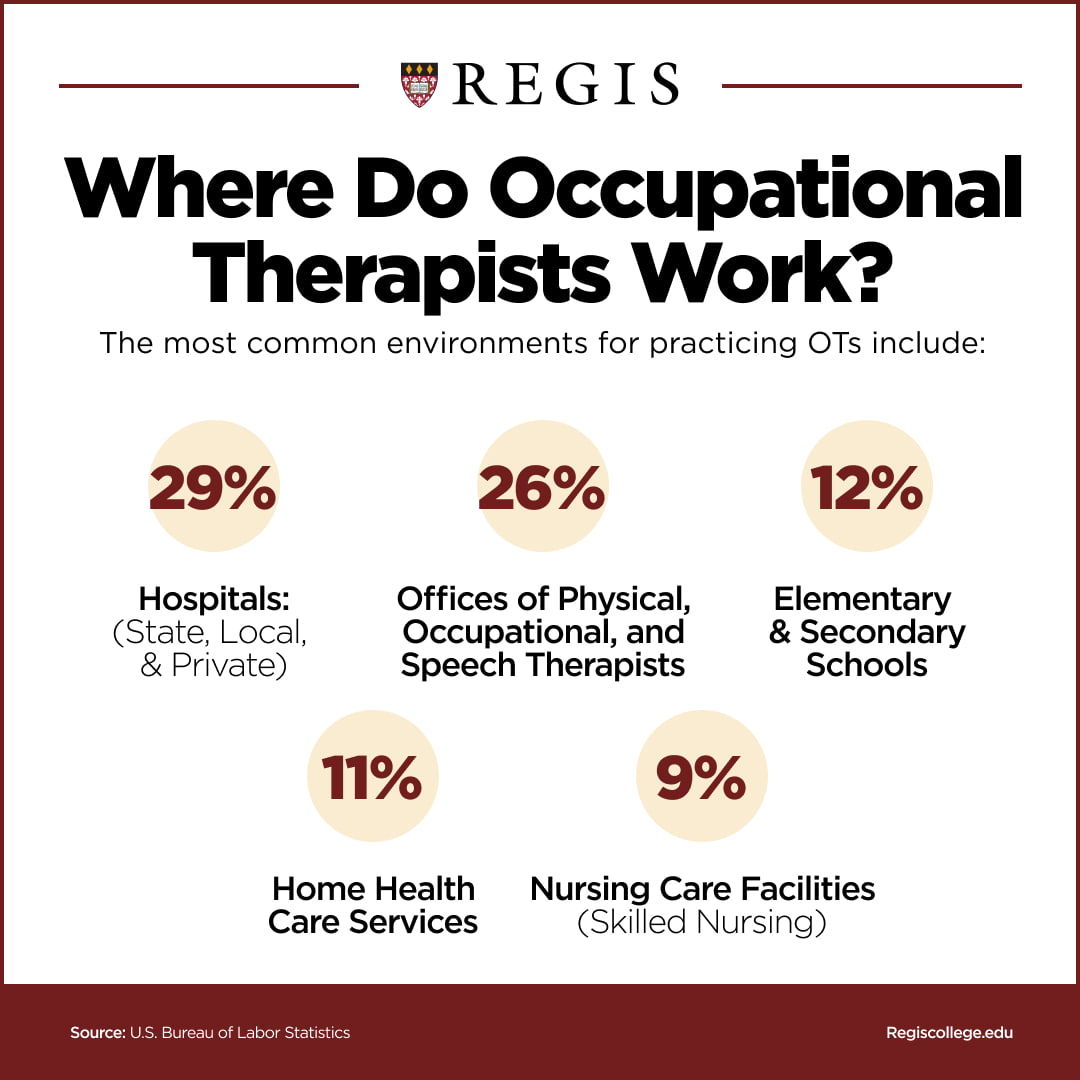
The best way to understand the daily work of occupational therapy is to look at how it changes across settings. The core goal is often similar, but the tasks, pace, and team structure can look very different.
Hospital or Acute Care OT
In a hospital or acute care setting, an occupational therapist may work with patients recovering from surgery, illness, stroke, injury, or a major change in health status. The day often starts with reviewing charts, checking precautions, understanding medical updates, and coordinating with the healthcare team.
A hospital-based OT might help a patient practice getting out of bed safely, using the bathroom, dressing, or completing basic self-care tasks after a medical event. They may assess whether the patient can return home safely or needs additional rehabilitation, equipment, caregiver support, or discharge planning.
A day in this setting may include:
- Reviewing medical charts and physician orders
- Coordinating with nurses, physicians, physical therapists, and case managers
- Evaluating mobility, self-care, cognition, and safety
- Helping patients practice activities of daily living
- Recommending equipment or environmental supports
- Contributing to discharge planning
- Documenting progress and recommendations
The pace can be fast as patient needs often change quickly. That requires a therapist to adjust based on medical status, pain, fatigue, or discharge timelines.
School-Based OT
School-based occupational therapists help students participate in the activities and routines that make up the school day. Instead of focusing only on a diagnosis, school-based OTs look at how a student functions in the classroom, cafeteria, playground, transitions, or other school environments.
A school-based OT might support handwriting, fine motor development, sensory regulation, self-care routines, adaptive tools, classroom access, or strategies that help a student participate more fully in learning. They may also work closely with teachers, families, special education teams, and other school professionals.
A day in this setting may include:
- Observing students in classrooms or school routines
- Providing direct or consultative services
- Supporting fine motor, sensory, or self-regulation needs
- Recommending classroom strategies or adaptive tools
- Communicating with teachers and families
- Participating in IEP-related documentation or meetings
- Tracking student progress toward functional goals
This setting appeals to those who enjoy working with children, but also those capable of collaborating closely with educators to think more deeply about how environment, routine, and development can impact a student’s ability to participate.
Pediatric Outpatient OT
Pediatric outpatient OTs will more often than not work with children and families in a clinic setting. Sessions may focus on anything from sensory processing and motor skills, to emotional regulation or participation in age-appropriate activities.
The day may include a series of individual treatment sessions with children of different ages and needs—one session may involve helping a child practice motor planning through play, while another focuses on assisting a family to build strategies for daily routines.
A day in this setting may include:
- Preparing individualized treatment activities
- Working with children through play-based interventions
- Supporting sensory, motor, feeding, or self-care goals
- Coaching parents or caregivers
- Collaborating with speech therapy or other professionals
- Documenting progress after each session
- Adjusting activities based on the child’s response
Patnaude notes that occupational therapists often work closely with speech therapy in pediatric practice, collaborating closely when there is overlap in communication, sensory, feeding, developmental, or participation needs.
To help Regis students prepare more effectively for a possible career in pediatric care, Patnaude states the program takes full advantage of the resources available on campus, including a children’s center and Autism Center.
Adult Outpatient or Hand Therapy OT
In adult outpatient rehabilitation or hand therapy, occupational therapists may work with clients recovering from injuries, surgery, pain, weakness, or loss of function. The work often focuses on restoring or improving upper-extremity function and helping clients return to daily activities, work tasks, hobbies, or self-care.
A client recovering from a hand injury may need support with a range of motion, strength, swelling, pain management, splint use, scar management, or adapting tasks while healing. Another client may need help rebuilding function after surgery or learning how to protect a healing joint.
A day in this setting may include:
- Assessing range of motion, strength, pain, and functional limitations
- Providing therapeutic exercises or activities
- Supporting hand, wrist, arm, or upper-extremity recovery
- Teaching home exercise programs
- Recommending adaptations for work or daily tasks
- Tracking progress over time
- Updating treatment plans based on client response
For students interested in more specialized areas of practice, this type of setting can show how OT combines anatomy, movement, function, and daily-life goals. Regis’ MSOT curriculum, for instance, includes a specialty course in hand and upper-extremity rehabilitation, giving students exposure to an area that many occupational therapists pursue after graduation.
Home Health or Community-Based OT
Home health and community-based occupational therapy bring the work into the client’s real environment. Instead of practicing skills in a clinic or hospital, OTs may observe how a client moves through their home, manages daily tasks, and interacts with the environment around them.
A home health OT might evaluate fall risks or recommend the client install new bathroom equipment to aid safety. The OT may advise on energy conservation strategies, help a client practice safe transfers, or speak to a caregiver on how to support independence.
The work can be highly practical since the OT has a chance to see the exact environment where the client needs to function.
A day in this setting may include:
- Traveling to clients’ homes or community sites
- Evaluating home safety and accessibility
- Recommending modifications or adaptive equipment
- Helping clients practice daily routines in their own environment
- Educating caregivers
- Coordinating with home health teams or community providers
- Documenting visits and progress
This setting often requires independence and problem-solving as an OT adapts to each home environment and learns more about the available family support and safety concerns.
Mental Health or Community Practice OT
Occupational therapists may also work in mental health or community-based settings, helping clients build skills and routines that support daily life, independence, and community participation.
According to the U.S. Bureau of Labor Statistics, OTs in mental health settings may help clients with developmental disabilities or mental health conditions improve skills such as managing time, using public transportation, and doing household chores.
A day in this setting may include:
- Supporting routines, time management, and self-care
- Leading individual or group sessions
- Helping clients build skills for community access
- Addressing barriers to participation
- Supporting functional goals tied to daily living
- Collaborating with mental health or community providers
- Documenting progress toward goals
This setting can appeal to students who are interested in the connection between mental health, routines, independence, and participation in everyday life.
The Skills OTs Use Throughout the Day
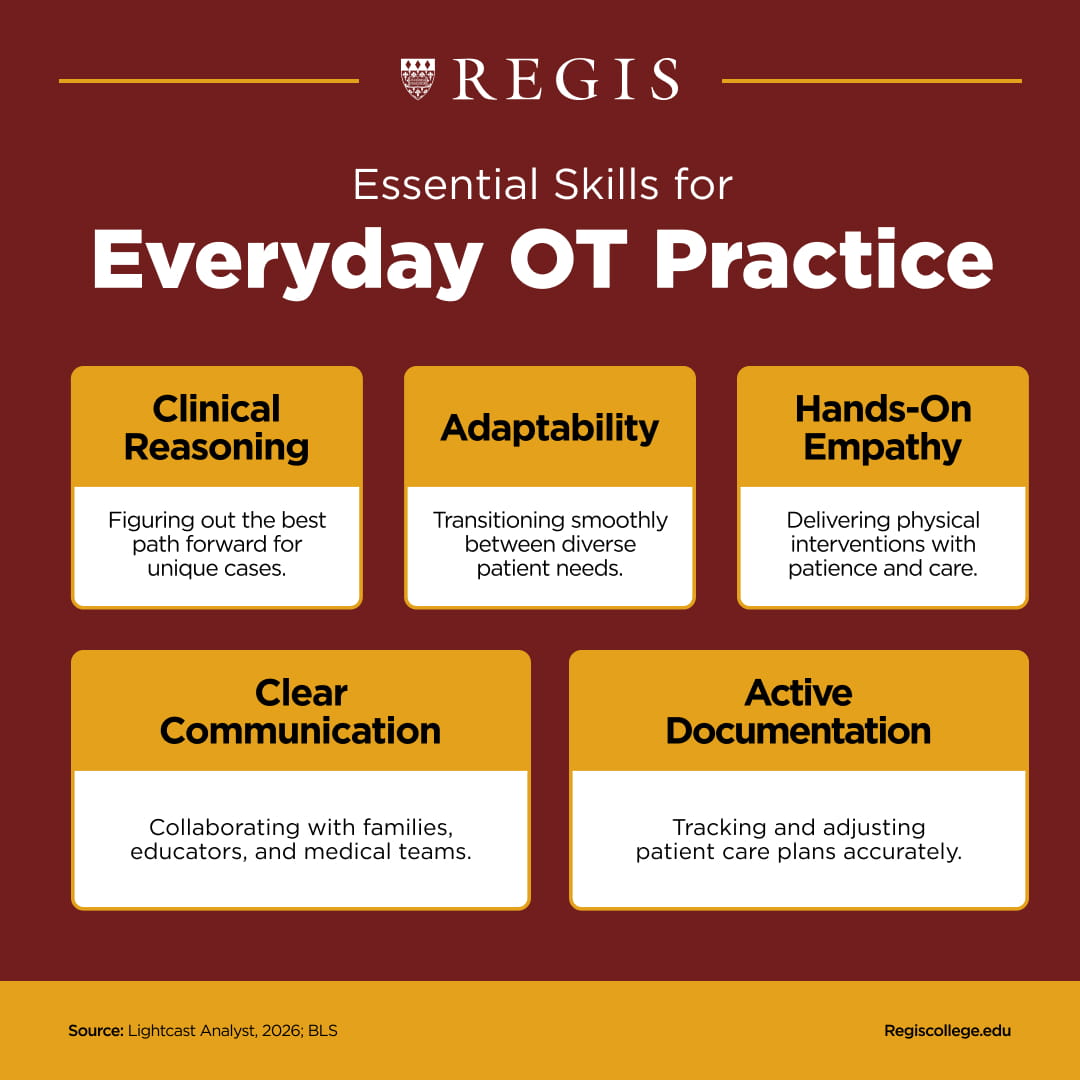
Because occupational therapists work across so many settings, they need a wide range of skills. Some are hands-on and clinical. Others involve communication, collaboration, documentation, and professional judgment.
Throughout the day, OTs may use:
- Communication
- Active listening
- Adaptability
- Documentation
- Collaboration
- Hands-on intervention
- Professional judgment
- Empathy and patience
- Time management
One skill Patnaude highlights as essential for OTs: clinical reasoning.
“Clinical therapeutic reasoning is kind of the way that you figure things out,” she says. “We can’t teach students everything about everything. We teach them basic knowledge. We teach them how to think of a specific patient and bring them through the OT process, from evaluation to assessment, to re-evaluation and discharge.”
Patnaude adds that OT education should help students learn “how to think and not just what to think.”
Such reasoning allows OTs to adapt according to what’s happening in real-time. A client may respond differently than expected. A family may raise a new concern. A school or hospital caseload may require quick transitions. A treatment plan may need to be adapted.
For students considering the profession, understanding the skills occupational therapists use every day can help them decide whether the career aligns with their strengths.
How Regis Prepares Students for the Day-to-Day Reality of OT Practice
For students who want to become occupational therapists, the right graduate program should help connect classroom learning to the realities of practice.
Regis College’s Master of Science in Occupational Therapy is designed as a clinically focused program that helps students prepare for the day-to-day work of OT through coursework, labs, service learning, and fieldwork.
Several features of the program support that preparation.
Active-practitioner faculty
Regis’ OT faculty bring current clinical experience into the classroom. That ensures students don’t just learn theory but are instead educated in how occupational therapists think through real client needs.
“All of our faculty are highly experienced and we all still practice clinically,” Patnaude says. “So you have faculty who are teaching who actually are out there in the clinic, who can bring real-life experience to you every day.”
That real-world perspective can help students understand how concepts apply across different clients, diagnoses, and care settings.
Hands-on and fieldwork-rich learning
OT is an applied profession, so students need opportunities to practice. Regis emphasizes hands-on learning through practice courses, service learning, and fieldwork experiences.
Patnaude points to hands-on clinical skill development as especially important, including practice with transfers, assessments, and treatment planning. These are the types of skills students need to build before entering full-time fieldwork or professional practice.
Broad fieldwork settings
Regis students may complete fieldwork in a variety of settings, including hospitals, school systems, outpatient practices, community-based mental health, adapted sports, and other OT practice environments.
That variety is vital in helping students understand the differences between each setting and explore the populations or practice areas that interest them most.
Students who are still exploring the field may also want to learn more about different occupational therapy specialties, including pediatrics, hand therapy, mental health, rehabilitation, school-based practice, and assistive technology.
Close-knit classes and clinical focus
Patnaude describes Regis as a clinically based program for students who want to become practitioners. That focus aligns with the realities of occupational therapy: students need to graduate ready to think clinically, communicate professionally, adapt to client needs, and work with real people in real settings.
Close-knit classes and personalized attention teaches students how to ask the right questions, apply that feedback appropriately, and build confidence.
What Future MSOT Students Should Know
A realistic picture of occupational therapy includes both the rewarding parts of the work and the demands of the profession.
The job is often deeply meaningful as OTs help people overcome physical challenges and participate more fully in daily life. But the work is also busy, hands-on, and complex. No two days are exactly the same, and that the profession requires comfort with client care, documentation, collaboration, and changing priorities.
Before pursuing occupational therapy, it helps to understand that:
- OTs often move between clients with different needs, goals, and care plans.
- Documentation is a regular part of the job.
- Collaboration with families, caregivers, educators, and healthcare providers is essential.
- Fieldwork is where students begin to experience the pace and variability of practice.
Graduate school can help students build the clinical reasoning, communication, and hands-on skills needed for entry-level practice. But weighing the day-to-day expectations alongside the timeline for completing an MSOT, the cost of earning a master’s in occupational therapy, and whether an MSOT or OTD better fits their career goals is an important step in deciding how a graduate-level program will assist them achieve their career goals.
Prepare for a Career in Occupational Therapy
A day in the life of an occupational therapist varies by setting, but the core purpose remains consistent: helping people participate more fully in daily life.
For some clients, that may mean relearning how to get dressed, return to work, or participate more fully in school. For OTs, it means balancing client-centered care with clinical reasoning, documentation, collaboration, and hands-on intervention.
If that kind of work feels meaningful to you, occupational therapy may be a strong career path to explore. And if you are preparing for that path, a clinically focused MSOT program can help you build the skills, confidence, and fieldwork experience needed for practice.
To learn more, explore Regis College’s Master of Science in Occupational Therapy or request more information and get answers to any questions you may have.



Published Date