
For ABD students comparing programs, the wrong question is often the easiest one to ask.
It is tempting to focus first on name recognition, convenience, or the lowest sticker price. But if you have already completed years of doctoral work and stalled at the dissertation stage, the right question is: which program is most likely to help me actually finish?
That is what makes choosing an ABD completion program different from choosing a traditional doctoral program. You are not evaluating a new academic beginning. You are evaluating a path to completion, and the features that matter most are the ones most closely tied to finishing the dissertation: structure, faculty engagement, research and writing support, accountability, and a format that works for real adult lives.
For students, the goal is to find programs—like Regis College’s EdD in Leadership All But Dissertation (ABD) Completion program—that provide substance that goes beyond surface-level talking points.
Key Takeaways
- The best ABD completion program is not simply the cheapest or most flexible; it is the one most likely to help you finish the dissertation.
- Look for a curriculum built around dissertation milestones, with direct support in research methods and scholarly writing.
- Faculty accessibility, timely feedback, and strong advising matter because many ABD students stalled in less supportive environments.
- A cohort model and built-in accountability can help reduce isolation and keep returning doctoral students moving forward.
- For working professionals, the right program format should balance flexibility with enough structure to make completion realistic.
Will This Program Help Me Finish?
ABD students do not need a program that simply lets them re-enroll. They need a program that is designed around completion. That means looking beyond general impressions and asking whether the curriculum, advising model, feedback structure, and overall format are likely to help a returning doctoral student keep moving.
Many students become ABD not because they lacked ability, but because the dissertation stage demanded a different kind of work than coursework had required. As Heather Maietta, EdD, a Professor at Regis College, notes dissertation writing is highly independent and often requires long-term research and scholarly writing skills that many students were never explicitly taught in the first place.
So, what should prospective students prioritize?
Look For a Curriculum Built Around Dissertation Progress
A strong ABD completion program should not treat the dissertation as a vague end goal. It should organize the student experience around getting there.
Courses Attached to Dissertation Milestones
One of the clearest things to look for is whether the curriculum is tied directly to dissertation progress.
Maietta explains that Regis attaches a course to each dissertation chapter so students continue taking classes while learning how to complete each stage of the dissertation rather than trying to teach themselves the process.
A program that ties coursework to dissertation milestones turns an intimidating, open-ended task into a sequence of guided steps.
At Regis, the curriculum reflects that approach. Students move through research and writing support, then into proposal development, literature review, methodology, findings, and conclusion/recommendations.
Research-Methods and Scholarly-Writing Support
Returning students often need help re-engaging with the kind of writing and research the dissertation requires. A program that assumes students can simply pick up where they left off may not be setting them up for success.
Maietta explains that, in the Regis program, courses were intentionally chosen to address common pitfalls, including rebuilding research-methods knowledge and scholarly writing after time away from school.
“We're not taught how to (scholarly) write,” Maietta says. “We don't learn how to do this…It's very different than if I was going to write a letter to you or if I was going to apply for a job or if I was going to complete an assignment for a doctorate program.”
Prioritize Faculty Accessibility and Advising Quality
ABD students already know what it feels like when momentum disappears, communication slows down, or the path forward becomes unclear. That is why advising quality matters so much at this stage.
It is not enough to know that a program assigns faculty advisors. What matters is whether those advisors are accessible, engaged, and able to provide timely feedback that keeps work moving.
“We have a really highly engaged faculty advising model,” Maietta says, about the Regis model. “(Faculty) almost become pseudo-experts on each one of these students' topics as they’re giving them feedback on their dissertations.”
Consider Whether the Program Offers a Cohort Model
The dissertation process can feel isolating, so built-in peer support matters more than many students initially realize. A cohort model can provide accountability, connection, and a sense that progress is happening alongside others who understand the same pressures and demands.
Maietta points to the Regis cohort model as an important part of the program’s support system. Students move through their topical classes together, which helps reduce isolation and gives returning doctoral students both peer connection and shared momentum.
Make Sure the Format Fits Your Real Life
An ABD completion program can have the right academic structure and still be the wrong fit if the format does not work with the realities of your life.
Online Delivery
In today’s world, online access is not a convenience for most students but, instead, a necessity. Work schedules, caregiving responsibilities, and geographic limitations often make a traditional on-campus model unrealistic.
Synchronous Touchpoints
At the same time, flexibility without structure can become a problem. Some students stalled the first time because dissertation work became too unstructured, too independent, or too easy to postpone.
That is why it helps to look for a format that combines accessibility with regular academic touchpoints.
The Regis ABD pathway is delivered online asynchronously and includes virtual Saturday sessions four times per semester. That balance can be especially useful for working professionals who need both flexibility and accountability.
Can You Work and Still Finish Your Dissertation?
A strong program should also feel realistic for adults with full schedules.
Maietta notes that nearly every student in the Regis ABD program over the past several years has worked full-time while pursuing their dissertation.
“(The students) have busy lives and they're interested in getting this advanced degree for various reasons. Some of them are working in affiliate or complimentary industries like Teach for America, or in the nonprofit space and they're interested in transitioning into higher education in an administrative or faculty capacity,” she says. “The doctoral degree gives them not only the connections to be able to navigate that transition more fully but also the credibility for their degree.”
Review Admissions Expectations Carefully
Admissions requirements can reveal a great deal about how a program thinks about completion.
A strong ABD completion program should not admit students casually. It should ask for evidence that they are academically prepared, ready to return, and a good fit for the structure being offered.
Regis requires applicants to provide prior dissertation material as a writing sample, submit recommendations, share a personal statement about barriers to completion, provide a resume or CV, and complete an interview, in addition to showing substantial prior doctoral work and a minimum 3.0 GPA.
A program looking to evaluate readiness will always reflect a serious, completion-focused model.
Ask Yourself These Questions When Comparing ABD Programs
The most useful program comparisons often come from asking the right questions.
1. Does this program teach the dissertation process or simply expect me to resume it?
If the program offers little more than access to an advisor, that may not be enough to change your outcome.
2. How accessible are faculty?
Timely, engaged feedback can be the difference between steady progress and another long stall.
3. What accountability is built in?
Many ABD students need more than flexibility. They need a structure that makes continued progress more likely.
4. Will this format work with my job and family responsibilities?
A program can sound excellent in theory and still be unrealistic in practice.
5. Does the curriculum help me rebuild research and writing momentum?
For many returning students, this is one of the clearest indicators of whether a program is truly designed for completion.
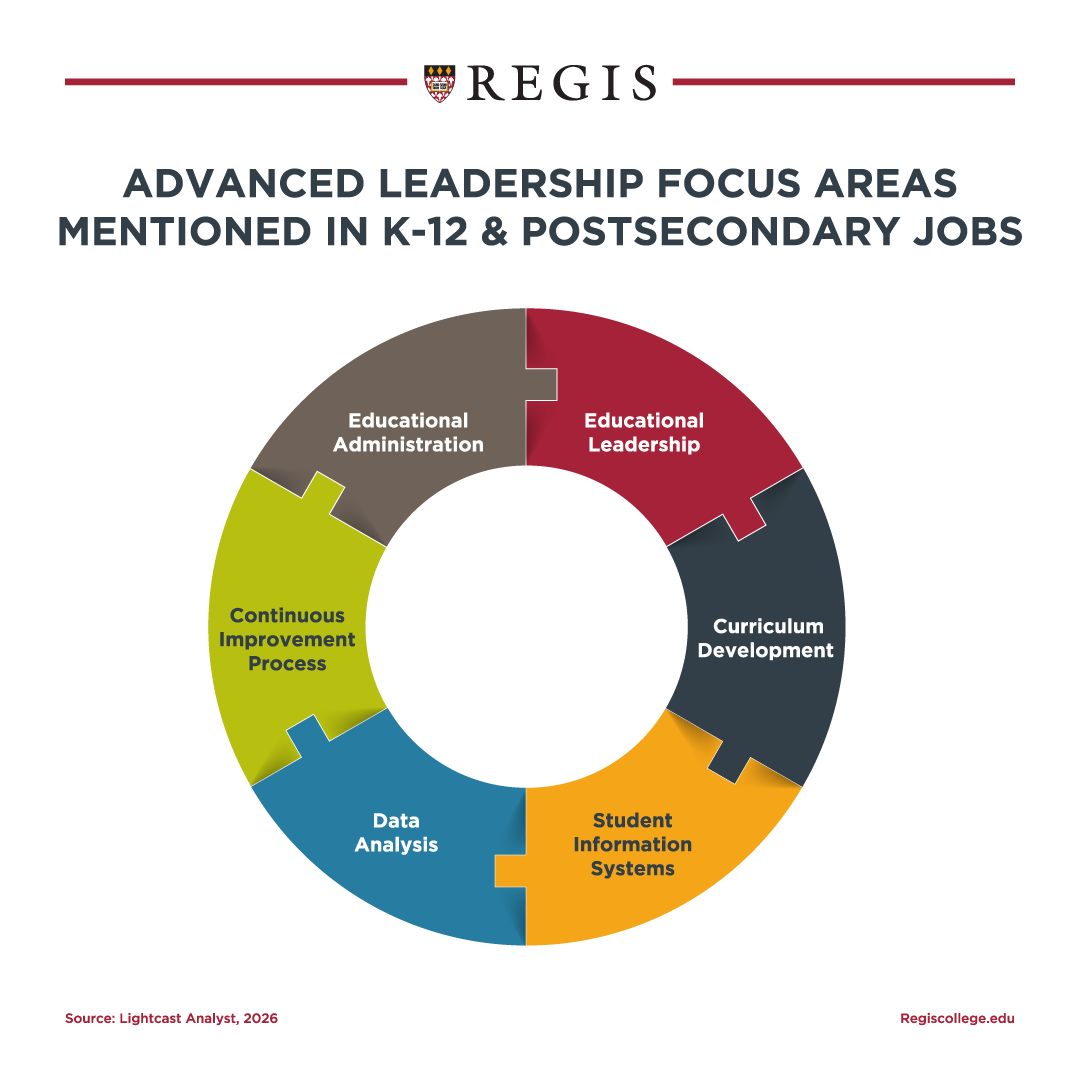
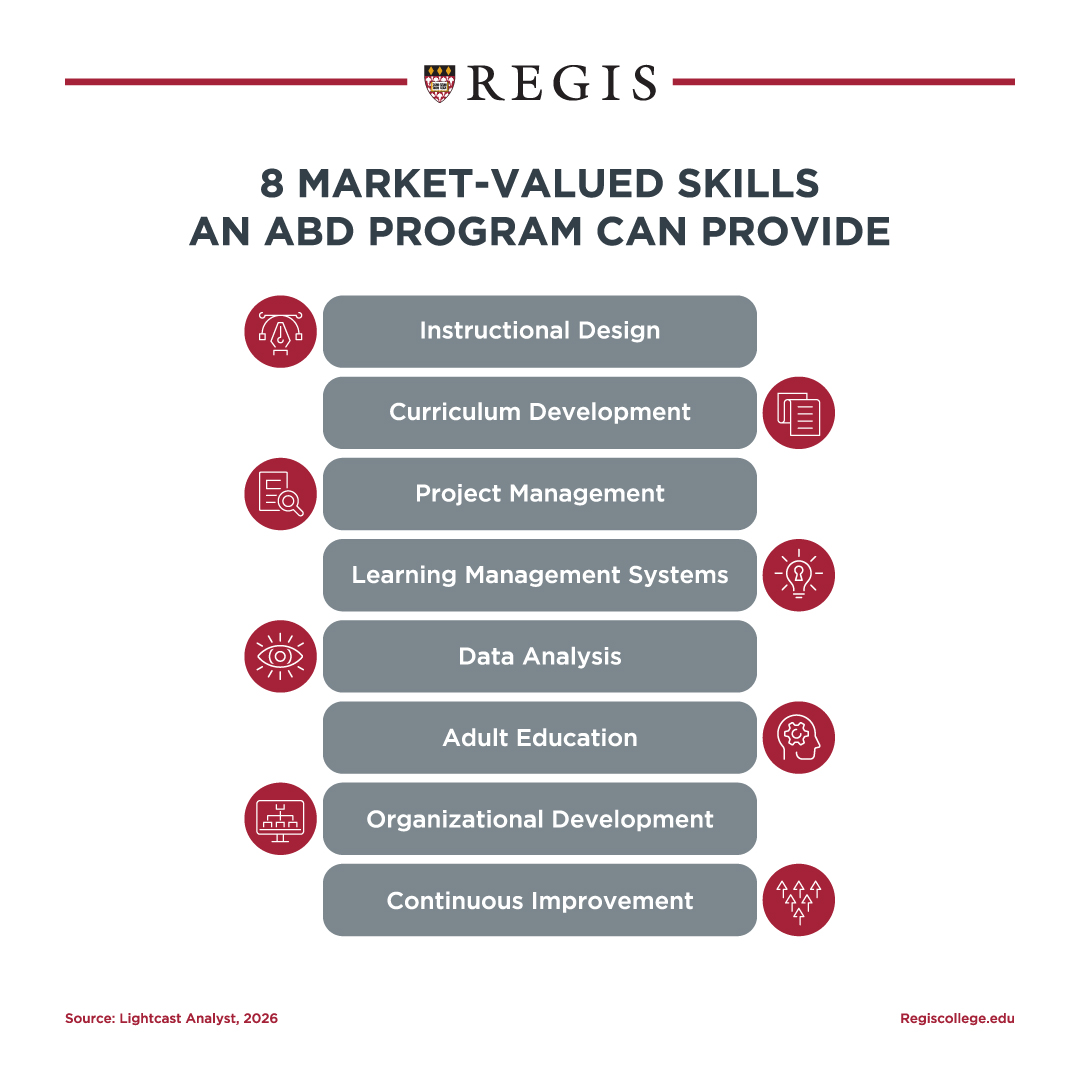
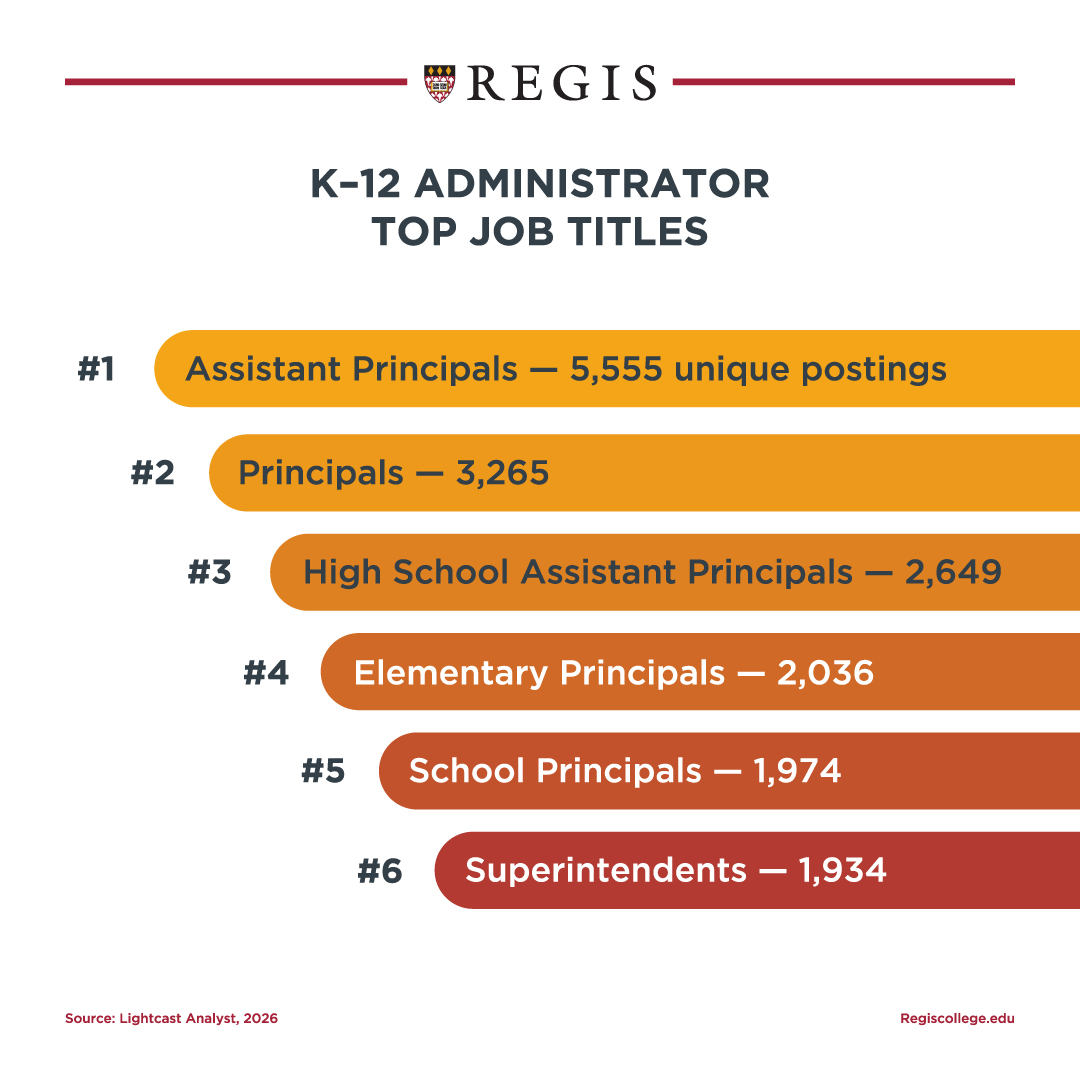
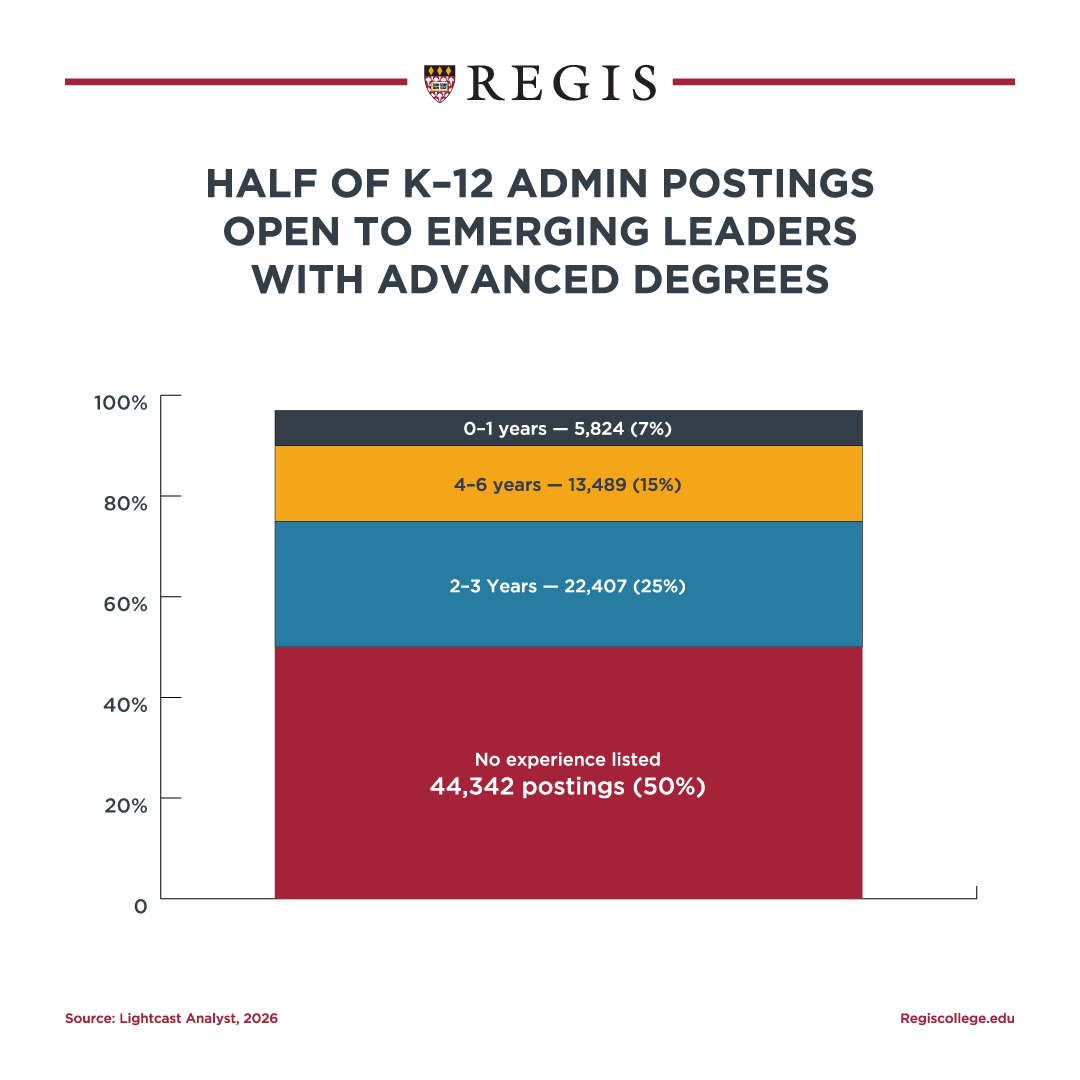
These questions help shift the comparison away from surface-level impressions and toward the features most likely to matter once the work begins. And once complete, graduates enter a field where opportunities present themselves immediately.
Choose the Program That Puts You on a Path to Completion
The best ABD program is not the one that looks the most impressive from a distance. It is the one that gives you the clearest and strongest path to finishing.
That means looking for a curriculum tied to dissertation milestones, meaningful support in research methods and scholarly writing, accessible faculty, built-in peer accountability, and a format that works for adult life.
Regis’ EdD in Leadership All But Dissertation Completion program is structured around those priorities. From the involvement of the faculty, to the focus on research and scholarly writing, the emphasis from day-one is helping students take their dissertation over the finish line and help them on their new career path.
If you are ready to explore what finishing could look like, start by reviewing Regis College’s EdD in Leadership All But Dissertation (ABD) Completion program page, exploring the curriculum, and looking through tuition and admission requirements.
For more information, and to better understand how the ABD Completion pathway fits your goals, timeline, and prior doctoral work:



Published Date