
When it comes to the cost of continuing one’s education, students who have already completed their doctoral coursework but have yet to finish their dissertation are usually asking different questions than someone comparing traditional doctoral programs from the beginning.
All But Dissertation (ABD) students have already spent years completing coursework, paying tuition, balancing school with work and family, and moving through their educational journey. Now, the decision is whether returning to finish the dissertation is financially realistic, and whether the program you choose gives you enough structure and support to make that investment worthwhile.
ABD students want to know specifics about timelines, funding, fees, research expenses, and the opportunity to turn prior academic work into a completed degree. Without answers to those questions, determining whether enrolling in an ABD program is worth it becomes impossible.
Top ABD programs, such as Regis College’s EdD in Leadership All But Dissertation (ABD) Completion program, are designed to give students who have completed most or all of their doctoral coursework a structured pathway to return, complete the dissertation, and finish the EdD. They also provide avenues for students to pay for their return to school and the flexibility to maintain what is likely already a busy personal and professional schedule.
Below, we’ll break down how ABD completion program costs are typically structured, what they cost, and what funding options may help make completion more manageable.
Key Takeaways
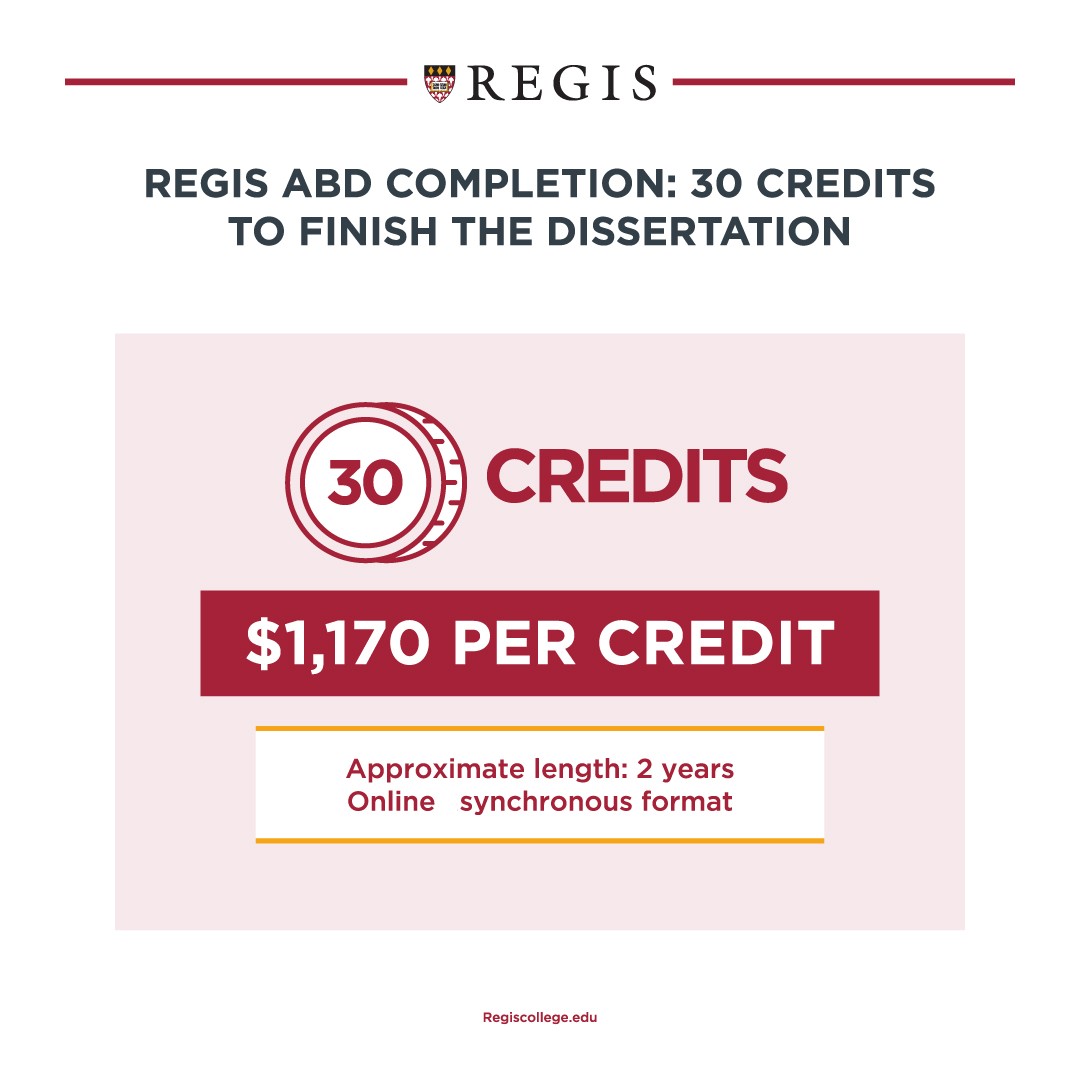
- Regis’ EdD in Leadership All But Dissertation (ABD) Completion program requires 30 credits at $1,170 per credit, for $35,100 in tuition before fees for the 2025-2026 academic year.
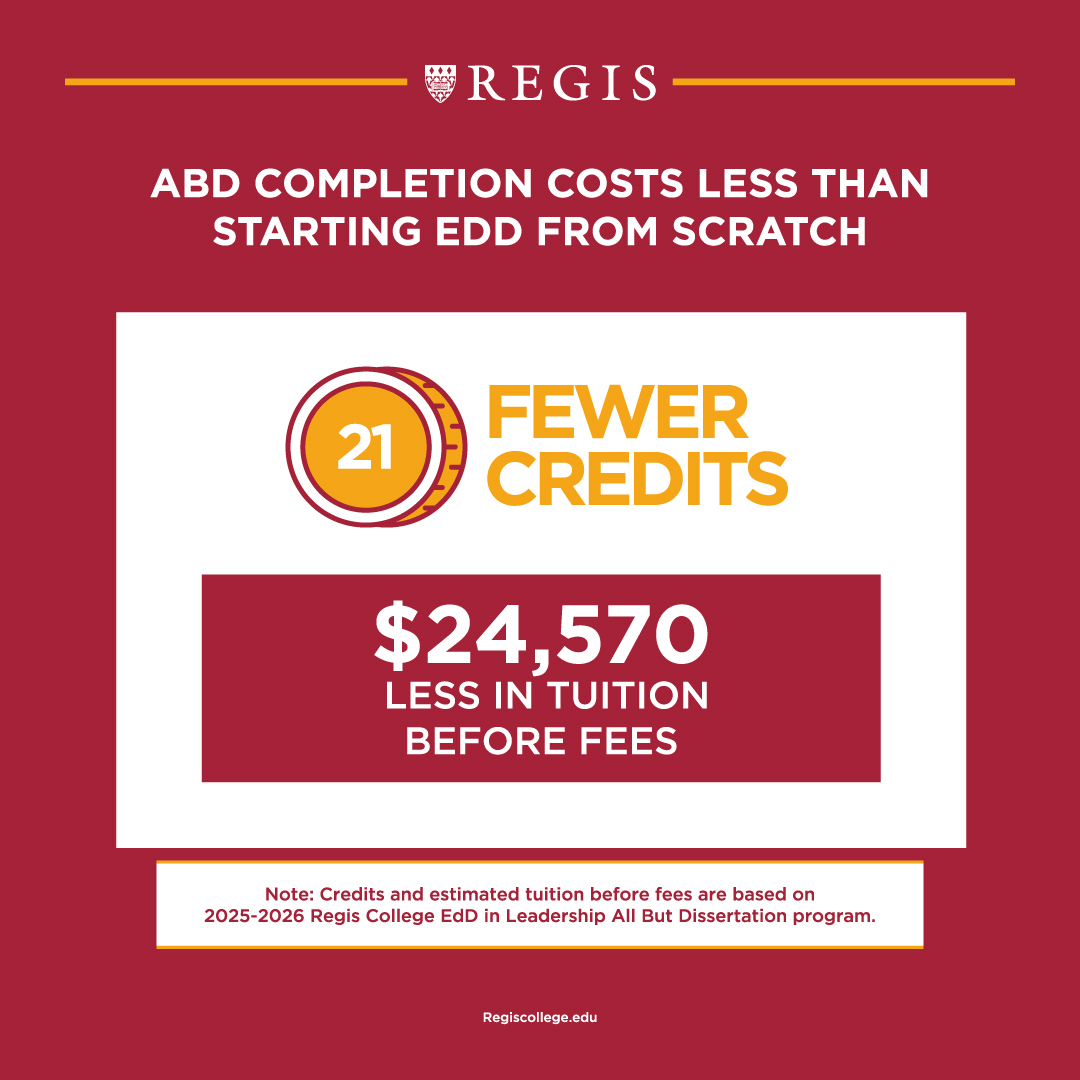
- ABD completion programs often cost less than starting a full EdD from scratch because students have already completed substantial doctoral coursework.
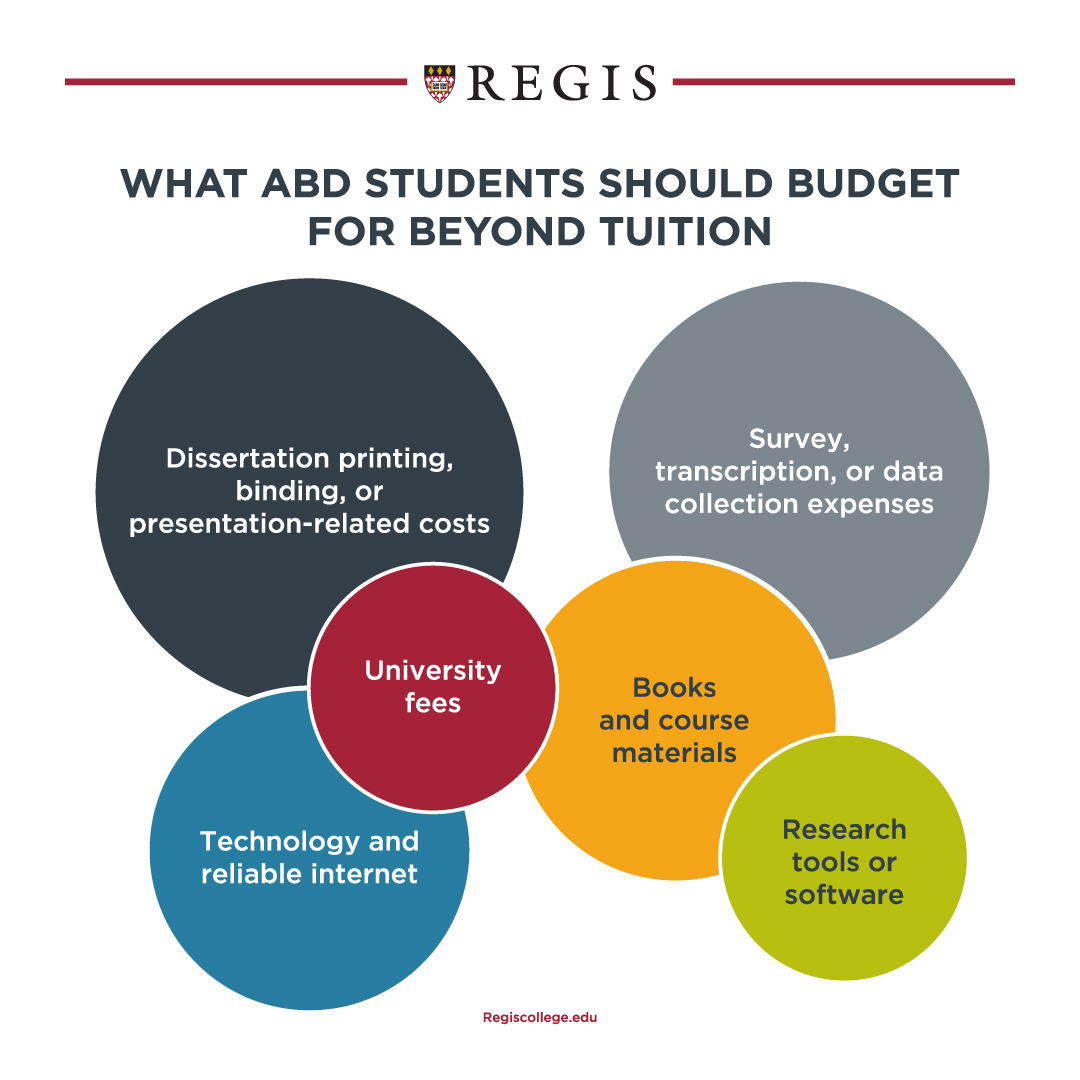
- Students should plan for additional costs beyond tuition, including fees, books, technology, research tools, and dissertation-related expenses.
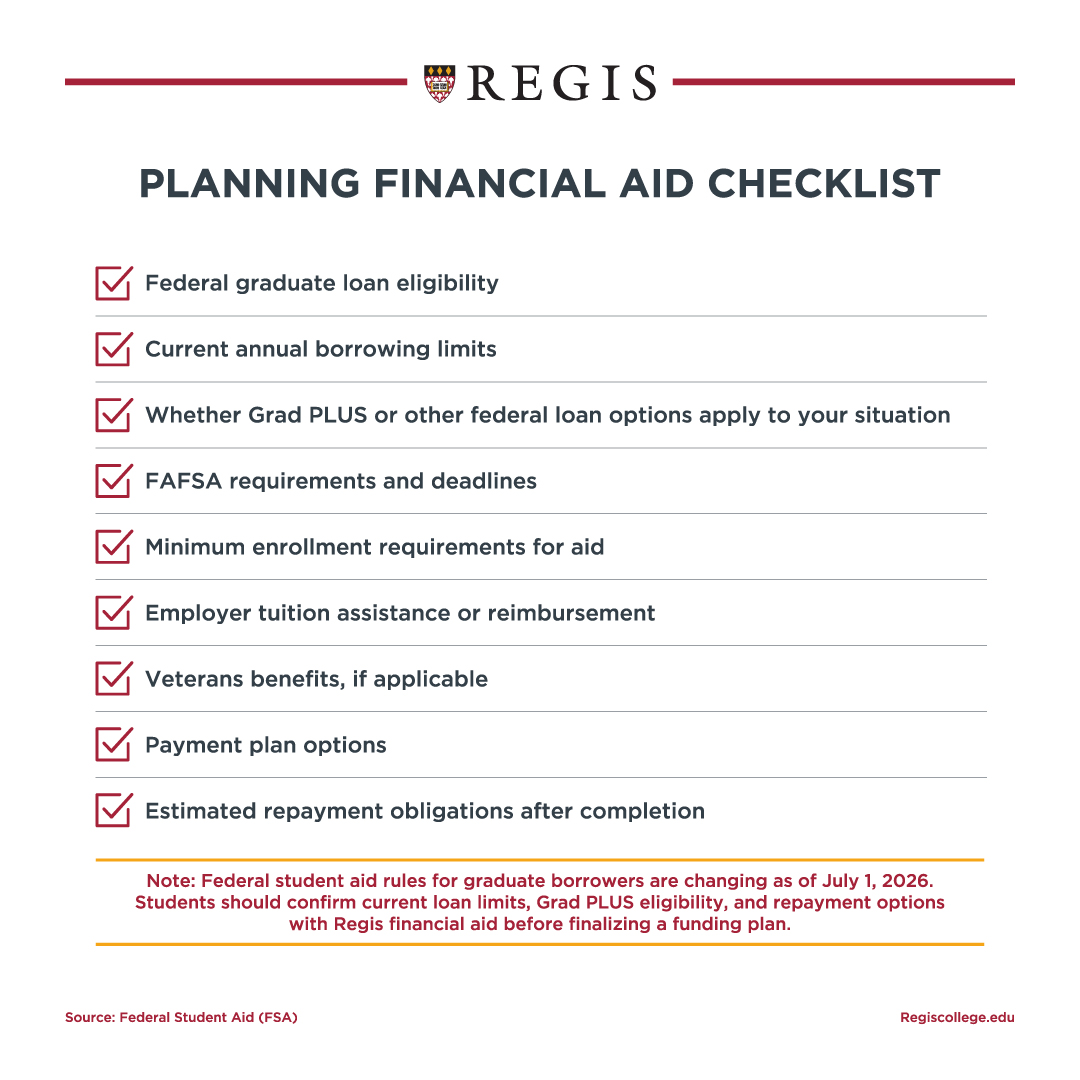
- Funding options may include federal student loans, employer tuition assistance, payment planning, strategic partnership discounts, and veterans benefits for eligible students.
How EdD ABD Completion Program Structure Impacts Cost
ABD completion program costs vary widely because programs are structured differently. The total cost usually depends on:
- The number of credits required
- The institution’s cost per credit
- Whether prior coursework is accepted
- How much dissertation work must be completed or repeated
- Fees, research expenses, and other program-related costs
Since ABD students have typically completed most or all of their doctoral coursework, these programs are often less expensive, requiring less of a time commitment, than a regular EdD pathway. Doctor of Education completion programs often require about one-half to one-third of the credits required in a full EdD program, commonly ranging from approximately 20 to 30 credits.
As tuition is almost always based on a per-credit basis, numbers will range depending on the specific institution offering the program. A 24-credit program at one institution may cost more than a 30-credit program at another.
Regional availability also matters. For instance, ABD pathways are rare among New England institutions, with Regis College offering one of the very few in the area.
How Much Does the EdD ABD Completion Program Cost at Regis?
At Regis College, the ABD Completion program requires 30-credits at $1,170 per credit.
That brings the estimated tuition to:
- 30 credits x $1,170 per credit = $35,100 total tuition before fees
This figure is based on the 2025–2026 academic year, does not include fees, and is subject to change. Students should use the published number as a planning baseline and confirm current tuition, fees, and billing information with Regis before making a final decision.
The ABD Completion curriculum is designed to be completed in approximately two years. Also, the structure of the program is “very intentional about how we designed the program to provide a space for maximum success,” according to Heather Maietta, EdD, Professor at Regis College.
What Additional Costs Should ABD Students Plan For?
Tuition is the largest cost, but ABD students should also plan for fees, technology, research materials, and dissertation-related expenses that may vary by topic and project design.
Books, Research Materials, and Technology
Online doctoral students should also plan for the practical costs of participating in coursework and completing dissertation research. Those may include:
- A computer that can support online coursework and research
- Books or required course materials
- Research databases or tools not already provided
- Statistical, survey, citation, or qualitative analysis software, depending on dissertation design
Some of these costs may be minor. Others may depend heavily on the student’s research topic. Because dissertation work is individualized, students should ask what tools and resources they may need to pay for separately.
Dissertation-Related Expenses
The dissertation itself may create additional expenses depending on the research method. Possible costs can include transcription, survey tools, participant recruitment, data collection, data analysis tools, printing, binding, or conference-related expenses if students choose to present their work.
Not every student will incur all of these costs. A student conducting interviews may have different expenses than a student analyzing existing data or conducting a survey. The safest approach is to discuss the likely cost of dissertation-related activities once the research design becomes clear.
The Cost of ABD Completion Vs Starting an EdD From Scratch
For many ABD students, the most useful comparison is not simply comparing ABD pathway programs. It’s comparing the cost of finishing through an ABD pathway with starting a full EdD program over.
At Regis, the comparison looks like this:
- EdD in Leadership All But Dissertation (ABD) Completion: 30 credits x $1,170 = $35,100 tuition before fees (2025-2026)
- Full EdD in Leadership: 51 credits x $1,170 = $59,670 tuition before fees (2025-2026)
- Difference: $24,570 in tuition before fees
That difference reflects the fact that ABD students have already completed significant doctoral work before entering the completion pathway. The cost is lower than starting from scratch because the academic situation is different.
Maietta explained that Regis intentionally requires ABD students to complete courses that address common barriers to finishing. “You might have been out of school for 10 years,” she said. “We forget how to research. We don’t do it every day.” As such, the program includes scholarly writing support—often invaluable to such students who may never have been instructed on how to write academically.
Completion programs still require a meaningful credit load, so as to ensure students get the structure and instruction necessary to finish the dissertation once and for all.
What Funding Options are Available for ABD Students?
The best funding plan usually combines several avenues at once: financial aid, employer support, personal budgeting, and any benefits a student may be eligible to use.
Federal Student Loans
Doctoral students may be eligible for federal student loans, depending on their enrollment status and other eligibility requirements.
Important to note: As of July 1, 2026, new federal regulations apply to student loans:
- Graduate Loan Caps: Annual federal student loans for general graduate degree programs are limited to $20,500, with a $100,000 aggregate cap.
- Graduate PLUS Loans: While being phased out for new borrowers, students continuing the same degree program may still have access to Grad PLUS loans to cover remaining costs.
Employer Tuition Assistance or Reimbursement
Many ABD students are working professionals. In fact, Maietta states that, in her experience, nearly every student in the program has worked full-time while balancing other life commitments.
That makes employer funding worth exploring. Some employers offer tuition assistance or reimbursement, professional development funds, or support for employees pursuing credentials tied to leadership, education, research, or organizational improvement.
Students working in K–12 education, higher education, nonprofits, healthcare, public agencies, or mission-driven organizations may want to ask:
- Are doctoral courses eligible for professional development funding?
- Is funding available only after successful course completion?
- Do I need approval before enrolling?
- Is there a service commitment after reimbursement?
Strategic Partnership Tuition Discounts
Regis College partners with several companies, colleges, and school districts, offering employees of these organizations discounts of as much as 10-20% off tuition. The full list includes approximately 50 educational partners. In addition, Regis alumni are also eligible for a 20% tuition discount.
Payment Planning and Personal Budgeting
Because Regis’ ABD Completion program is designed to take approximately two years, determining how costs are distributed across terms will help students estimate how much they may owe each semester, how aid will be applied, and whether they need a personal payment plan.
This is especially important for students balancing tuition with family obligations, existing student loans, or reduced work flexibility during the dissertation process.
Veterans Benefits and Other Funding Questions
Military-connected students may also be eligible to take advantage of benefits. Regis provides assistance to eligible U.S. veterans and active duty service members, including the Yellow Ribbon Program.
Students should confirm eligibility and benefit details directly with Regis and the appropriate VA resources before making assumptions about coverage.
Is the Cost of an ABD Completion Program Worth It?
Returning to finish a doctorate requires time, money, and renewed focus. But for ABD students, the cost is not the same as starting over.
Students are deciding whether the remaining investment can help them turn prior coursework, research, and effort into a completed degree and, ultimately, new career opportunities.
Regis’ EdD in Leadership All But Dissertation (ABD) Completion program offers a 30-credit pathway designed around dissertation progress, faculty support, research and writing guidance, and flexibility for working professionals. It also costs less in tuition than beginning a full EdD in Leadership program from scratch.
If you are ready to explore what finishing could look like, start by reviewing Regis College’s EdD in Leadership All But Dissertation (ABD) Completion program page, exploring the curriculum, and looking through tuition and admission requirements.
For more information, and to better understand how the ABD Completion pathway fits your goals, timeline, and prior doctoral work:



Published Date