
Licensure Steps, Certificate Options, and Career Paths
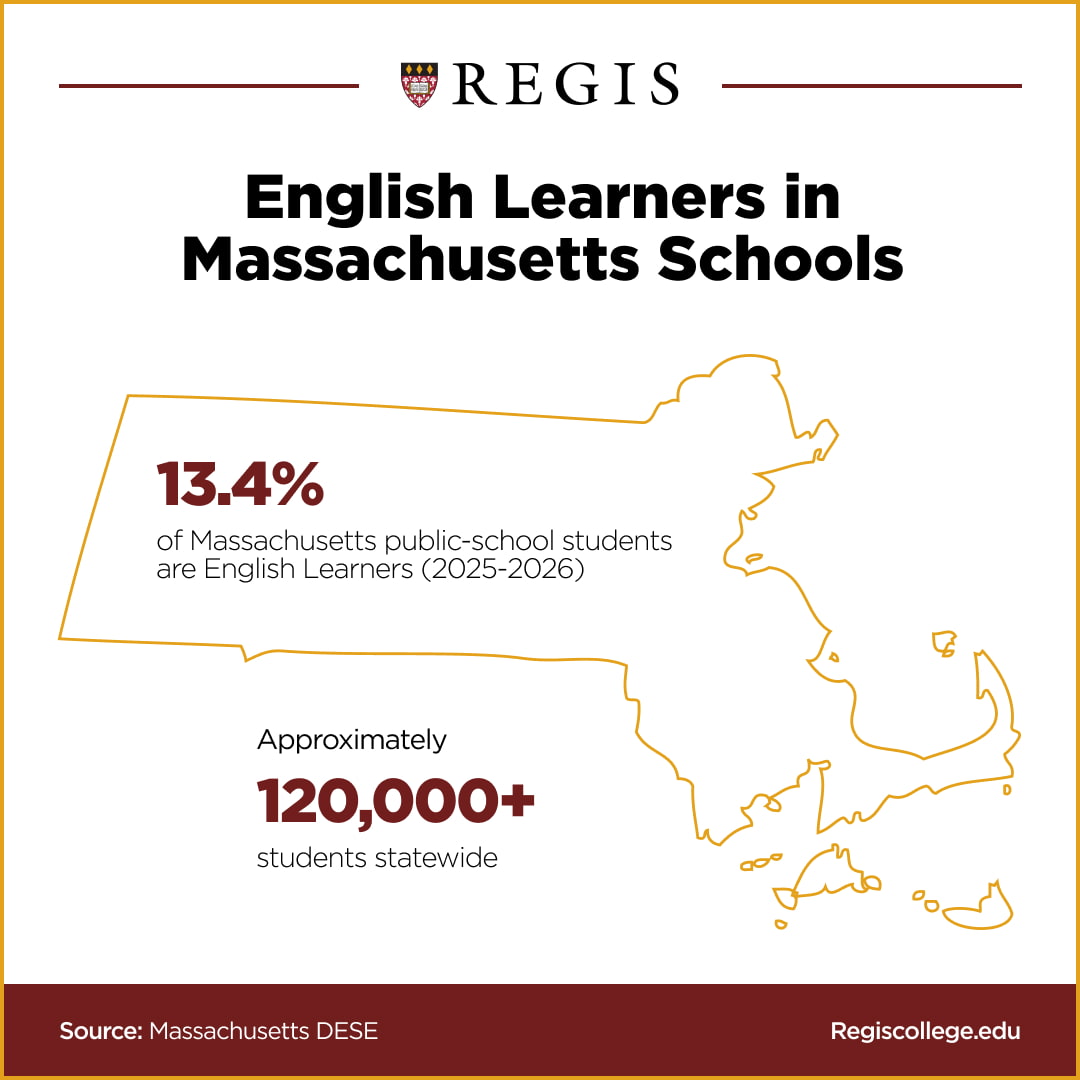
In Massachusetts, educators increasingly work with students who are developing English proficiency while learning grade-level material. For licensed teachers, adding ESL expertise can provide an opportunity to support these learners more effectively, move into a dedicated ESL position, or expand their flexibility within a school or district.
Becoming licensed in ESL, however, involves more than completing a few courses. Educators must understand the state’s preparation, testing, field-experience, and application requirements.
To become an ESL teacher in Massachusetts, educators generally need to complete an approved preparation pathway, build the required ESL subject-matter knowledge, satisfy the applicable Massachusetts Tests for Educator Licensure requirement, complete supervised field experience, and apply for the license through the Massachusetts Department of Elementary and Secondary Education.
The exact path you’d take depends on your current credentials and experience. Here, we’ll focus on teachers who already hold a Massachusetts Initial or Professional license and want to add ESL, explaining how to pursue the additional license.
Key Takeaways
- Massachusetts public-school educators must hold the appropriate state-issued license for their teaching assignment.
- An ESL graduate certificate and an ESL teaching license are not the same: A college awards the certificate, while the state issues the license.
- Regis College’s ESL Graduate Certificate is designed for educators who already hold a current Massachusetts Initial or Professional teaching license.
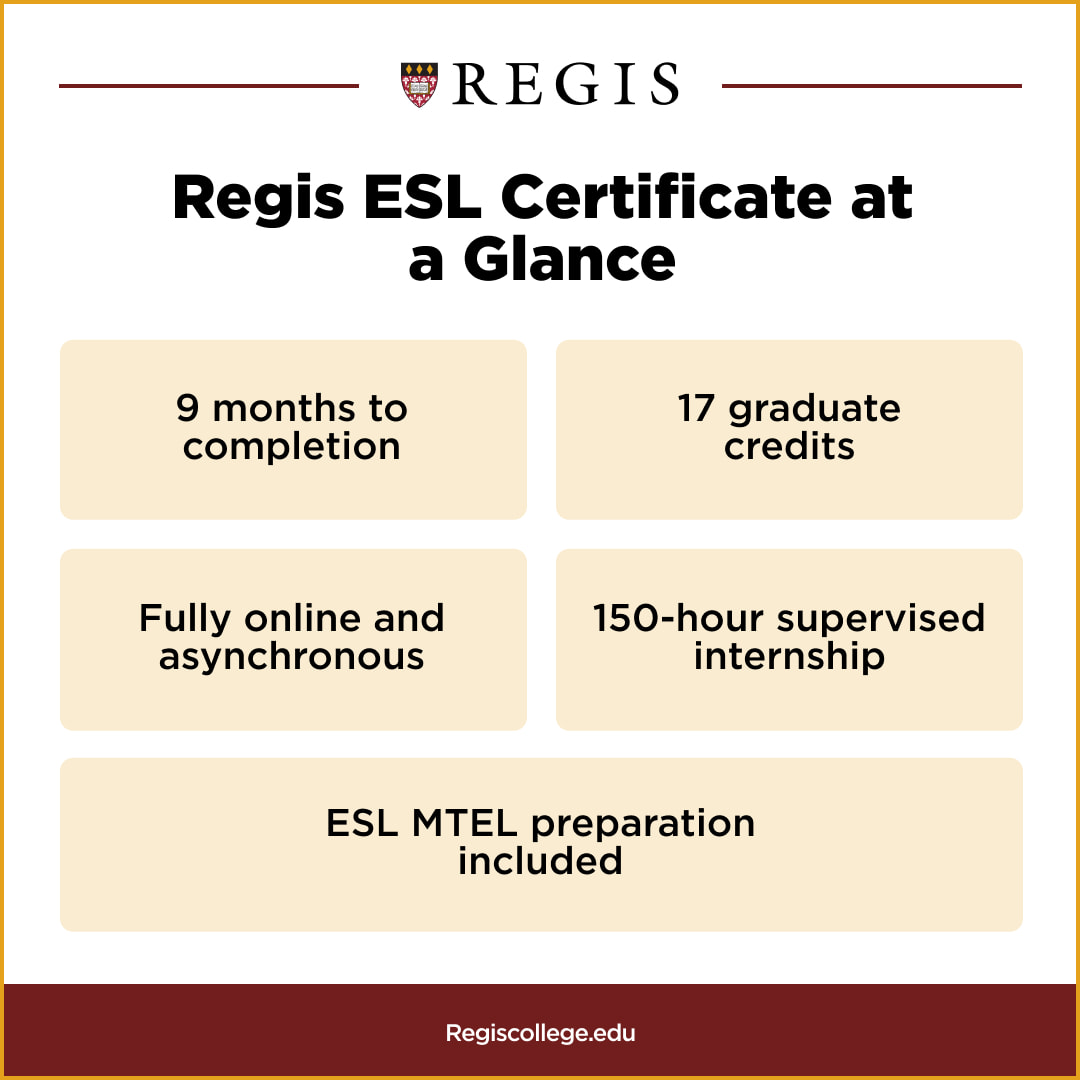
- The nine-month program includes ESL-focused coursework, MTEL preparation, and a 150-hour supervised internship.
- Because licensure pathways vary, educators should review their ELAR profile and confirm their individual requirements with DESE.
What Does an ESL Teacher Do?
An ESL teacher helps students develop the English language skills necessary to understand grade-level content and participate in school. The role extends beyond vocabulary and grammar by connecting language development with literacy and other subjects.
Depending on the school and student population, an ESL teacher may:
- Teach dedicated ESL classes.
- Provide push-in support inside general education classrooms.
- Lead pull-out or small-group instruction.
- Work with students in newcomer programs.
- Assess language-development needs and monitor progress.
- Collaborate with classroom teachers to make lessons more accessible.
- Support students across pre-K, elementary, middle, or high school settings.
Andrew DaCunha, MEd, program director for Regis College’s English as a Second Language (ESL) Graduate Certificate, explains that the work can vary widely. An ESL teacher might teach at the high-school level or support pre-K students. The preparation can also benefit classroom teachers who want stronger strategies for supporting the English learners they already teach.
Do You Need an ESL License to Teach ESL in Massachusetts?
Massachusetts public schools assign educators according to the licenses they hold. That means if you want to move into a dedicated ESL position, you generally need a Massachusetts ESL license that matches your role and the grade level you teach.
If you already hold an Initial or Professional teaching license, you may be able to pursue ESL as an additional license after satisfying the preparation, assessment, field-experience, and other requirements associated with your individual pathway. Of course, the exact pathway depends on factors such as the licenses and endorsements you already hold, your education, prior experience, and completed MTEL requirements.
It is important to distinguish three related but different concepts:
- ESL is an instructional field focused on helping English learners develop language proficiency and access academic content.
- An ESL graduate certificate is an academic credential awarded by a college or university after a student completes a focused program.
- An ESL teaching license is issued by Massachusetts DESE and authorizes an educator to work in a licensed ESL teaching role.
A certificate can organize the coursework, testing support, and field experience connected to licensure, but it does not automatically produce a state license. An add-on pathway is also different from earning a first teaching license or completing general professional development.
Review your Educator Licensure and Renewal profile and confirm your individual route with DESE.
How to Become an ESL Teacher in Massachusetts
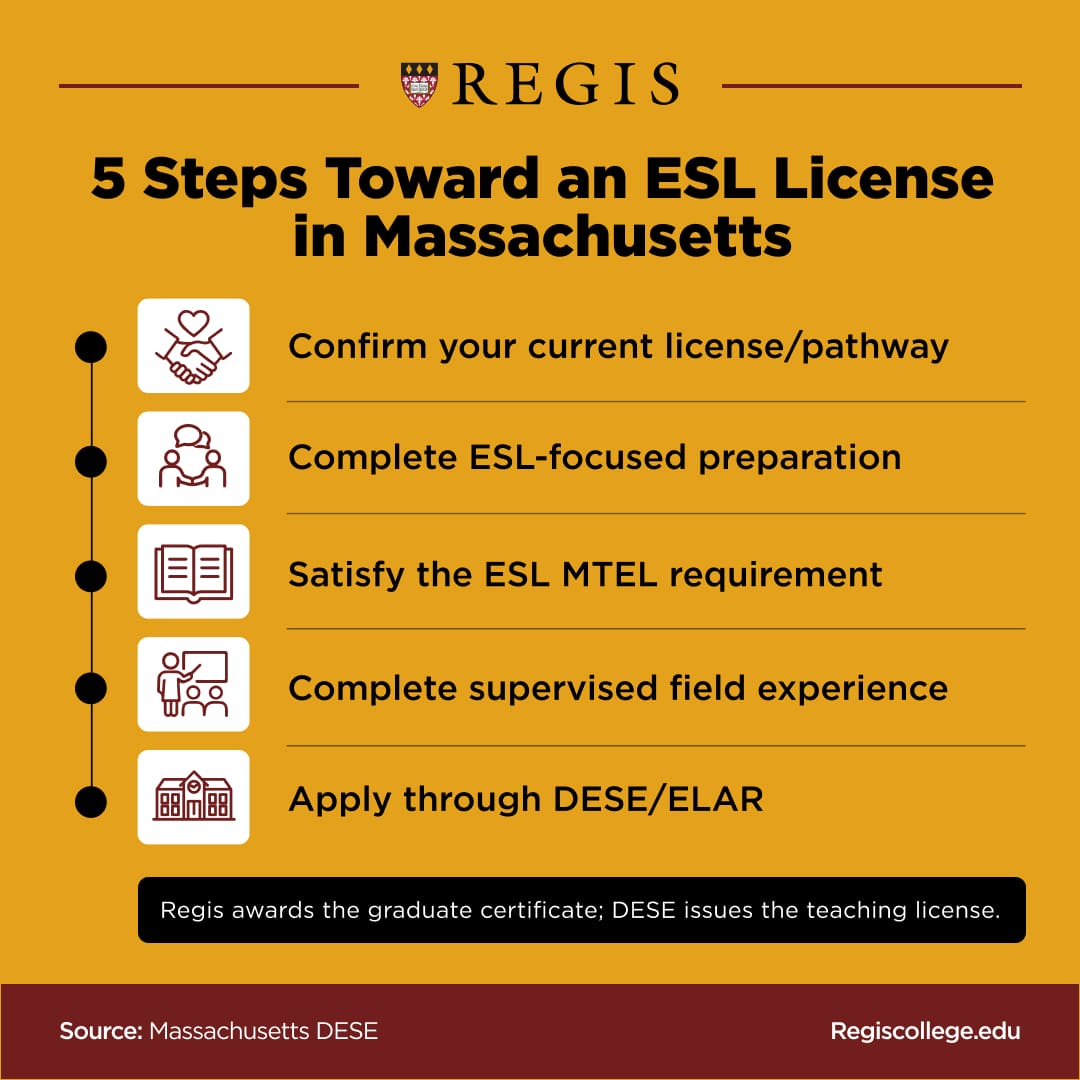
If you’re already a licensed Massachusetts educator, the broad pathway typically includes the following five steps.
1. Confirm That You Meet the Starting Requirements
Start by identifying the license you currently hold and whether an add-on ESL pathway fits your situation.
Then explore your options for an ESL certificate.
The Regis English as a Second Language Graduate Certificate, for instance, is specifically designed for educators who already hold a current Massachusetts Initial or Professional teaching license. It is not intended as a first-licensure program for people who have not yet become licensed teachers.
Applicants must hold a bachelor’s degree with a minimum 3.0 GPA and submit a completed application, official transcripts, a résumé, a personal statement, one letter of recommendation, and a copy of their current Massachusetts teaching license.
2. Complete ESL-Focused Educator Preparation
Effective ESL instruction requires specialized knowledge of language development, culture, identity, assessment, and grade-level instruction.
Relevant preparation may address:
- Second-language acquisition.
- Culture, linguistics, and identity.
- Literacy development for English learners.
- Curriculum and content instruction.
- Assessment of language development.
- Culturally and linguistically responsive lesson planning.
This preparation can benefit educators even if they do not plan to move immediately into a dedicated ESL position. A classroom teacher may pursue the additional credential because they regularly teach English learners and want stronger strategies for helping those students access instruction.
“Maybe I don’t actually want to become an ESL teacher, but I want to go through this program in order to get that certification,” DaCunha explains. “I’m an elementary classroom teacher, and I always get ESL students, and I feel like I’m not able to reach them. So this is going to give me some content-area expertise even if I don’t choose to have that position.”
3. Prepare for and Satisfy the ESL MTEL Requirement
Massachusetts uses the English as a Second Language MTEL to evaluate whether candidates have the subject-matter knowledge needed to teach English learners. The test includes 100 multiple-choice questions and two open-response assignments, with a qualifying score of 240. Candidates may take it at a testing center or through online proctoring.
The assessment covers three broad areas:
- Foundations of second-language instruction, including linguistics, language-acquisition theory, instructional approaches, and the cultural and social factors that affect learning.
- Second-language and content learning, including listening, speaking, reading, writing, assessment, academic language, and strategies for helping English learners access subjects such as math, science, and social studies.
- Integration of knowledge and understanding, assessed through open-response questions that ask candidates to analyze instructional situations and apply ESL principles.
In practical terms, you should be prepared to do more than define terminology. You may need to interpret a learner’s language needs, select an appropriate teaching or assessment strategy, recognize how a student’s first language can affect English development, and explain how they would support both language growth and grade-level learning.
DaCunha explains that at Regis, a one-credit ESL MTEL preparation course is offered during the January intersession, after students complete the program’s four content courses. This sequencing gives you an opportunity to review the major test areas while the material is still fresh.
4. Complete Supervised Field Experience
Coursework provides the foundation, but field experience gives you the opportunity to apply what you learn with real students.
Regis’ certificate program includes a 150-hour, 15-week field-based internship supervised by a school-based practitioner and a Regis faculty member.
Eligible working teachers may be able to complete the internship at their current school rather than arrange a separate placement.
“Being able to complete pre-practicum hours and observations—they’re already there [at the school]. We’re not creating something new or having these arrangements that are wildly unclear or unable to be done in their day-to-day job,” DaCunha says. “You’re already there. We’re going to use what you have there to be able to support you, to complete your requirements and still have those hands-on experiences.”
5. Apply for the ESL License Through DESE
After completing the applicable preparation, testing, and field-experience requirements, you can apply for the educator license through the state’s ELAR system.
The application may require evidence of preparation, field experience, testing, fees, and other documentation. You should monitor your application and respond if DESE asks for additional materials.
DESE—not Regis College—makes the final licensing determination. Requirements may differ according to your existing credentials and experience, so use official state guidance as the final authority.
What Is the Difference Between an ESL Certificate and an ESL License?
A graduate certificate documents that you completed a focused academic program. It may provide graduate credits and include the coursework, testing preparation, and internship connected to a licensure pathway.
A teaching license, by contrast, is issued by the state. It confirms that you have met Massachusetts requirements for a particular educator role and grade span.
Before enrolling, confirm that a certificate:
- Fits your current license status.
- Aligns with the license you want to pursue.
- Includes appropriate preparation and supervised field experience.
- Provides support for applicable testing requirements.
- Fits your school-year and work schedule.
Graduate credits may also affect a teacher’s salary lane in some districts. However, collective bargaining agreements and district policies vary. Do not assume that completing 17 credits will automatically result in higher pay; ask your district how the coursework would be treated.
How Long Does It Take to Add an ESL License?
The total timeline depends on your preparation route, existing qualifications, testing schedule, and DESE’s application process. At Regis, the ESL Certificate program is structured as a nine-month pathway:
- Four accelerated eight-week courses during the fall.
- A two-week MTEL preparation course in January.
- A 15-week supervised internship during the spring.
The courses are fully online and asynchronous, which gives working teachers flexibility in deciding when to complete weekly assignments. “It’s this small unit of time that will allow [students] to open up their horizons,” DaCunha says.
Still, accelerated does not mean effortless. You’ll take two courses during each eight-week fall session and should plan for a demanding academic schedule.
DaCunha also encourages students to communicate with their support systems about when they may need additional help balancing school, work, and personal responsibilities.
What Career Paths Can an ESL License Support?
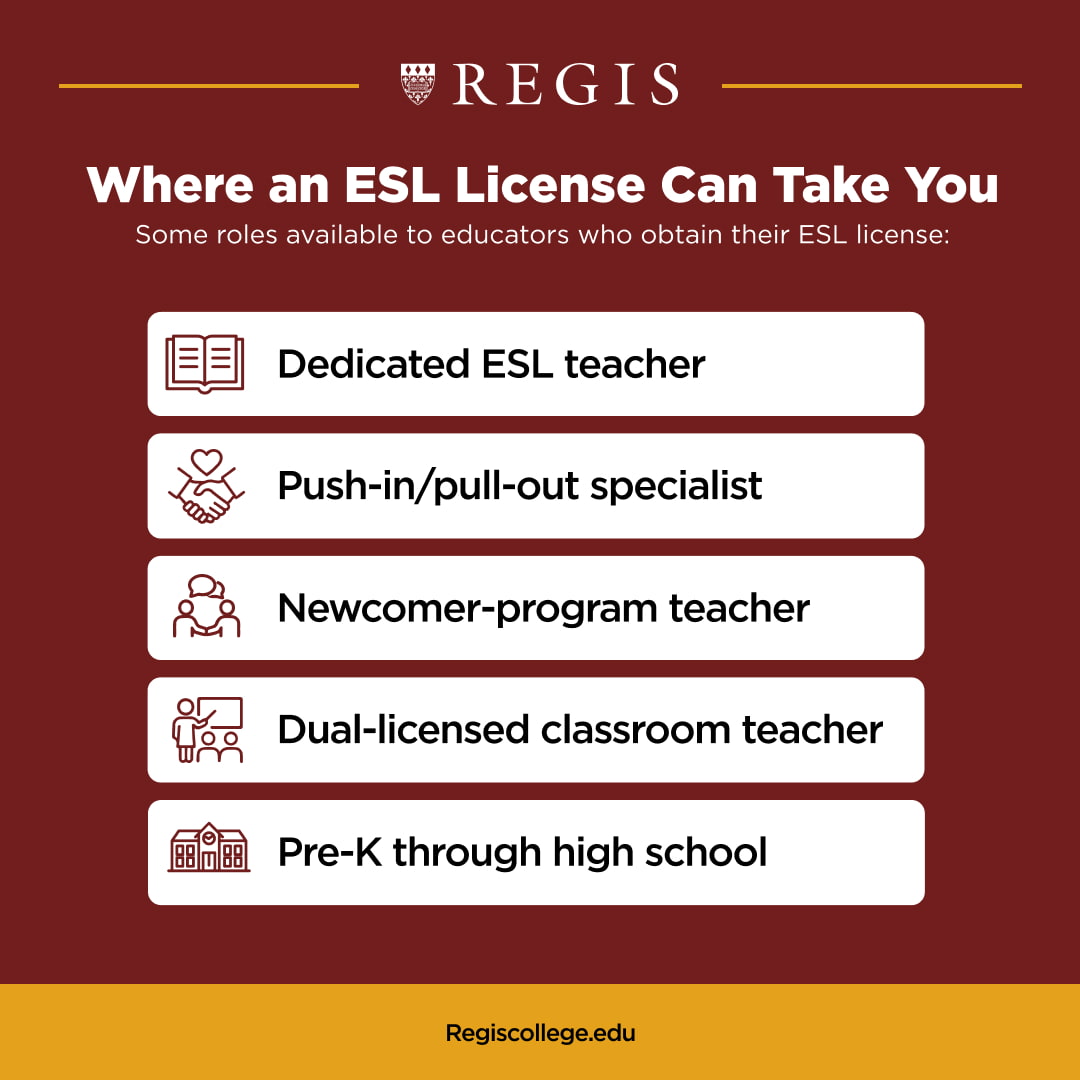
An additional ESL license can help you pursue roles such as:
- Dedicated ESL teacher.
- Push-in or pull-out ESL specialist.
- Newcomer-program teacher.
- Dual-licensed classroom teacher.
- ESL educator serving a particular grade band or school level.
An ESL license can also strengthen your value in your current school or district, even if you do not plan to move immediately into a dedicated ESL position. Dual licensure can give schools more flexibility in how they assign teachers and support English learners across classrooms.
“Sometimes districts are really looking for teachers who have a dual certification because now they’re able to meet that requirement,” DaCunha says. “They are certified to be able to do those two things. They can work in the general classroom, but we also have ESL students [who] can also be met there.”
The exact opportunities will depend on the grade span of the license, district needs, and employer requirements. Completing the certificate should not be interpreted as automatic qualification for administrative, curriculum-leadership, or director-level roles.
Ask Yourself These Questions Before Choosing an ESL Pathway
Before enrolling in a program, consider:
- Do I already hold the Massachusetts teaching license required to enter this pathway?
- Do I want to move into a dedicated ESL role, or primarily strengthen my current teaching practice?
- Can I commit to an accelerated nine-month sequence?
- Can my current school support an appropriate supervised internship?
- Have I reviewed the ESL testing and application requirements that apply to me?
- Does my district recognize these graduate credits for salary-lane movement?
- Have I confirmed my individual pathway with DESE and the program?
Take the Next Step Toward ESL Licensure
Becoming an ESL teacher in Massachusetts requires several connected steps: completing appropriate preparation, developing ESL subject-matter knowledge, meeting testing and field-experience requirements, and applying for the license through DESE. For already licensed educators, a structured graduate certificate can bring those components together in a clearer, more manageable pathway.
Regis College’s nine-month ESL Graduate Certificate is designed for working Massachusetts educators who want to add an ESL license or become better prepared to teach English learners in their current classrooms.
Explore the English as a Second Language Graduate Certificate at Regis College to review the curriculum, admission requirements, and internship structure.
Want more information? Connect with one of our admissions counselors to discuss what the right next steps might be for you!



Published Date