
Pursuing a graduate degree is a serious decision. It takes time, money, and sustained effort.
For many prospective students considering applied behavior analysis, the biggest question is not whether they can complete the degree but, rather: is a master’s in ABA worth it?
For many students, the answer is yes. A master’s degree in applied behavior analysis can lead to a growing field, strong salary potential, flexible career paths, and work that can make a direct difference in people’s lives.
Here, we’ll take a look at how the field is growing, what doors a master’s can unlock, who the degree is right for, and how Regis College’s MS in Applied Behavior Analysis (ABA) prepares graduates for a successful career.
Key Takeaways
- An MS in ABA can be worth it for students who want a growing field, strong career flexibility, and work that makes a measurable difference in people’s lives.
- Demand for Board Certified Behavior Analysts® (BCBAs) remains strong, with continued growth in job postings nationwide and in Massachusetts.
- Salary data suggests that BCBAs often earn competitive pay, with room for advancement as they gain experience and move into leadership or specialized roles.
- ABA professionals can work in a range of settings, including schools, hospitals, early intervention, adult services, and organizational behavior management.
- The value of the degree depends in part on choosing a program that builds real-world skills, offers fieldwork support, and helps students prepare for long-term career success.
Demand for BCBAs Is Strong and Growing
One of the clearest reasons an MS in ABA can be worth it is job demand.
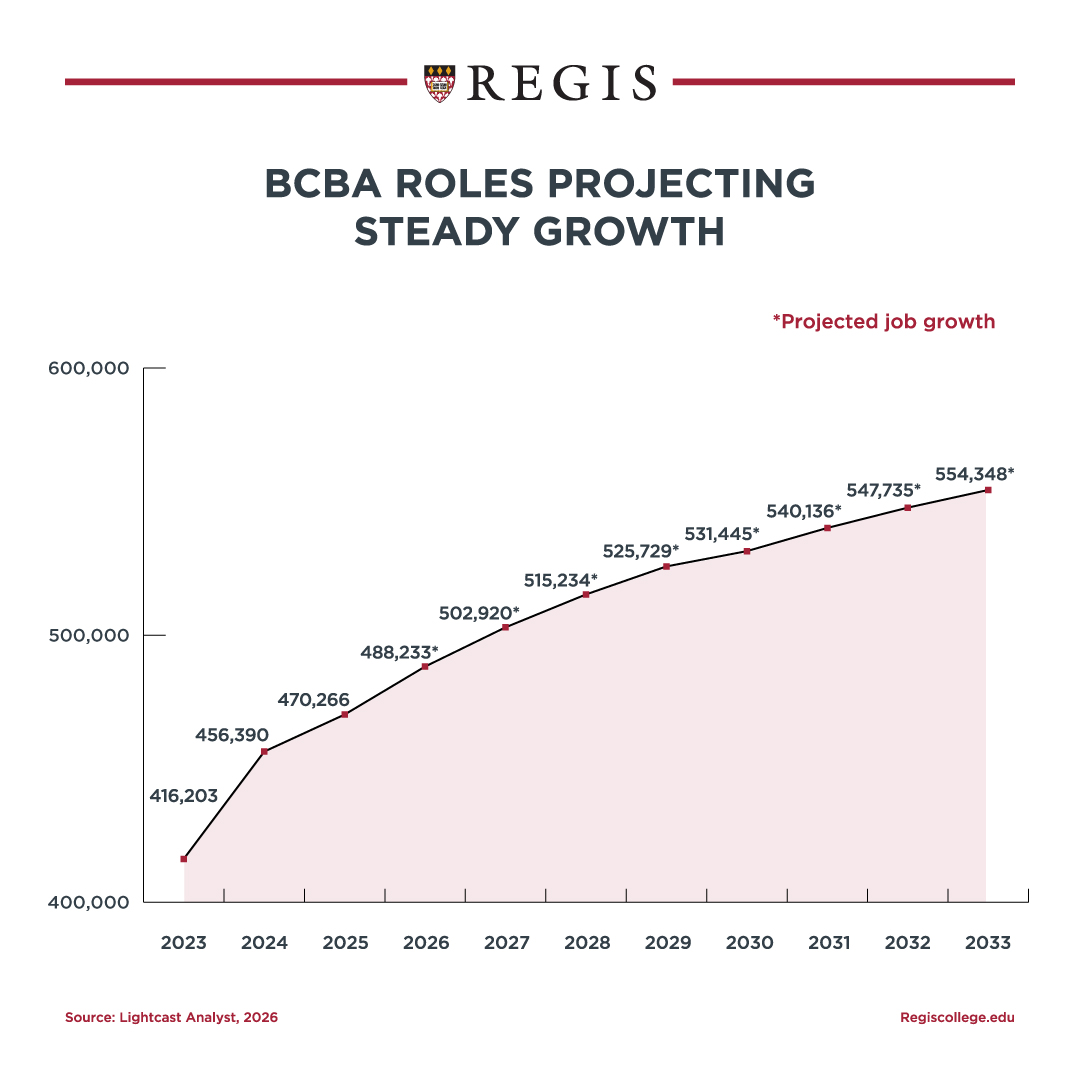
The national market for Board Certified Behavior Analysts® (BCBAs) has expanded significantly over time, and recent data shows that demand continues to rise. The Behavior Analyst Certification Board’s 2026 employment demand report found that annual nationwide demand for BCBA/BCBA-D job postings increased again from 2024 to 2025, up 28%, continuing a long-term upward trend dating back to 2010.
Graduates are entering an expanding field. In practical terms, strong demand can mean:
- More job opportunities after graduation
- Greater flexibility in choosing a setting
- More geographic options
- Stronger long-term career stability
Jacquelyn MacDonald, PhD, BCBA-D, LABA, Regis MS in ABA Program Director, points to several reasons demand has remained strong. In her view, growth has been driven not only by increased awareness of autism and earlier diagnosis, but also by broader recognition of where behavior analysts can contribute.
That broader demand also shows up regionally. The BACB’s report identified Massachusetts among the leading states for BCBA demand in 2025, alongside California, New Jersey, Texas, and North Carolina.
Salary Potential and Career Stability
Demand is only one part of the equation. Salary potential matters too.
Current salary data suggests that BCBAs earn strong incomes relative to many other helping professions, with the average salary for a BCBA at approximately around $89,000–$90,000.
Compensation varies based on location, employer, years of experience, specialization, and supervisory responsibilities. Still, the salary outlook suggests that graduates can expect meaningful earning power over the course of their careers.
Career stability matters as well. Strong demand paired with strong salaries can make the field more resilient than many students expect. Instead of training for one narrowly defined role, graduates may find opportunities in education, healthcare, autism services, community programs, family support services, private practice, and organizational settings.
Career Flexibility Across Settings
Another reason a master’s in ABA can be worth it is that it does not lock graduates into a single type of job.
MacDonald is especially clear on this point. She notes that many people assume behavior analysts only work with autistic children, but that is too narrow a picture of the field.
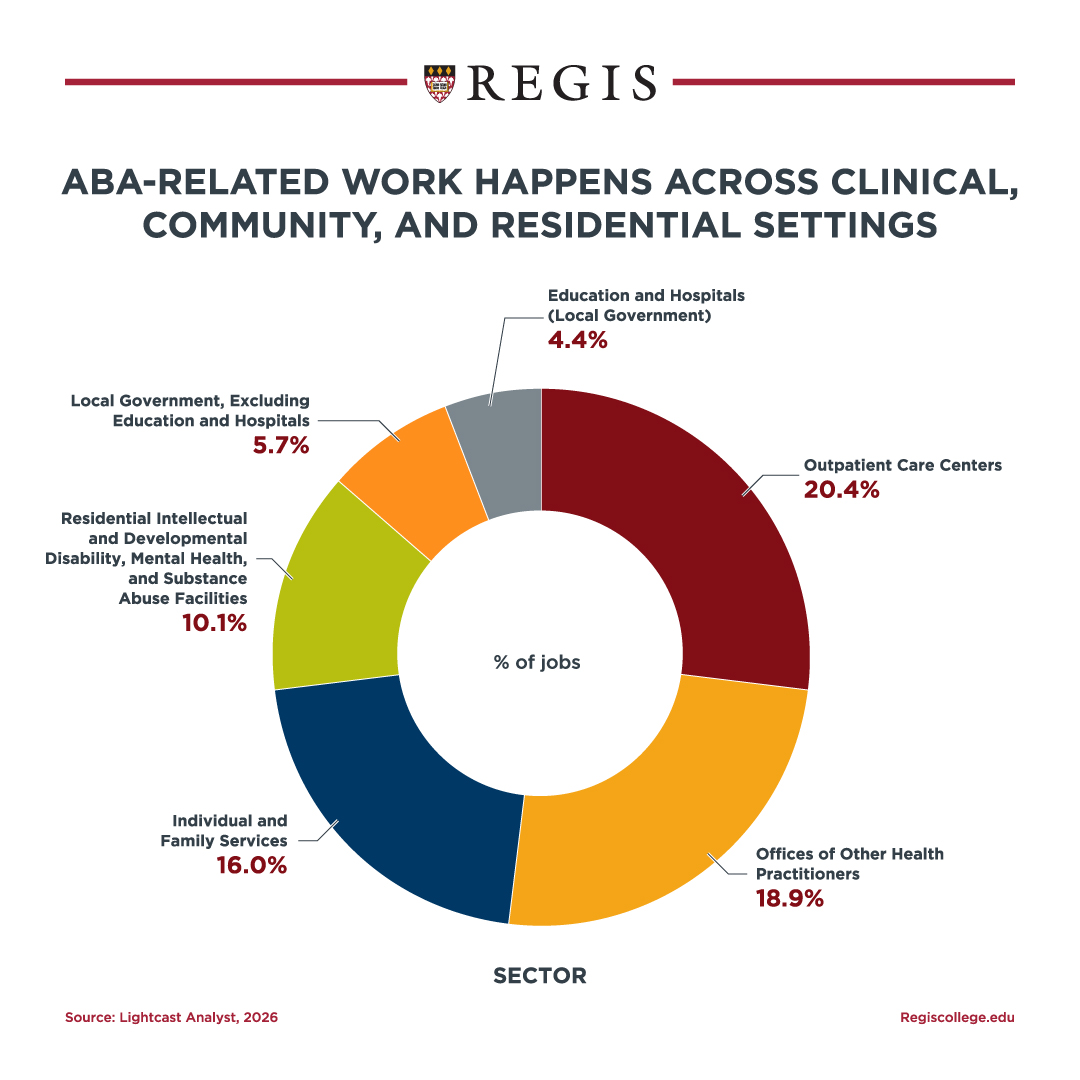
While autism services remain one of the most common practice areas, MacDonald points to a much wider range of settings where behavior analysts can build careers, including:
- Early intervention
- Preschools
- Schools
- Centers
- Residential programs
- Hospitals
- Adult services
- Geriatrics
- Health and fitness
- Organizational behavior management
That flexibility is one of the field’s strongest selling points.
As MacDonald puts it, “I think one thing I love about this field is that there’s so many different places you can go.”
She also emphasizes that behavior analysts can work “across the lifespan,” which makes the profession appealing to students with different interests and long-term goals.
A one-path degree can feel risky if your interests change over time. A degree that supports work across multiple settings and populations gives graduates more room to adapt.
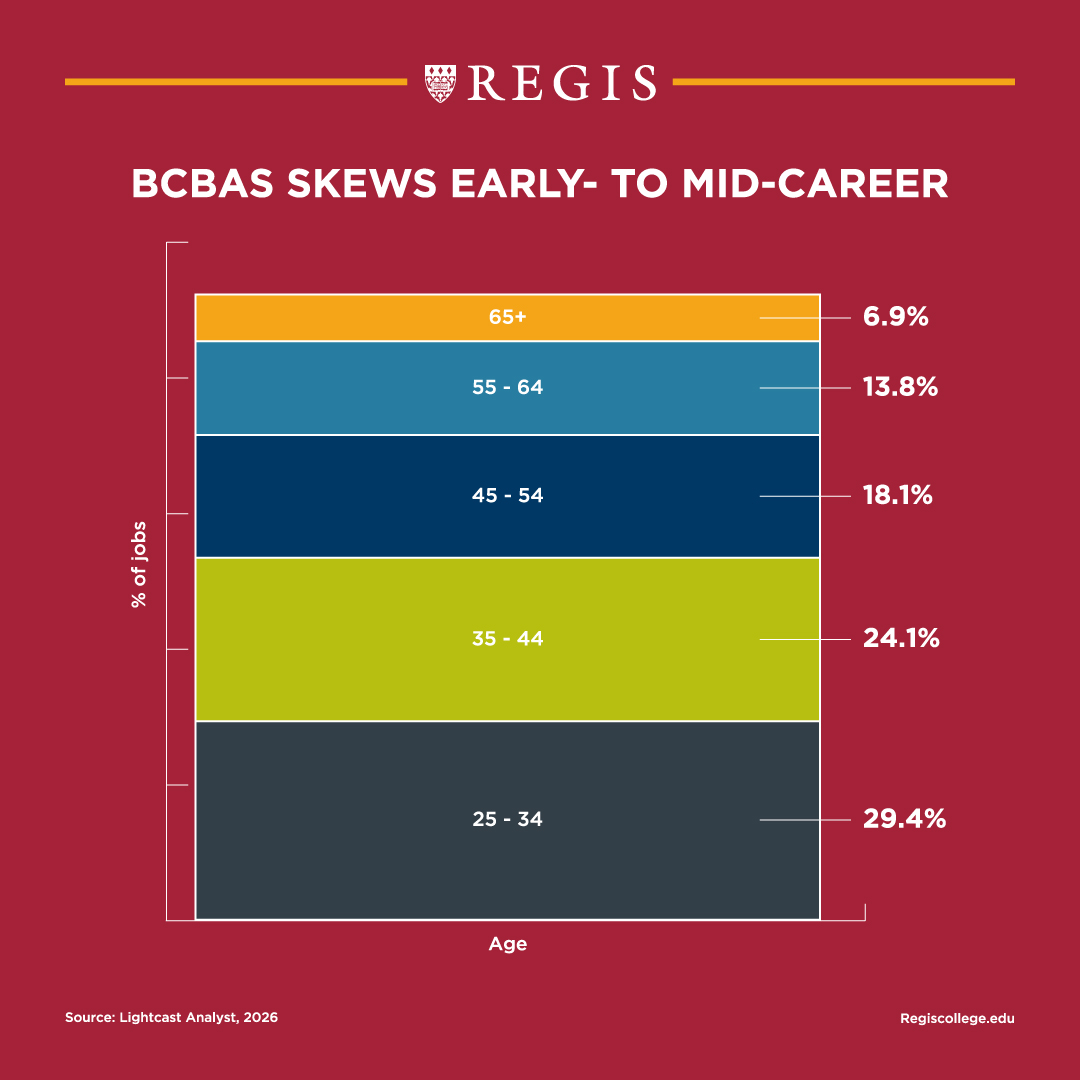
That is also why the field can appeal to students from many backgrounds. MacDonald notes that Regis students come from diverse professional backgrounds, including business and nursing. Graduates build skills that are relevant across a wide range of BCBA roles and settings.
The Personal Impact of the Work
Salary and job demand matter, but as MacDonald explains, one of the strongest aspects of applied behavior analysis is that it can be deeply meaningful work.
She describes the field as one that focuses less on labeling people and more on understanding behavior in context.
What matters, in that view, is being curious about why a behavior is occurring, what environmental factors may be influencing it, and how thoughtful changes can support better outcomes.
That perspective gives the field a different kind of value. It positions behavior analysts not simply as technicians, but as professionals who help people make meaningful changes through observation, collaboration, and evidence-based support.
MacDonald also emphasizes the human side of the work. She says the field needs more empathy, more kindness, and less judgment. That idea aligns closely with how she describes strong behavior analysts: collaborative, culturally responsive, trauma informed, and able to work well with others.
For students who want work that combines analysis with compassion, that is a powerful reason the degree can feel worthwhile.
When an MS in ABA Is Worth It—and When It May Not Be
One of the best ways to answer whether a master’s in applied behavior analysis is “worth it” honestly is to acknowledge that the degree is not the right fit for everyone.
An MS in ABA may be worth it if you:
- Are genuinely interested in behavior and behavior change
- Want a career in a helping profession
- Are comfortable using data to guide decisions
- Value evidence-based practice
- Want work that combines analysis with human impact
- Are interested in direct service, supervision, or team-based care
It may be less likely to be the right fit if you:
- Have little interest in behavior science
- Dislike data-driven work
- Want a graduate experience focused primarily on talk therapy
- Are looking for a more generalist helping-profession degree
- Are not interested in applied, structured problem-solving
ABA is practical, structured, and analytical. For the right student, that is a major strength. For the wrong student, it may feel like a mismatch.
MacDonald makes a related point when she talks about what makes students successful in the program. In her view, passion for behavior analysis matters more than a perfectly matched prior background.
That means students do not need one specific undergraduate major. But they do need genuine interest in the work and in the kind of thinking the field requires.
How the Right MS in ABA Program Impacts ROI
Whether a master’s in ABA is worth it depends not only on the field, but also on the program itself.
A program’s structure, support, and connection to real-world practice can significantly affect the return students get from the degree.
That includes:
- How well the curriculum prepares them for applied work
- How much guidance they receive around fieldwork
- How effectively classroom learning connects to career readiness
- How much support they receive as they move toward professional practice
At Regis College, the program promotes active responding, role-play, peer presentations, and practicums as part of the learning experience. It features a structured course sequence that includes fieldwork and a staged thesis process.
Those elements ensure that students are not only learning concepts, but also practicing how to apply them over time.
MacDonald also points to the support students receive while moving through the program, helping students think through:
- Where they want to work
- What populations interest them
- How to approach fieldwork
- How to navigate supervision expectations
That kind of support can matter a great deal when students are trying to translate a degree into a sustainable career.
Is an MS in ABA Worth It?
For many students, yes.
An MS in ABA can be a strong investment if you are looking for a growing field, competitive salary potential, flexible career paths, meaningful work, and a profession grounded in evidence-based practice.
Demand for BCBAs remains high. Salary data is encouraging. The field offers opportunities across a range of settings and populations. For students who are drawn to evidence-based helping work, the profession can be both practical and personally rewarding.
At Regis, the combination of applied learning, fieldwork integration, and academic support makes the MS in ABA a clear pathway for students who want to become capable, confident professionals in the field.
To learn more, reviewing information about the MS in Applied Behavior Analysis program curriculum and structure can help you decide whether this path fits your goals.



Published Date