
You’re interested in becoming a Board Certified Behavior Analyst® (BCBA). You know the impact you can have on individual lives and the long-term stability such a career path can provide.
However, before returning to school to pursue your master’s, you’re undoubtedly asking whether it’s feasible.
What’s the timeline? How many fieldwork hours are required? Can you realistically work while completing your degree?
For most students, the path to BCBA eligibility includes:
- Earning a master’s degree in applied behavior analysis (typically about two years full-time)
- Completing required supervised fieldwork hours (minimum 1,500 hours, per BACB standards)
- Applying for and passing the BCBA examination, administered by the Behavior Analyst Certification Board® (BACB)
At Regis College, the MS in Applied Behavior Analysis program (on-campus) is structured to integrate coursework and fieldwork so students can progress toward eligibility in a clear, supported way. Here, we’ll take a step-by-step look at what that timeline involves and how Regis helps make it manageable.
Key Takeaways
- Becoming a BCBA typically takes about two years to complete a master’s degree, plus a minimum of 1,500 supervised fieldwork hours as required by the BACB.
- At Regis College, coursework and supervised fieldwork are completed concurrently, helping students stay on a structured timeline toward certification.
- Supervised fieldwork is integrated directly into the curriculum through dedicated fieldwork courses, allowing students to gain applied experience while progressing toward BCBA eligibility.
- The Regis MS in ABA program uses a three-tier mastery approach and hands-on classroom model to reinforce core behavior-analytic concepts over time.
- Graduates can pursue careers in autism services, schools, healthcare settings, organizational behavior management, and other applied environments.
Step 1: Earn a Master’s Degree in Applied Behavior Analysis
How long is a master’s in ABA?
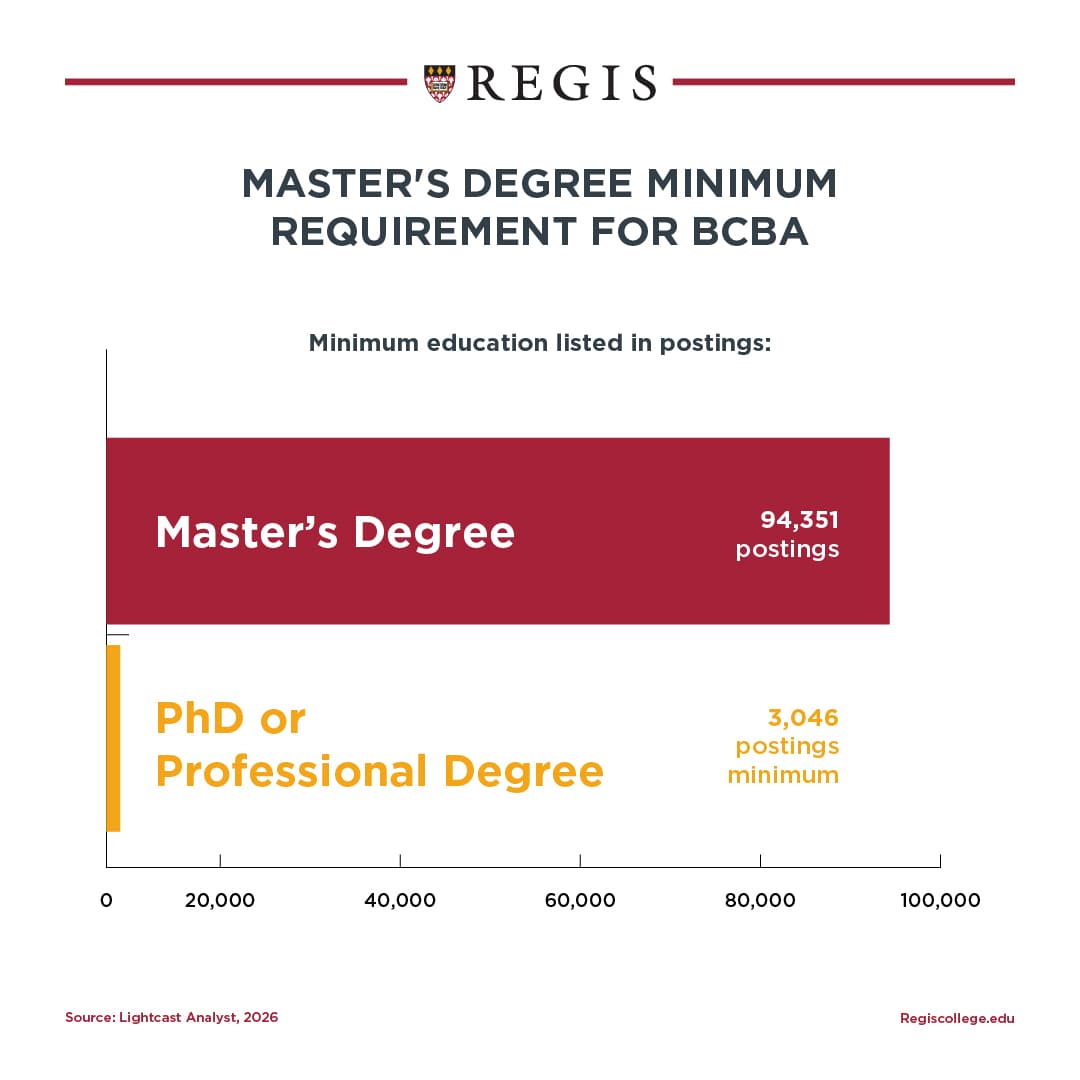
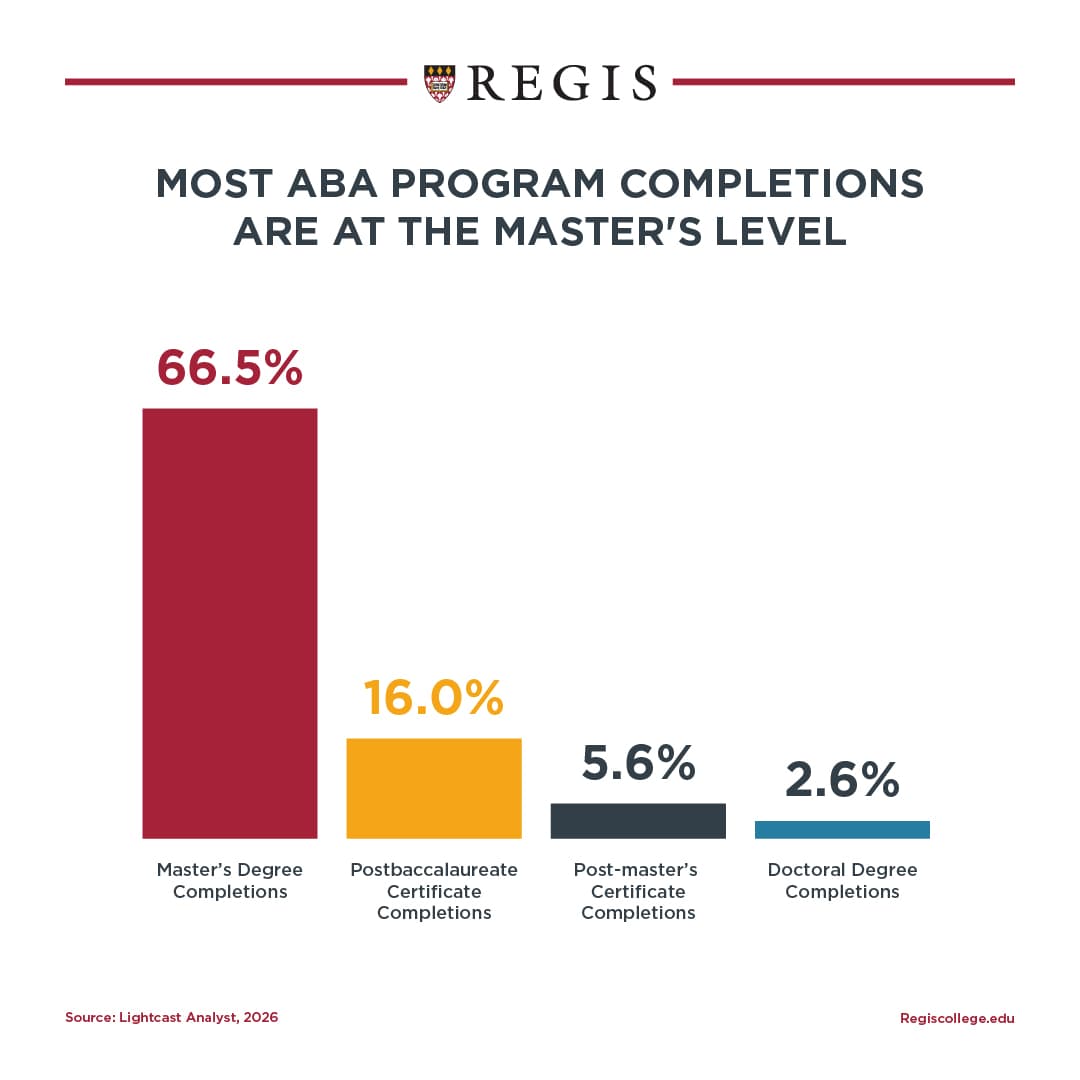
For most students enrolled full-time, a master’s in ABA takes about two years to complete, including at Regis, where the MS in ABA 40-credit program is designed for spring and fall admission and structured across two academic years (including summer study).
What does the two-year plan look like?
Across four semesters and summer coursework, students complete classes such as:
- Concepts and Principles of Behavior Analysis
- Treatment Evaluation
- Behavior Assessment
- Behavior Intervention
- Ethical Practice
- Training and Supervision
- Verbal Behavior
- Radical Behaviorism
- Fieldwork courses across multiple semesters
- A thesis sequence
Rather than teaching each concept once and moving on, the program is designed around what Regis MS in ABA Program Director Jacquelyn MacDonald, PhD, BCBA-D, describes as a three-tier approach: students are introduced to key concepts, revisit them in more advanced contexts, and ultimately demonstrate mastery before graduation.
In practice, that means you don’t just encounter assessment or intervention strategies in a single course. Rather, you see them again and again, each time with higher expectations and deeper application.
Aspiring To Be A Board Certified Behavior Analyst?
Learn more by downloading our guide.

Active, applied learning
Coursework is intentionally interactive. Instead of long, lecture-heavy classes, students engage in collaborative exercises, case analysis, and peer presentations.
MacDonald explains that classes often include short lectures followed by applied activities that require students to practice what they’ve just learned. This emphasis on active participation helps students build fluency in:
- Defining behavior clearly
- Conducting assessments
- Designing interventions
- Evaluating data
- Supervising and collaborating with others
These skills are central to BCBA practice and they develop progressively across the two-year timeline.
Step 2: Complete Required Supervised Fieldwork
How many hours does it take to become a BCBA?
In addition to earning a master’s degree, candidates must complete supervised fieldwork hours as defined by the BACB. Under current standards, this includes a minimum of 1,500 hours of supervised fieldwork, with alternative concentrated options available under specific supervision structures.
When do you complete fieldwork hours?
At Regis, fieldwork begins during the first semester of the program. Students enroll in fieldwork courses across multiple semesters while completing academic coursework.
A key component of the Regis model is that students are required to hold employment in the field during the program. That employment setting becomes the environment where supervised hours are accumulated.
Can you work while earning your degree?
In many cases, yes — but it depends on whether your job allows you to meet supervised fieldwork requirements.
Because BCBA eligibility requires supervised experience hours, students must work in a setting where those hours can be accrued under qualified supervisors. Some students are able to remain in their current roles if the setting aligns with BACB standards. Others may need to transition into a position that provides appropriate supervision and experience.
Fieldwork courses are integrated into the curriculum across multiple semesters, allowing students to complete supervised hours alongside their academic coursework. While students secure their own employment, faculty provide guidance after admission to help evaluate whether a current role qualifies or to identify potential agencies that align with supervision requirements.
In short, many students work while earning the degree — the key is ensuring your employment supports your fieldwork goals.
On-campus applied learning
Regis also operates the Regis College Autism Center, an on-campus center that serves children ages two to six diagnosed with autism spectrum disorder.
All behavior therapists at the center are current MS in ABA graduate students. Services include:
- One-on-one ABA therapy
- Social group instruction
- Parent coaching
- Integration with typically developing peers in preschool classrooms
This setting provides additional opportunities for supervised, applied experience under faculty oversight.
Step 3: Apply for the BCBA Examination
Once you’ve completed a qualifying graduate degree and the required supervised fieldwork hours, you may apply to sit for the BCBA exam through the BACB.
It’s important to understand that:
- The BACB determines eligibility requirements.
- Completing a master’s program does not guarantee certification or exam approval.
- Candidates must meet all degree, coursework, and supervised fieldwork standards in effect at the time of application.
Historically, Regis has reported strong pass performance. The curriculum’s repeated exposure to core content areas is designed to support exam preparation, but success ultimately depends on individual readiness and preparation.
Where Can a BCBA Work After Graduation?
While many BCBAs work with individuals diagnosed with autism, the field extends well beyond a single population.
MacDonald notes that graduates may work in:
- Early intervention programs
- Preschools and daycare settings
- Public and private schools
- Center-based ABA programs
- Residential services
- Hospitals (including pediatric hospitals)
- Geriatric or nursing home settings
- Health and fitness environments
- Organizational behavior management (OBM)
- Child protective services
The versatility of ABA is one of the reasons many professionals are drawn to the field. Skills in behavior assessment, intervention design, and data-driven evaluation can be applied across the lifespan and across service settings.
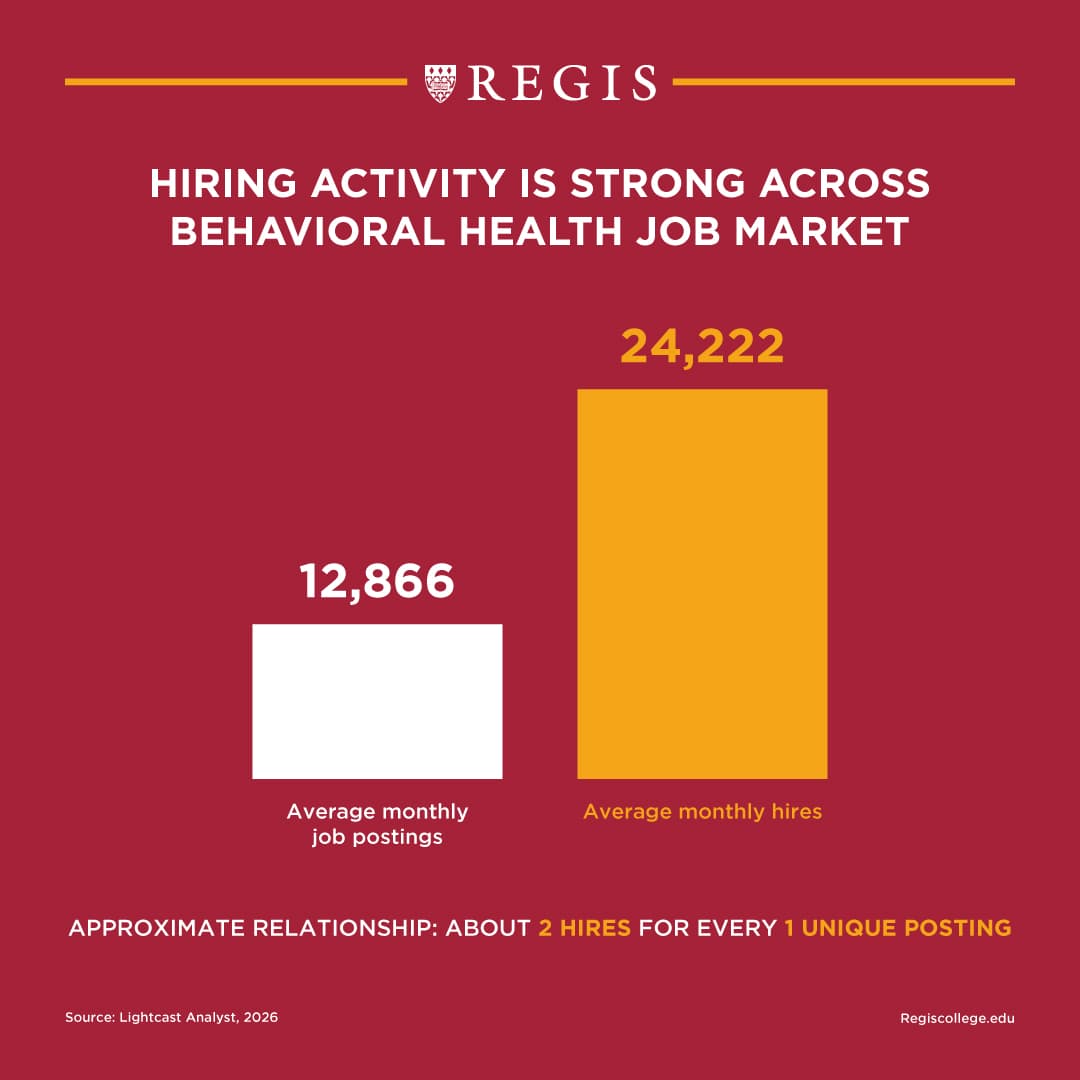
Employers continue to seek credentialed behavior analysts as strong demand continues to be driven in part by earlier autism identification, expanded insurance coverage for ABA services, and growing recognition of how behavior analysis can support individuals across settings.
What Makes the Timeline Manageable at Regis?
Two years of graduate coursework combined with 1,500-2,000 supervised hours is a serious commitment. That’s why several program elements help structure that timeline in a manageable way.
Weekly faculty connection
Students meet regularly one-on-one with faculty to review progress, address challenges, and receive guidance. That consistent touchpoint provides accountability and mentorship throughout the program.
Integrated fieldwork model
Rather than treating fieldwork as an afterthought, Regis weaves fieldwork courses across semesters, aligning supervision and academic learning.
Interdisciplinary collaboration
Students participate in interdisciplinary projects alongside occupational therapy (OT) and speech-language pathology (SLP) students. Learning to collaborate across disciplines is essential in real-world practice and reinforces communication skills.
Accreditation and program standards
The MS in ABA program holds accreditation from the Association for Behavior Analysis International (ABAI) Accreditation Board. As a Tier 1 program, it meets the highest standards of excellence in behavior analytic education, ensuring students receive training that aligns with the most rigorous academic and professional benchmarks in the field.
Is Becoming a BCBA Worth the Time Investment?
For many students, the decision comes down to three questions:
1. Is there demand?
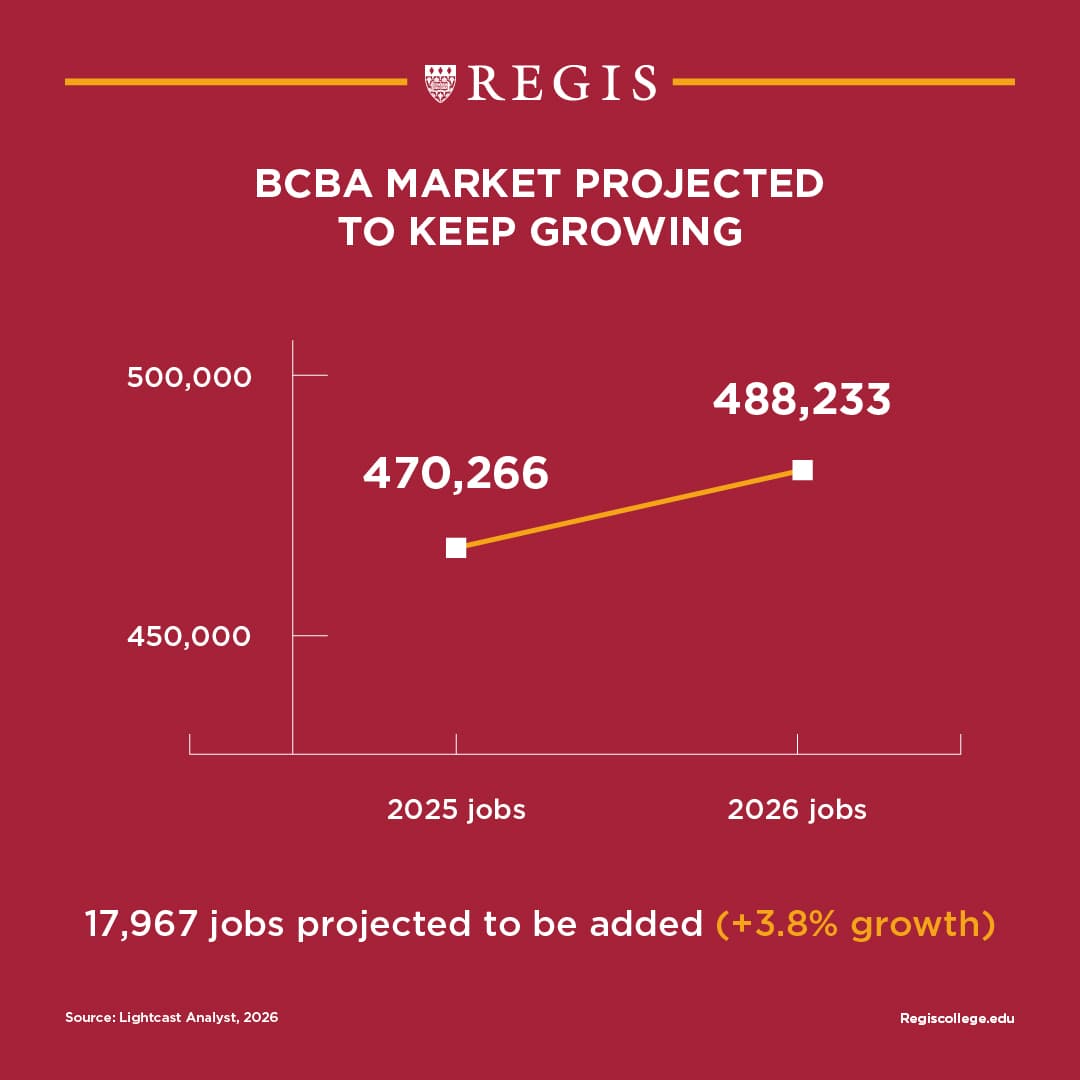
Workforce data from the BACB shows sustained employer demand for credentialed behavior analysts nationally.
2. Is the work meaningful?
Behavior analysis focuses on understanding behavior within environmental contexts and designing interventions that promote meaningful, measurable change. Many professionals are drawn to the collaborative, data-informed nature of the work.
3. Is there professional flexibility?
BCBAs can work across age groups, settings, and service models. While autism services remain a primary area of practice, opportunities continue expanding into healthcare, schools, organizational systems, and beyond.
So, how long does it take to become a BCBA?
For most students, a master’s degree can be completed in about two years, including 2,000 supervised fieldwork hours (minimum) completed during graduate study.
At Regis College, the MS in Applied Behavior Analysis program is structured so coursework, fieldwork, and mentorship happen concurrently, providing clarity about expectations and support throughout the process.
Are you ready to begin your journey towards a career in behavioral analysis? Sign up for Information Session and connect with a member of our team to learn more about this program and how it fits into your future goals.



Published Date