
Seeing “BSN preferred” or “BSN required” in job postings can feel frustrating if you are already a registered nurse.
You have already completed nursing school, and passed the NCLEX-RN. You are licensed, and may already be caring for patients, managing demanding shifts, communicating with providers, educating families, and making clinical decisions every day.
So why do some employers prefer nurses with a Bachelor of Science in Nursing?
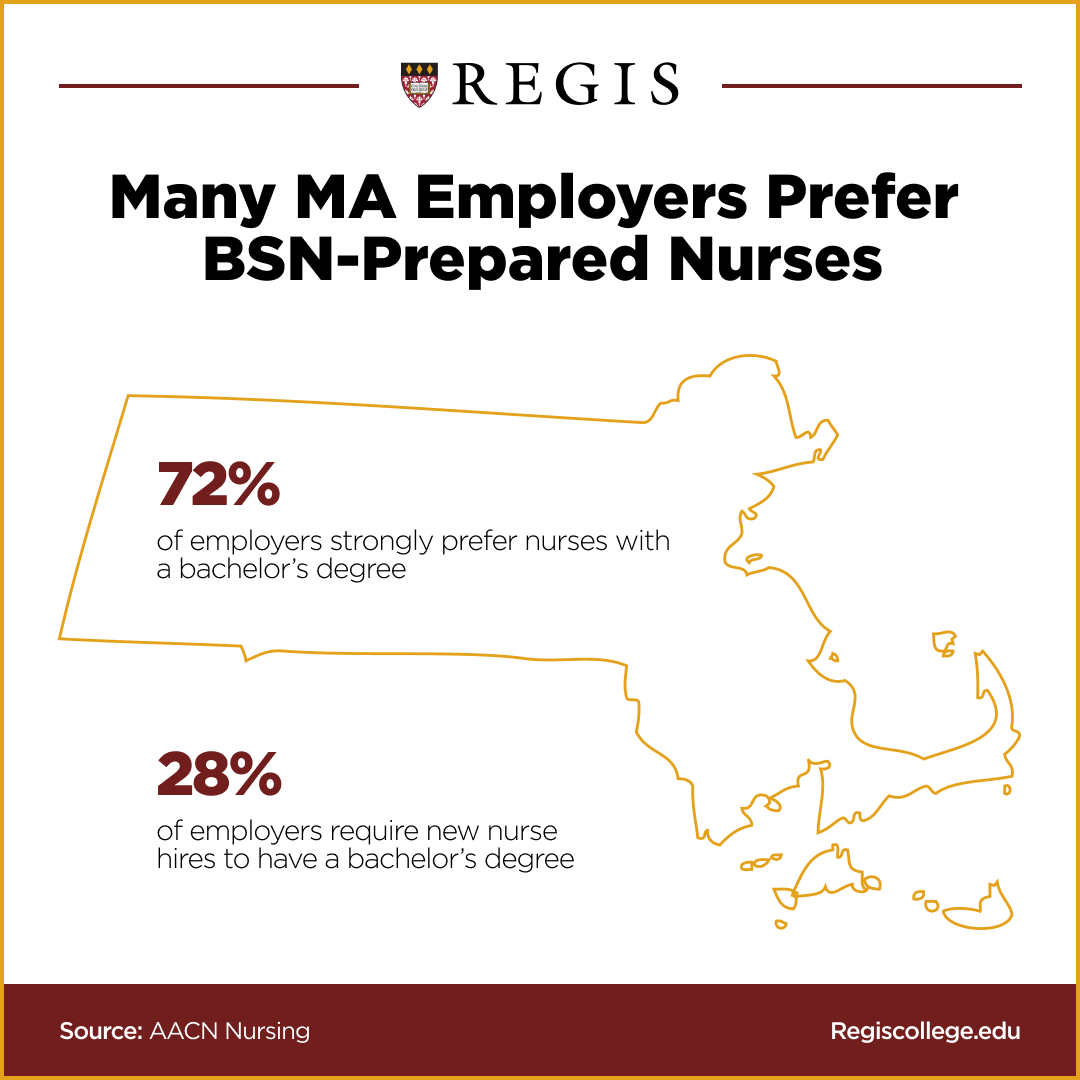
Many hospitals often prefer BSN-prepared nurses because the curriculum expands beyond direct bedside preparation into areas employers increasingly value, such as evidence-based practice, leadership, health assessment, population health, healthcare policy, ethics, informatics, quality improvement, communication, and systems thinking. These organizations focused on leadership development, quality improvement, patient outcomes, and long-term workforce planning value the breadth of experience and capacities BSN-educated nurses may have acquired during their education.
Here, we’ll look at the specific factors that often make BSN-educated nurses more attractive to employers, what hiring managers routinely look for in nursing candidates, and how specific BSN programs, such as Regis College’s BS in Nursing RN-to-BS Degree Completion program, designed specifically for registered nurses with an associate's degree, help you build on your existing experience and strengthen the skills that can support long-term career mobility.
Key Takeaways
- Many employers prefer BSN-prepared nurses, especially in hospital, specialty, leadership, and advancement-oriented roles.
- BSN preference is not the same as RN licensure. ADN-prepared nurses can become licensed RNs and provide excellent care.
- Employers may value BSN preparation because it develops broader competencies in leadership, evidence-based practice, communication, population health, and systems thinking.
- Specialty units such as critical care, emergency nursing, labor and delivery, and cardiology may be more likely to prefer or require BSN preparation.
- A BSN does not guarantee job security, but it may help nurses avoid being limited by future employer requirements, promotion criteria, or graduate education prerequisites.
BSN Preference Is Not the Same as RN Licensure
Employer preference is distinct from RN licensure because licensure is based on passing the NCLEX-RN regardless of whether you graduated from a bachelor’s, associate's, or diploma program.
Registered nurses typically enter the profession through one of three education pathways:
- Bachelor’s degree in nursing
- Associate's degree in nursing
- Diploma from an approved nursing program
Yet, regardless of pathway, registered nurses must graduate from an approved nursing program and pass a qualifying exam to become licensed. ADN-prepared nurses are licensed professionals who can assess patients, administer medications, coordinate care, educate patients and families, and work as part of healthcare teams.
Employer preference comes later.
For associate's-prepared RNs, the practical question is not “Am I qualified to be a nurse?” According to the BLS, licensed graduates of bachelor’s, associate's, or diploma programs generally qualify for entry-level staff nurse positions.
The better question is: “Will earning a BSN help me stay competitive for the roles and employers I want next?”
A hospital or health system may decide that certain roles, units, promotions, or new-hire pathways require or prefer a BSN. That decision may be based on workforce goals, specialty needs, quality initiatives, leadership development, accreditation priorities, or the complexity of the care environment.
Want to learn more about this program?

Why Do Employers Prefer BSN Nurses?
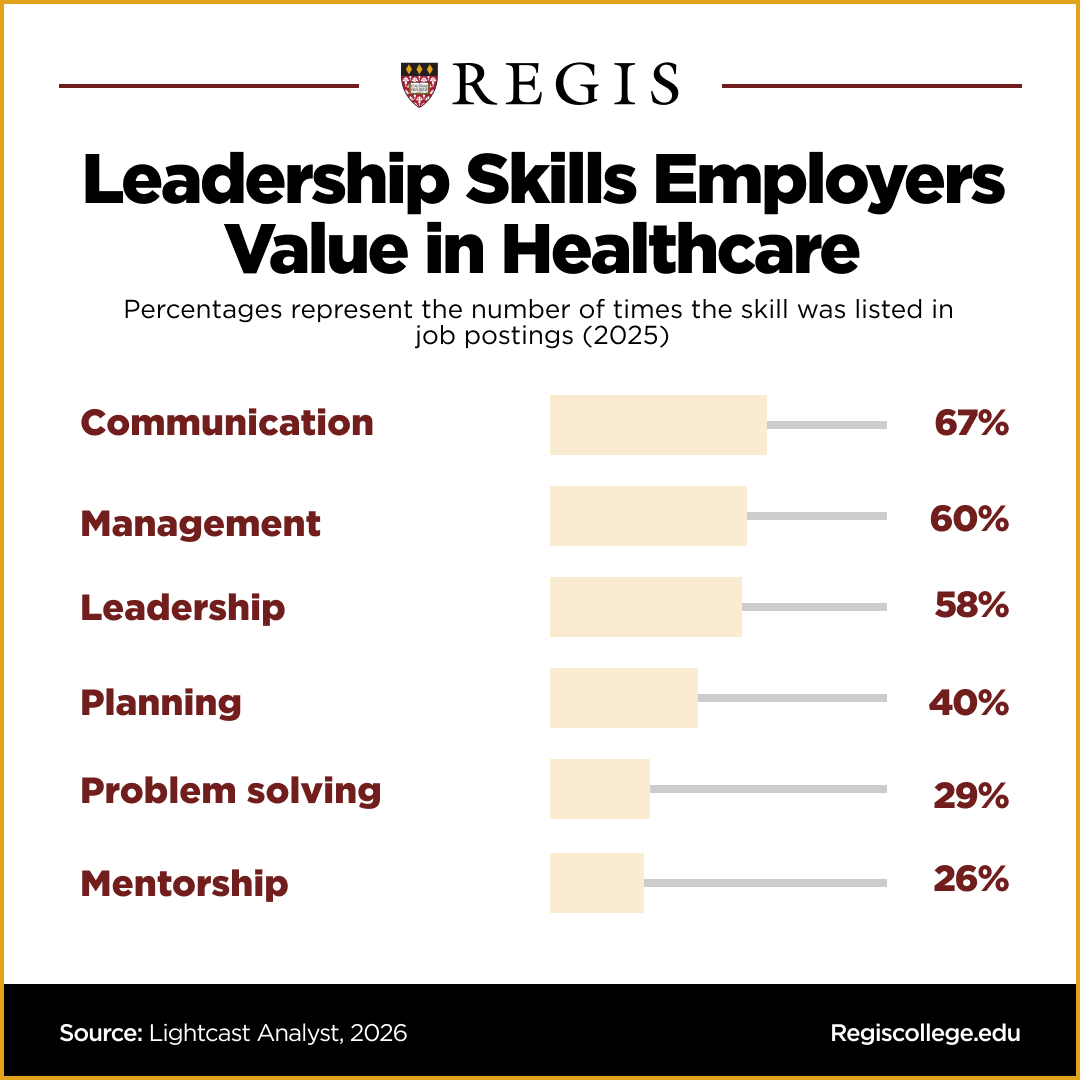
Employers prefer BSN nurses because modern nursing education at the baccalaureate level prepares professionals for the increasing complexity of healthcare, where nurses are expected to communicate across teams, educate patients, and coordinate care. Healthcare is increasingly complex. Nurses are not only expected to complete clinical tasks. They are often required to communicate across teams, educate patients, understand technology, coordinate care, contribute to patient outcomes and safety, and adapt as healthcare systems change.
That’s why many employers increasingly value BSN-educated nurses.
Deborah Roy, assistant professor and BS in Nursing RN-to-BS Degree Completion program director at Regis College, says BSN-level education helps nurses move beyond a narrow view of one patient assignment or one unit.
“The BSN component of the nursing degree dives a lot more into policy,” Roy says. “What are the politics surrounding healthcare? What are the public health needs, and how do we start influencing public health? How do we put together a plan to address issues that might be on a unit or in an organization, in a community, or nationwide?”
The American Association of Colleges of Nursing reports that as of 2024, 72.9 percent of the RN workforce held a baccalaureate or higher degree as their highest level of nursing education. AACN’s Essentials also emphasize competency-based nursing education designed to prepare practice-ready graduates for modern healthcare environments.
For employers who prefer BSN-prepared nurses, it is not usually motivated by a dismissive attitude toward associate's-prepared nurses. Rather, it is about the additional preparation employers may associate with baccalaureate education.
What Hospitals Look For in BSN-Prepared Nurses
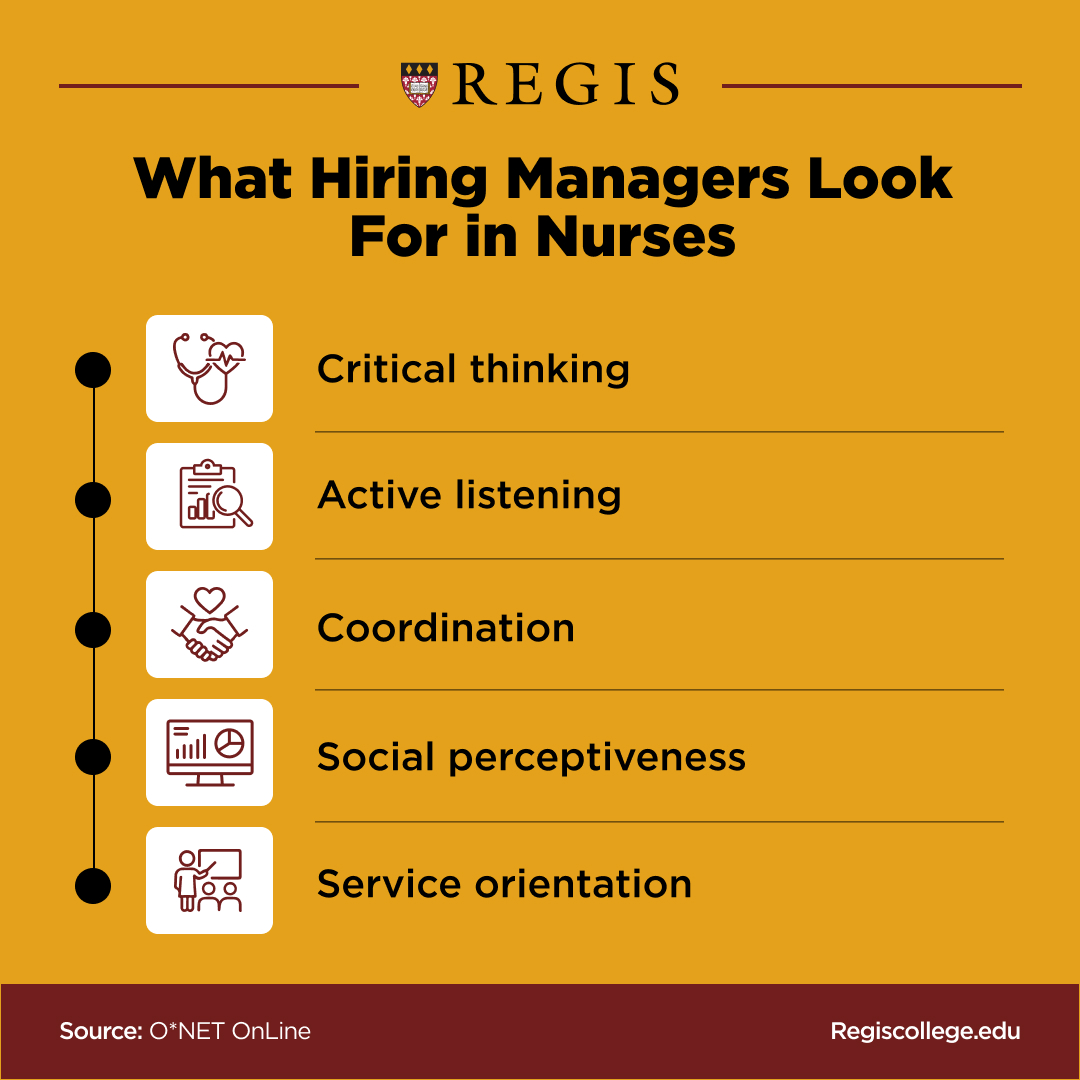
Hospitals and hiring managers look for BSN-prepared nurses who can demonstrate a mastery of broader professional competencies and contribute to better patient outcomes in complex care environments. They are not only looking at the letters after a nurse’s name. They are looking for signs that a nurse is prepared to contribute in a complex care environment.
Core Competencies
That may include:
- Strong clinical judgment
- Clear communication
- Evidence-based practice
- Patient advocacy
- Leadership potential
- Care coordination
- Health assessment
- Population health awareness
- Comfort with documentation and healthcare technology
- Adaptability
- Professional accountability
A BSN can signal exposure to these broader competencies.
For example, a nurse who has studied evidence-based practice may be better prepared to ask whether a unit process reflects current research. A nurse who has studied population health may be more aware of the social, community, and system-level factors affecting patient outcomes. A nurse who has studied leadership may be more prepared to advocate, communicate, manage conflict, and influence change even without a formal management title.
Roy believes many nurses already demonstrate leadership skills, even when they do not describe it that way.
“When I talk to young nurses on the units, they don’t see themselves as leaders,” Roy says. “They see themselves as advocates. They see themselves as problem solvers. They see themselves as communicators, but they won’t put leadership in their list. Well, all the things that I just mentioned are leadership behaviors.”
The value of BSN preparation can often be in assisting nurses to recognize, strengthen, and apply the professional behaviors they may already be using at the bedside.
Systems-Level Contributions
Hospitals prefer BSN-prepared nurses for their ability to handle interdisciplinary collaboration and support safety initiatives that lead to improved patient outcomes. Hospitals are complex environments. Patients may have multiple conditions. Care teams may include physicians, nurse practitioners, pharmacists, therapists, social workers, case managers, and specialists. Nurses must communicate clearly, document accurately, respond quickly, and understand how individual care decisions fit into larger systems.
Hospitals may prefer BSN-prepared nurses who can:
- Care for complex patients
- Collaborate across interdisciplinary teams
- Communicate effectively during high-pressure situations
- Support patient safety initiatives
- Understand evidence-based care
- Participate in quality improvement efforts
- Adapt to changing technology and documentation expectations
- Take on leadership or preceptor responsibilities over time
Some hospitals also hire ADN-prepared nurses with the expectation that they complete a BSN within a certain timeframe. In those cases, earning the BSN proactively can help nurses move on their own timeline rather than waiting until an employer requirement creates pressure.
Not every hospital requires a BSN for every RN role. Requirements vary by employer, region, unit, and workforce need. But if your long-term goal is to work in a hospital, move into a specialty unit, or become more competitive for advancement, BSN preparation can matter.
Specialty Units May Be More Likely to Prefer or Require a BSN
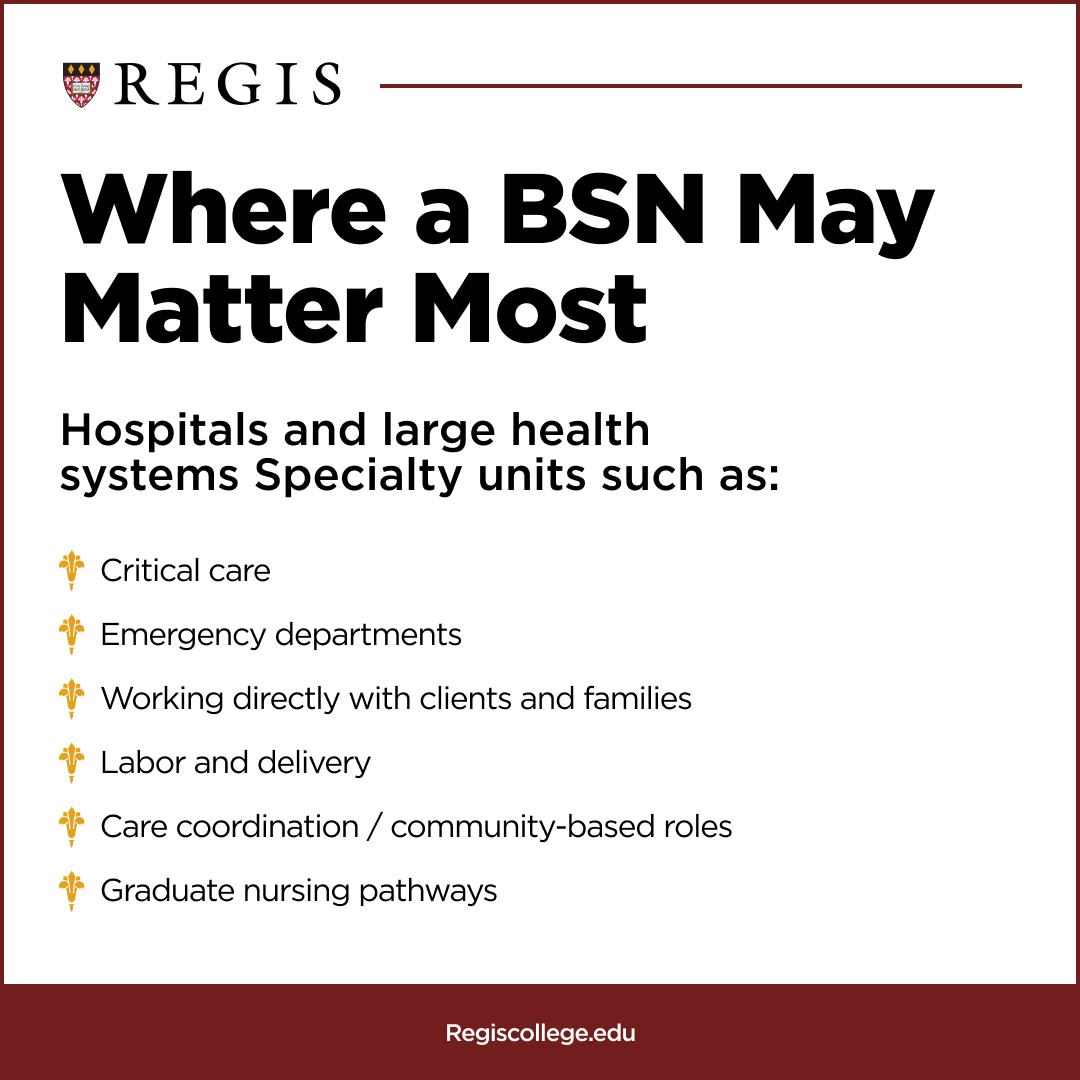
BSN preference may be stronger in some specialty units because these environments can be highly technical, fast-moving, and knowledge-intensive.. BSN preference may be stronger in certain clinical environments, especially those that are highly technical, fast-moving, or knowledge-intensive.
These may include:
- Critical care
- Emergency departments
- Labor and delivery
- Cardiology
- Oncology
- Other specialty or high-acuity units
“There are many specialties that require the BSN,” Roy says. “So critical care, labor and delivery, a lot of emergency departments—some of the more technically challenging, knowledge-challenging areas are going to require the BSN.”
These areas may require strong assessment skills, rapid decision-making, communication, patient safety awareness, emotional resilience, and the ability to apply evidence in complex situations. A BSN alone may not guarantee access to a specialty unit. Nurses may also need experience, certifications, employer training, or other qualifications. But the BSN can help make nurses more competitive when employers are comparing candidates.
Why Evidence-Based Practice Matters to Employers
Evidence-based practice matters to employers because it allows nurses to utilize current research to improve patient outcomes and organizational efficiency rather than relying on tradition. Healthcare organizations want nurses who can help improve care, not simply follow outdated routines.
Evidence-based practice helps nurses ask better questions:
- What does current research say about this problem?
- Is this process still the safest or most effective approach?
- What outcomes are we trying to improve?
- What evidence supports a change?
- Who needs to be involved for that change to work?
Roy says a BSN-level education can help nurses understand how to look at the existing literature and connect it to an existing issue.
“If there is literature that speaks to it and offers solutions, then what are the best solutions that I can bring into my organization to help address this issue, and what’s the best way of doing that?” she says.
Such thinking supports quality improvement, patient safety, professional confidence, and better decision-making.
At Regis, students take Evidence-Informed Nursing Care and complete a Capstone Project. The capstone gives students an opportunity to identify a practical nursing issue, review evidence, consider stakeholders, and develop an improvement-oriented project connected to their area of interest.
Does a BSN Increase Job Security?
A BSN does not guarantee job security, but it may help nurses stay eligible for more roles as employer expectations evolve.
Earning a BSN may reduce the risk of being limited later by employer requirements, promotion criteria, or graduate education prerequisites. It can also help nurses stay competitive as expectations evolve.
Some nurses wait until they are told they need a BSN. Others choose to complete the degree before a requirement appears.
Roy says nurses may want to make that decision on their own terms.
If a nurse wants more options, she explains, earning the BSN can prevent the decision from being forced later by an employer, promotion opportunity, or job requirement.
That is especially important because nursing careers can change over time. A nurse who is happy in a current role today may later want to move into a specialty, switch settings, reduce physical strain, take on leadership, or pursue graduate education.
The BSN can help keep those doors open.
How Regis’s RN-to-BS Program Helps Nurses Build Employer-Valued Skills
Regis’ RN-to-BS program helps nurses build employer-valued skills through a curriculum that emphasizes practical leadership, evidence-based practice, and population health management. Regis’ RN-to-BS Degree Completion program is designed for registered nurses with an associate's degree who want to continue their education while balancing work and personal responsibilities.
The RN-to-BS Completion program offers:
- A 12- to 16-month program duration
- Online coursework with asynchronous or Zoom synchronous hybrid options
- No clinical component
- 45 credits awarded for associate's degree nursing coursework and an active RN license
- Up to 90 transfer credits
- Personalized academic support from faculty, the program director, and an advisor
The program’s required nursing coursework includes:
- Contemporary Topics in Healthcare
- Health Assessment and Diagnostic Measures
- Evidence-Informed Nursing Care
- Emerging Trends in Population Health
- Nursing Leadership and Transition to Professional Practice
- Capstone Project
“The curriculum for the RN-to-BS program is very practically centered,” Roy says. “It does have theory and research, but we’re utilizing it in a way that they’re going to be able to utilize it every single day in their work environment to help them navigate and meet their goals.”
For nurses considering graduate education, Regis also offers a direct pathway to its Master of Science in Nursing program and an RN-to-BSN-to-MSN Upward Mobility Track.
So, Do Employers Prefer Nurses with a BSN?
Employers generally prefer nurses with a BSN for specialty, leadership, and advancement-oriented roles, although associate's degree nurses continue to play a vital role in the workforce. Many employers do prefer nurses with a BSN, especially hospitals, specialty units, leadership pathways, and advancement-oriented roles. But the answer depends on the employer, role, region, and care setting.
ADN-prepared nurses are important, capable, licensed professionals. They provide essential care every day. But BSN preparation can help nurses stay competitive, expand future options, qualify for certain roles, and prepare for graduate education if they choose that path.
For many working nurses, the BSN is not only about the next job. It is about long-term mobility.
It can help you move toward specialty practice, leadership, care coordination, quality improvement, community health, graduate study, or simply greater flexibility across a long nursing career.
If you are ready to take the next step, explore Regis College’s RN-to-BS Degree Completion program.
Have more questions? Reach out to our team to get the answers you need and begin your career journey.

Published Date