
You’re drawn to the world of digital marketing. Maybe you’ve already dipped your toes in the field or found yourself managing pieces of campaigns without the official title. But now, you're wondering what it takes to turn your passion into an established leadership role.
Digital marketing is one of today’s most in-demand career paths, and the digital marketing manager role is a natural next step for professionals ready to lead. But getting there raises important questions: How much experience is enough? Do I need a degree? What skills actually matter to employers?
If you’re asking those questions, you’re in the right place. This guide breaks down the steps to becoming a digital marketing manager—from gaining foundational experience to building the advanced skills and education that can open doors. Whether you’re looking for a promotion or a fresh start, this is your roadmap to a career in digital marketing leadership.
Key Takeaways
- Most digital marketing managers start with a bachelor's degree and build experience in entry-level roles like an SEO or content specialist.
- Four to six years of hands-on experience leading campaigns and contributing to strategy is commonly required for management roles.
- Earning a specialized graduate degree, such as Regis’ Online Master’s in Digital Marketing Communication, can help you stand out in a competitive market.
- Continuous learning through certifications and skill development in strategy, analytics, leadership, and communication is essential for long-term success.
Ready To Advance Your Career?
Plan your next campaign and career move with our free digital marketing toolkit.

What Does a Digital Marketing Manager Do?
Digital marketing managers are the strategic minds behind an organization’s online presence. They plan, execute, and optimize digital campaigns across platforms like social media, email, search engines, and websites to reach target audiences and achieve business goals. From boosting brand awareness to driving conversions, their work directly influences a company’s growth and visibility in the digital space.
Common responsibilities include:
- Developing and managing integrated digital marketing campaigns
- Overseeing content creation and SEO strategies
- Managing paid advertising and social media initiatives
- Using analytics tools to measure performance and improve results
- Collaborating with cross-functional teams to align marketing efforts with business objectives
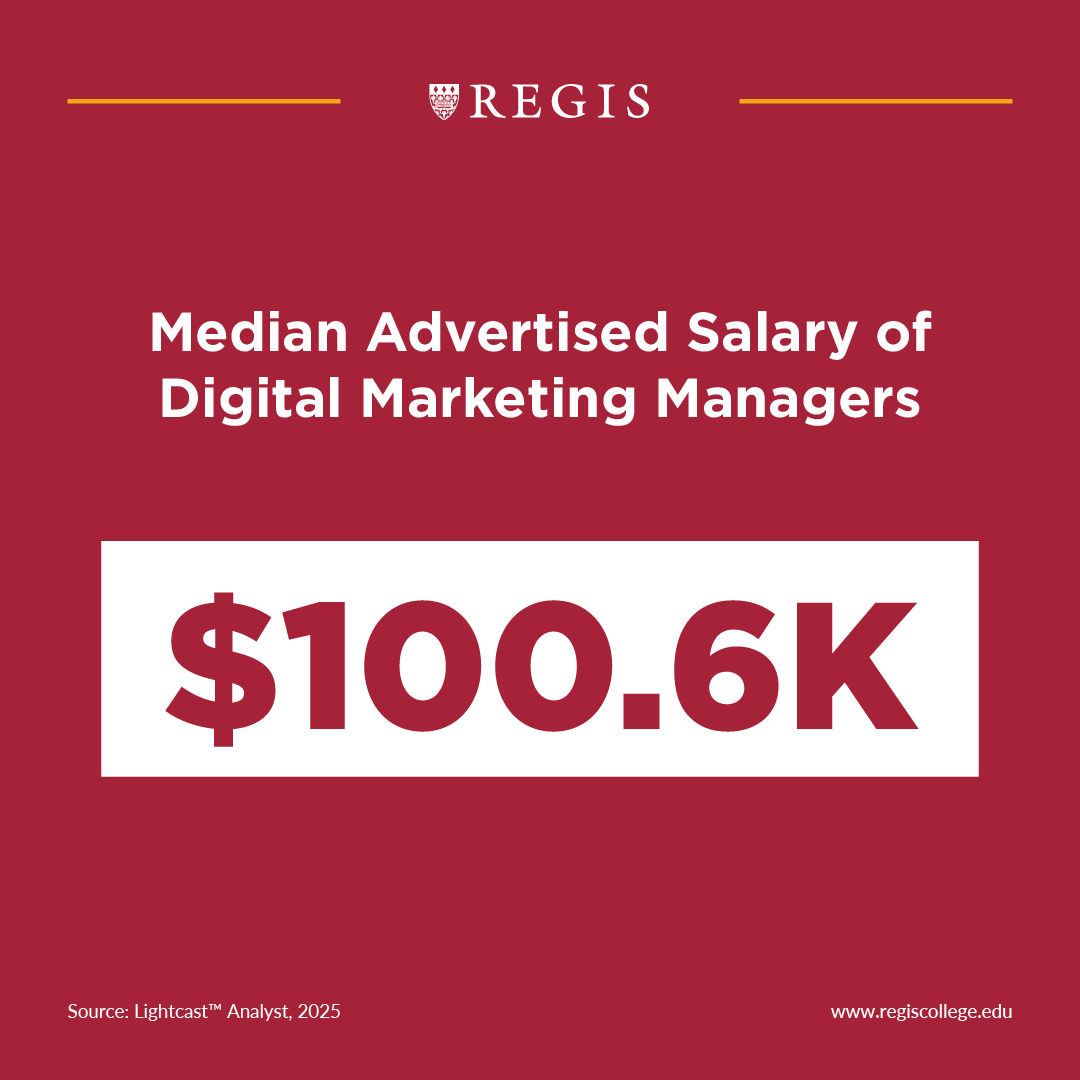
Digital marketing managers are expected to balance creative thinking with data-driven decision-making—making the role both dynamic and in-demand. As a result, the median advertised annual salary for a digital marketing manager is $100,600, according to labor market data.
If you're interested in stepping into this high-impact role, understanding the skills, experience, and education needed is the first step. Here's how to become a digital marketing manager.
How to Become a Digital Marketing Manager
1. Build a Strong Marketing Foundation
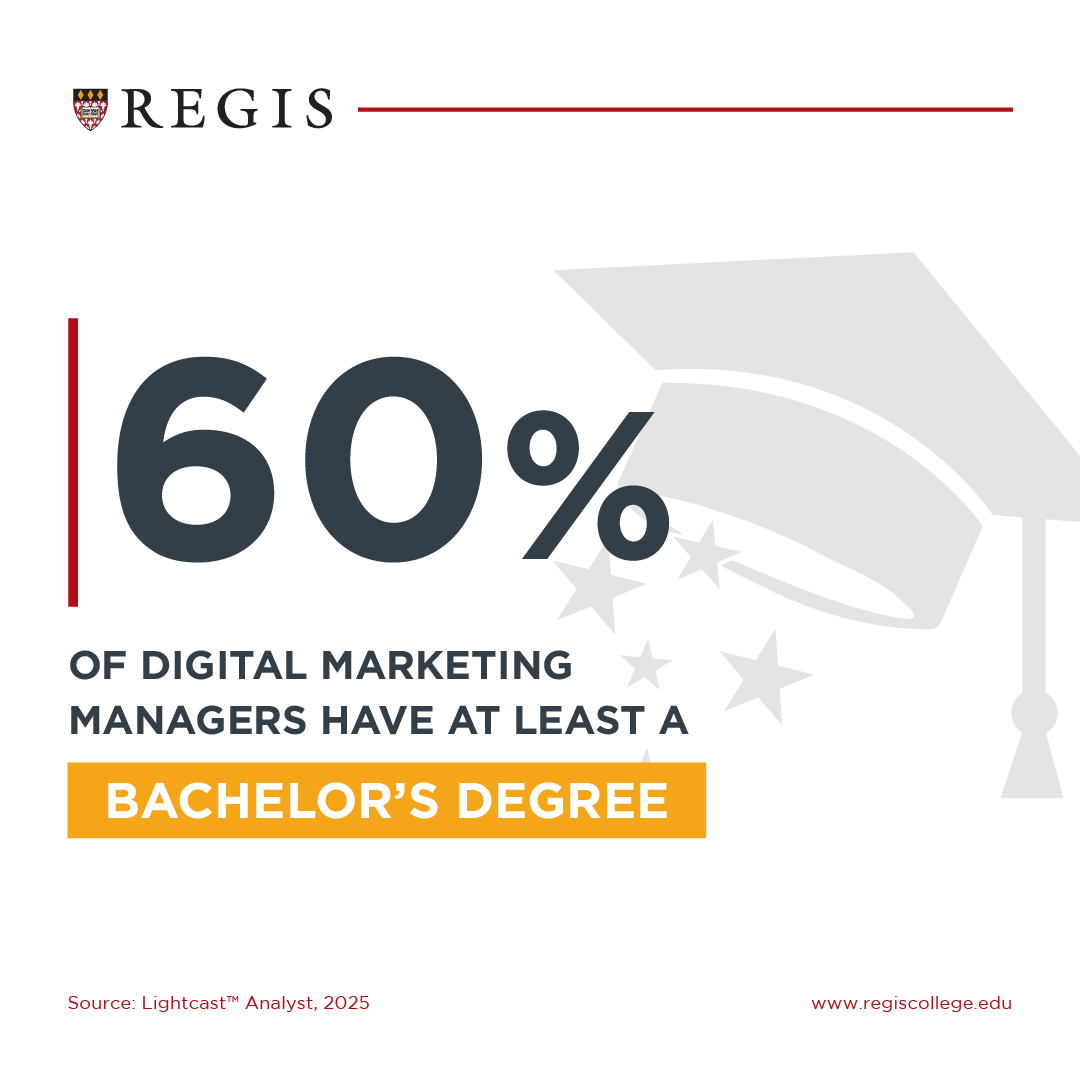
The path to becoming a digital marketing manager often begins with a solid educational foundation. A bachelor’s degree in marketing or a related field can provide the essential knowledge needed to understand consumer behavior, marketing strategy, and data analysis. In fact, according to labor market data, 60 percent of digital marketing manager job postings require at least a bachelor’s degree.
While a bachelor’s degree can set the stage, hands-on experience is equally important. Entry-level roles and internships are great ways to start applying what you’ve learned in real-world settings. Positions such as digital marketing coordinator, SEO specialist, social media specialist, and content specialist help you build practical skills in campaign execution, analytics, and cross-channel strategy.
Most digital marketing managers begin their careers in one of these roles and gradually take on more responsibility. Over time, you’ll gain a better understanding of how to manage projects, collaborate with creative and technical teams, and make strategic decisions that contribute to business goals.
2. Gain Experience in Strategic Marketing and Leadership
Becoming a digital marketing manager requires more than just technical know-how. It takes real-world experience leading campaigns, contributing to strategic decisions, and driving measurable results.
According to job posting data, 38 percent of digital marketing manager roles list four to six years of experience as the minimum requirement. These early- to mid-career positions help build the tactical and strategic foundation needed to lead marketing initiatives and collaborate across departments.

To prepare for a management position, look for opportunities to:
- Take ownership of end-to-end campaigns or performance metrics
- Contribute to strategic planning and present ideas to stakeholders
- Lead cross-functional projects or mentor junior team members
- Stay current with trends in SEO, social media, content strategy, and analytics tools
These experiences not only sharpen your marketing expertise but also position you as a capable leader ready to guide teams and drive business impact.
3. Earn an Advanced or Specialized Degree
As the digital marketing landscape continues to evolve, pursuing an advanced degree can significantly enhance your expertise and marketability. While foundational education and hands-on experience are crucial, a master's degree that focuses specifically on digital marketing can provide deeper insights into the latest strategies, tools, and technologies.
Specialized programs offer tailored curricula that address the nuances of digital marketing, preparing you to navigate its complexities effectively. For instance, Regis’ Online Master’s in Digital Marketing Communication offers concentration tracks in Nonprofit Communication and Sports Communication. These tracks allow students to focus their studies on sectors where digital marketing plays a pivotal role, equipping them with industry-specific skills and knowledge.
By enrolling in a program that offers such specializations, you can align your education with your career aspirations, ensuring you're well-prepared for the specific challenges and opportunities within your chosen field. As a result, this targeted approach deepens your expertise and demonstrates your commitment to the field to future employers.
4. Invest in Continuous Learning
Digital marketing is constantly evolving. New tools, platforms, and consumer behaviors are reshaping how brands engage with their audiences, often at a rapid pace. To remain competitive and effective, digital marketing managers must be committed to continuous learning.
Whether you're expanding your technical skills or staying current on emerging trends, investing in professional development is essential. This might include enrolling in online courses, earning relevant certifications, or even pursuing an advanced marketing degree. Certifications like the Google Analytics Certification, HubSpot Inbound Marketing Certification, and Meta (Facebook) Blueprint Certification are widely recognized in the industry and can help deepen your expertise in various areas.
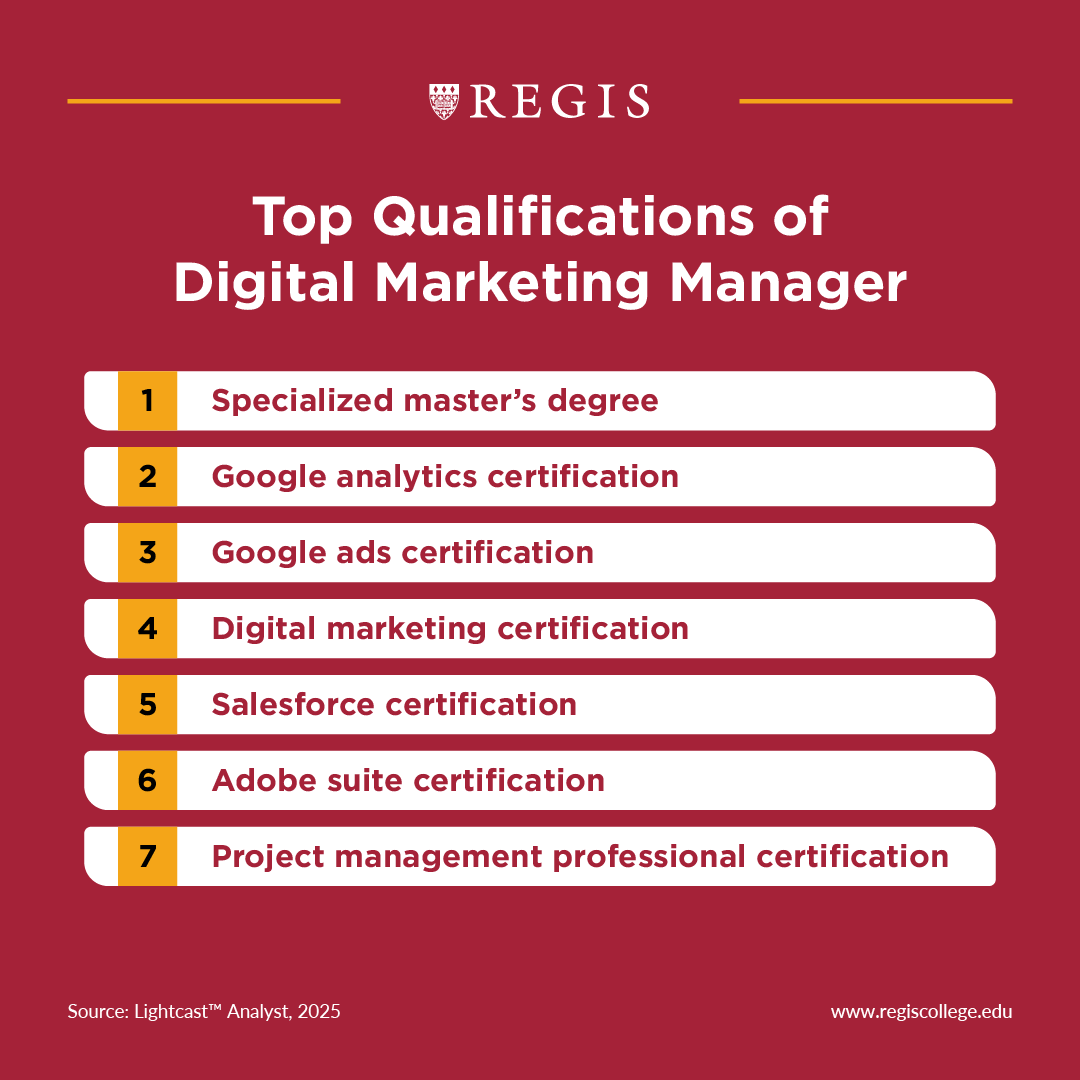
This investment should also focus on skill development. For example, according to job posting data, some of the most common qualifications of digital marketing managers is:
- Specialized master’s degree
- Google analytics certification
- Google ads certification
- Digital marketing certification
- Salesforce certification
- Adobe suite certification
- Project management professional certification
Continuously building and refining these skills not only helps you adapt to changes in the industry, but also positions you as a capable, future-ready leader in the digital marketing space.
Start Your Journey to Becoming a Digital Marketing Manager
Whether you're just beginning your marketing career or preparing for your next big move, taking intentional steps can help you position yourself for a promotion or transition into a digital marketing manager role.
To stand out to employers, tailor your resume to highlight measurable achievements and technical proficiencies. Be prepared to speak confidently in interviews about past campaigns, how you led cross-functional teams, and the strategies you used to drive performance.
If you’re ready to take the next step, exploring advanced education can help accelerate your progress. Regis’ Online Master’s in Digital Marketing Communication offers fully online marketing degree programs designed for career-focused professionals who want to lead in the ever-evolving digital space. Whether you're looking to build new skills or specialize in a specific area of marketing, Regis provides the flexibility and support to help you advance with confidence.




Published Date