
Returning to graduate school is exciting…but it’s also practical.
If you’re considering a master’s in counseling, you’re likely asking important questions, such as “How long does it take to get a master’s in counseling?” or “Can I realistically keep working while enrolled?”
For many prospective students, especially working professionals, the second question matters just as much as the first. The good news? With planning and choosing the right program structure, earning a master’s in counseling while maintaining employment is achievable.
Here we'll look at how programs, such as the MA in Counseling at Regis College, are structured to help prospective students fit their studies into personal and professional schedules, while delivering the kind of intensive instruction a master’s program is designed to provide.
Key Takeaways
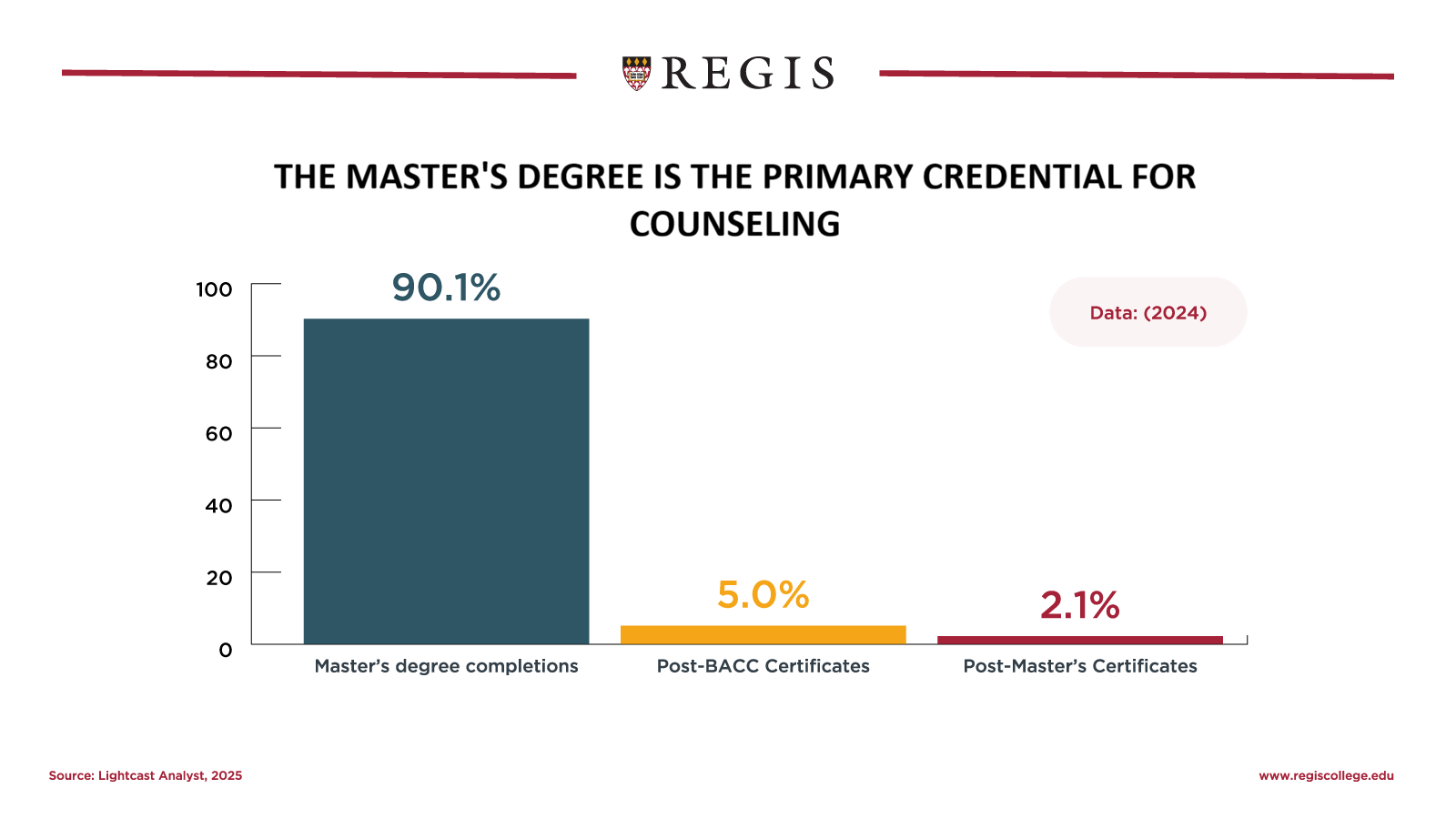
- A master’s in counseling is typically required for licensure and independent clinical practice in most states.
- Job demand for mental health counselors is projected to grow 17% from 2024 to 2034, much faster than average.
- Licensure unlocks professional autonomy, higher reimbursement potential, and expanded career options.
- The MA in Counseling program at Regis College aligns with licensure standards, reports strong exam pass and employment outcomes, and prepares graduates for long-term career sustainability.
How Long Does It Take to Get a Master’s in Counseling?
Most licensure-aligned counseling programs in the United States require approximately 60 graduate credits. This standard reflects state licensure requirements for credentials such as Licensed Mental Health Counselor (LMHC) or Licensed Professional Counselor (LPC).
For example, Massachusetts requires a 60-credit master’s degree for LMHC eligibility, consistent with many other states.
In general:
- Full-time enrollment may allow students to complete a 60-credit program in about two years, including summers.
- Part-time enrollment may extend completion to approximately three years or longer, depending on course load.
However, timelines vary based on course sequencing; practicum and internship scheduling; whether a student attends year-round; and individual pacing preferences. Because counseling is a clinical profession, graduate education includes not only coursework, but also supervised field experience.
Ready To Start A Career In Counseling?
Download our guide to learn everything you need to know!

Full-Time vs. Part-Time Enrollment Options
When evaluating a counseling graduate program timeline, it’s important to distinguish between credit requirements and pacing flexibility.
Full-Time Enrollment
Full-time students typically take a heavier course load each semester. This path may accelerate program completion but requires greater weekly time commitment.
Federal financial aid generally defines graduate full-time enrollment as nine credits per semester, though eligibility requirements may vary.
Part-Time Enrollment
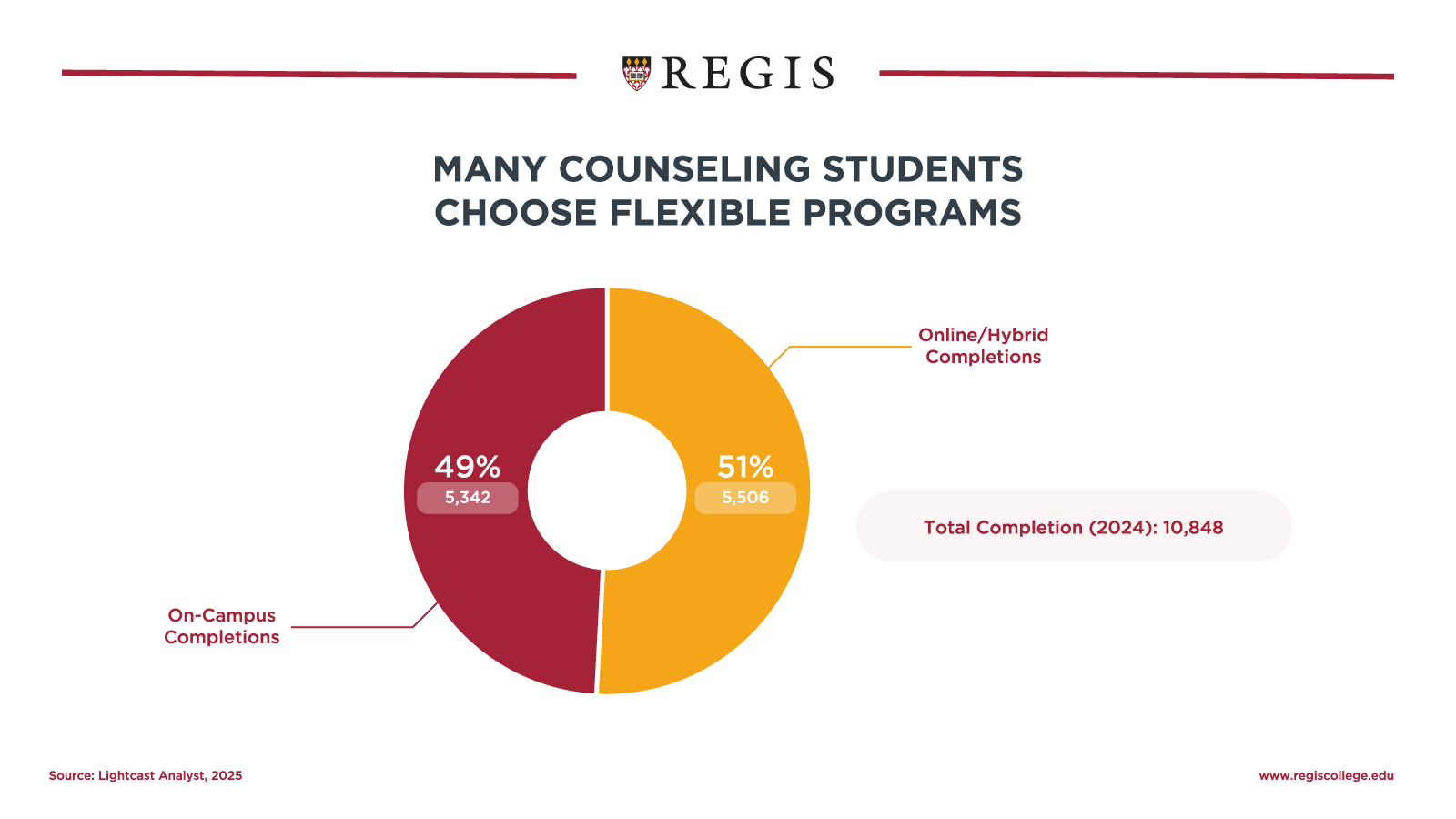
Many counseling students choose part-time enrollment, particularly if they are working.
Part-time enrollment:
- Reduces semester credit load
- Extends overall program duration
- Often improves work-life balance
At Regis, many students pursue the degree while maintaining employment, and the program’s structure reflects that reality.
The Regis Timeline
The MA in Counseling at Regis College is a 60-credit program, with most students completing it in approximately two to three years, depending on whether they enroll full-time or part-time.
Because the curriculum is carefully sequenced—including foundational coursework followed by practicum and internship experiences—academic advising plays an important role in determining pacing.
Students work with faculty and advisors to:
- Map out course progression
- Identify practicum readiness
- Align internship timing with professional obligations
This intentional sequencing helps ensure that clinical readiness and academic development occur in tandem.
Can You Work While Earning Your MA in Counseling?
Many students can work while pursuing their degree. As Brandon Jones, PhD, Interim Director of Graduate Counseling Programs at Regis College, explains, most of the students in the Regis program remain employed, “and a good chunk of the folks who work, work traditional working hours.”
Recognizing this, the program is structured to accommodate working adults.
Evening Course Start Times
Courses typically begin between 6 and 7:30 p.m., making it possible for students with standard daytime schedules to attend. This intentional scheduling allows students to complete work responsibilities before transitioning to academic commitments.
Hybrid Format: Synchronous + Asynchronous
All courses follow a hybrid model.
- Synchronous learning: In-person or live sessions
- Asynchronous learning: Independent coursework facilitated through the learning management system
This structure provides both real-time engagement and flexible study time.
Alternating-Week Scheduling
Most courses meet synchronously every other week.
For part-time students, this can create predictable academic rhythms. As Jones explains, courses may alternate by week, allowing students to designate specific days for academic engagement.
This format supports:
- Consistent work scheduling
- Family commitments
- Reduced weekly commuting
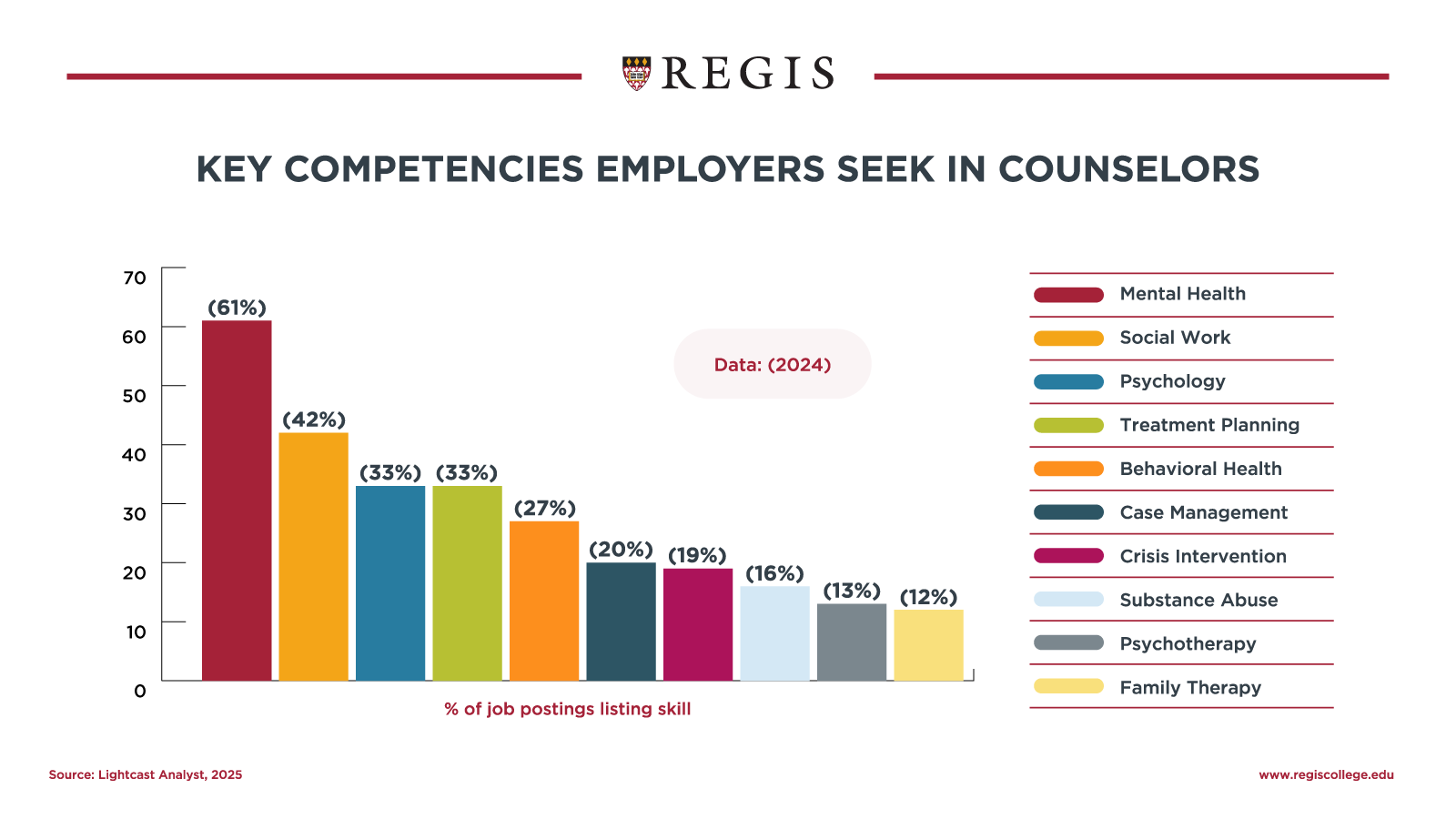
While graduate study always requires discipline and time management—ensuring one emerges with the skills valued by employers—thoughtful scheduling makes continued employment more realistic.
What About Practicum and Internship Requirements?
All licensure-eligible counseling programs include supervised field experience. These clinical components operate under an apprenticeship model, where students learn under the supervision of experienced professionals.
At Regis, clinical placement follows what Jones describes as a developmental and collaborative approach. Rather than asking students to independently secure placements without guidance, the program:
- Assesses student strengths and interests
- Identifies appropriate clinical sites
- Acts as a liaison between students and placement settings
- Supports onboarding and readiness
As Jones explains, faculty collaborate with students to identify placements that are “a good fit” and help prepare both student and site for success.
Because practicum and internship hours require real-time client interaction, students should anticipate adjustments to work schedules during these phases. However, with planning and advisor coordination, many students continue working while completing clinical requirements.
How the Program Is Designed for Adult Learners
Flexibility is key for many prospective students, and impactful programs are aware of that. As Jones explains, about the Regis program:
“We’re thinking about the lives of our students as we’re scheduling to try and make things accessible.”
The goal, Jones insists, is not to eliminate rigor as counseling education is clinically demanding. Instead, it's to ensure to structure that rigor in a sustainable way.
What Makes Regis’ MA in Counseling Program Different?
Beyond timeline considerations, program design plays a critical role in whether a degree feels manageable.
Small Class Sizes
Courses are capped at 15 students, allowing for interactive simulations, role-play exercises, and individualized feedback.
Experiential Learning
The program embeds clinical simulations directly into coursework so students practice skills before entering high-stakes client settings.
Structured Clinical Placement Support
The developmental and collaborative placement model helps students transition smoothly into practicum and internship settings.
Long-Term Professional Partnership
Graduates often return for licensure exam preparation support and career guidance, reflecting a sustained faculty-student relationship.
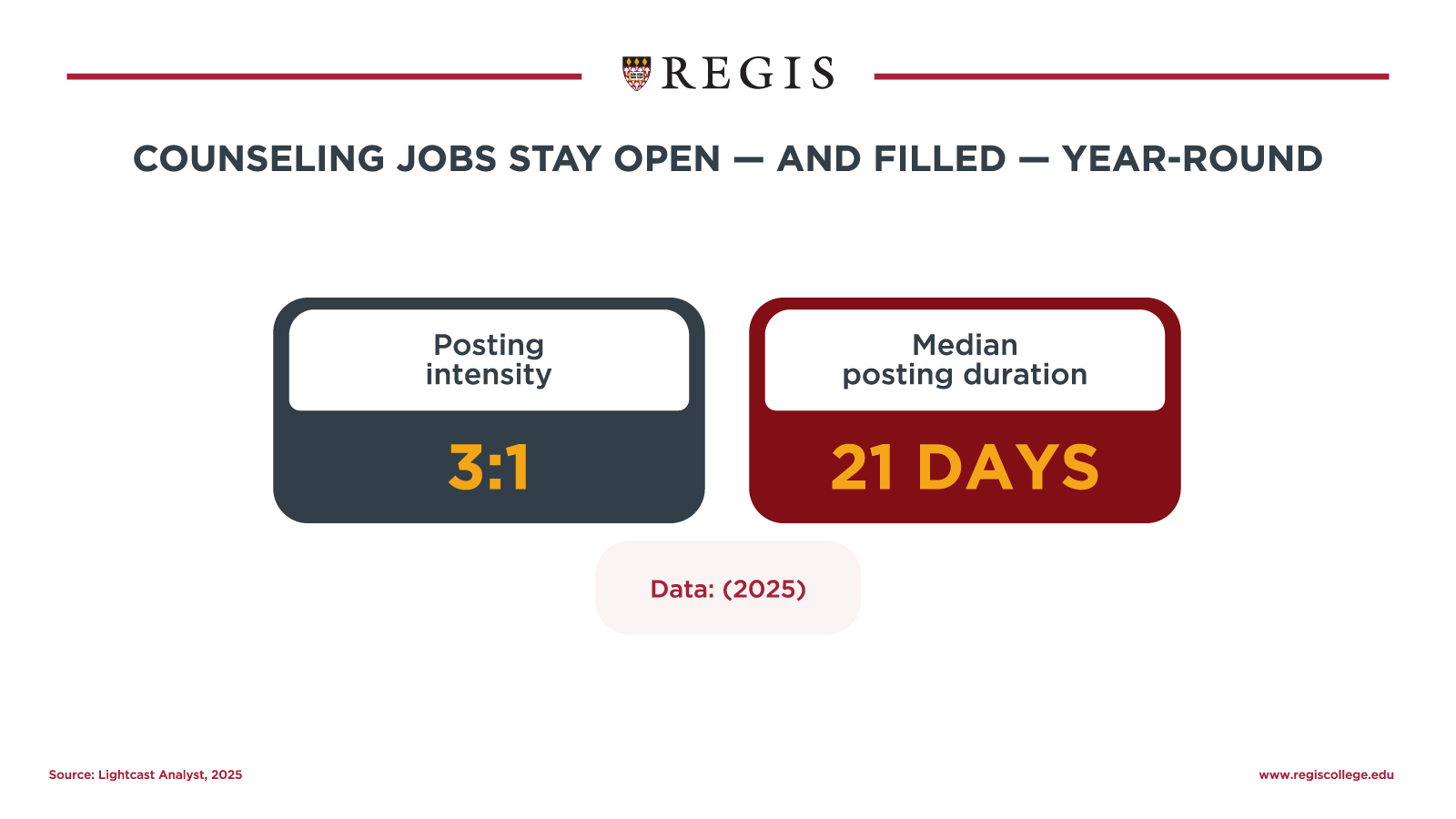
These elements support both academic progress and long-term professional development. It also helps students find employment upon entering a workforce where the demand for counselors continues to outpace supply.
5 Questions to Ask Before Applying to an MA in Counseling Program
1. How many credits are required for licensure eligibility?
This determines baseline program length.
2. What is the typical full-time and part-time timeline?
Understanding pacing options helps align expectations.
3. How are practicum and internship placements coordinated?
Support structures can significantly impact stress levels.
4. When are courses scheduled?
Evening and hybrid formats can make a substantial difference.
5. What percentage of students work while enrolled?
This offers insight into program flexibility.
The answers to these questions will clarify whether a program aligns with your professional and personal responsibilities.
Is an MA in Counseling Manageable?
For motivated students with clear goals, yes—especially when the program is designed with working professionals in mind.
The MA in Counseling at Regis College offers:
- A 60-credit licensure-aligned curriculum
- Flexible pacing options
- Evening and hybrid scheduling
- Alternating-week formats
- Developmental clinical placement support
- Small, interactive class sizes
With thoughtful planning and the right program structure, earning a master’s in counseling while continuing to work can be both realistic and rewarding.
Ready to take the next step? If you’d like to learn more about the program, sign up for an information session, where a member of our admissions team and faculty or program director can answer any questions you might have.



Published Date